Power Without More Muscle: How Force Travels Through Connective Tissue


A reel with more than 20 million views promises power without adding muscle. The argument goes like this: your body is connected through fascia from the foot through the glutes into the trunk, the gluteus maximus works mostly through its fascial connections, and if you train that integration the body delivers more force as a unit than any isolated contraction could. Athletes shared it because it names something they have felt. The squat went up. The sprint didn't.
Here is the honest version. Parts of that claim sit on solid anatomy. One number in it does not appear in the study it cites. And the headline gets the mechanism backwards in one important way: connective tissue doesn't produce power. It decides how much of the power you already have arrives where you need it.
This article checks the claim against the research, piece by piece, and then shows what it actually means for your training. For the basics of the tissue itself, start with what fascia is. Every statement carries its evidence tier: Established, Supported or Emerging. Where the research stops, we say so.
You cannot create power without muscle. Muscle contraction is the only engine your body has. But research shows that a meaningful share of muscle force leaves through connective tissue rather than the muscle's own tendon, and that this tissue links muscles into lines that cross joints and even cross the midline. "Power without more muscle" therefore means something precise: getting more of your existing force through the chain and into the ground, through better transfer and coordination, not through a second power source.
What the viral claim gets right, and where it overreaches
Take the three parts of the claim in turn.
"The body is connected through fascia from the foot through the glutes into the trunk." Largely accurate. A systematic review of 62 dissection studies found strong evidence for three continuous myofascial lines: the Superficial Back Line, the Back Functional Line and the Front Functional Line [8]. The Back Functional Line is the one the reel is describing: latissimus dorsi, thoracolumbar fascia, gluteus maximus, and from there into the fascia lata of the opposite leg. That is anatomy on the table, not a model.
"The gluteus maximus works through 80 percent of fascia lata connections." The study it refers to exists, and its main finding supports the direction of the claim. But the number does not appear in the study's abstract, and we could not confirm it in any primary source. The authors describe a major insertion into the fascia lata in every specimen; they do not report a percentage [5]. More on this below.
"Fascial integration lets the body deliver more force as a unit than isolated contraction." True as transfer, false as production. Force transmitted through connective tissue is still force a muscle made. The research question is not whether fascia adds power. It is how much of a muscle's force takes the fascial route, and what that means when you train.
| WHAT THE CLAIM SAYS | WHAT THE RESEARCH SHOWS |
|---|---|
| Fascia connects foot, glutes and trunk | Strong anatomical evidence for continuous lines along the back and across the trunk [8]. Established |
| The glute works through 80 percent fascial connections | A large, consistent insertion into the fascia lata, no percentage reported, six cadavers [5]. Supported, number unverified |
| Fascia delivers more force than isolated contraction | Connective tissue transmits a share of muscle force; it does not generate any [1][2][3]. Supported |
| You can increase power without adding muscle | You can increase usable power by improving transfer, coordination and rate of force development; the motor is still muscle [9][10]. Supported |
How much force leaves the muscle sideways?
The textbook picture is simple: a muscle contracts, its tendons pull on bone, the joint moves. Everything in between is packaging. The experiments that overturned that picture come from Peter Huijing's group, and they are worth understanding in detail, because they are the scientific root of the idea the reel is selling.
In the classic design, researchers stimulated a rat muscle to contract and measured the force at its origin tendon and at its insertion tendon simultaneously. If a muscle were an isolated motor, both ends would pull equally. They did not. With the surrounding fascia intact, the two tendons differed by up to about 23 percent depending on muscle length [1]. The difference had to go somewhere, and the only candidate was the connective tissue linking the muscle to its neighbors and to the bone.
A second experiment made the point more bluntly. The team cut three of a muscle's four tendons. It still delivered 84 percent of its force to the bone. Only when they separated the muscle from its surrounding connective tissue did force drop to roughly half [2]. The muscle was pushing force out through its fascial envelope the whole time.
Then the bridge to movement. Maximal electrical stimulation is not how athletes use muscle. At submaximal, movement-like firing rates, the share of force taking the connective tissue route rose to about 30 percent, and the lower the firing rate, the larger the share [3]. The authors point out that low firing rates like these are what muscles encounter in a living body. That makes the fascial route more relevant in motion, not less.
Three honesty points. First, these are rat studies. Nobody has measured a force percentage in a living human, and nobody can with current methods. Second, the numbers vary with conditions, from near zero at some muscle lengths to well above the figures quoted here in more extreme experimental setups. Third, when Humanpeak says "roughly a fifth of your force," that figure is drawn from this animal literature and stated as "research shows," never as a measurement in your body. Treat it as the order of magnitude, not a decimal.
What the literature does establish, across reviews, is the principle: a muscle is not an isolated motor. Unequal forces at its two tendons are direct proof that connective tissue is a force pathway, not padding [4].
Is the gluteus maximus a fascia muscle?
The reel's strongest anatomical point is also its most misquoted one.
In 2013, Antonio and Carla Stecco and colleagues dissected six cadavers to map where the gluteus maximus actually ends: in the iliotibial band, the fascia lata, the lateral intermuscular septum or the femur [5]. The findings: the iliotibial band is not a separate structure but a reinforcement of the fascia lata that cannot be dissected away from it. Its inner surface connects to the lateral intermuscular septum. And in every specimen, the gluteus maximus had a major insertion into the fascia lata, so large that the authors wrote the iliotibial tract could be considered a tendon of the gluteus maximus. They proposed that this fascial insertion could explain how force is transmitted from the thoracolumbar fascia down to the knee.
So the direction of the viral claim is right. The largest muscle in the body sends a major share of its pull into a sheet of fascia, not only into the femur. The sheet runs the length of the thigh and anchors below the knee. When the glute fires in a sprint stride or a cut, the lateral thigh and the knee feel it through the fascia lata, not through a bony lever alone.
What the study does not say is "80 percent." The abstract reports a qualitative finding, and the sample is six cadavers. Secondary summaries of the paper circulate with different percentages; we could not verify any of them in a primary source. Use the finding, not the number.
For an athlete, the finding matters because of what sits above the glute. Vleeming and colleagues showed in 1995 that the latissimus dorsi, the gluteus maximus and the erector spinae all tension the same thoracolumbar fascia, and that below the fourth lumbar vertebra this tension crosses to the opposite side [6]. They called it an integrated system linking spine, pelvis, legs and arms. Put the two studies together and you have a continuous tensioned route from one shoulder, across the lower back, through the opposite glute, down the fascia lata to the knee. That is the Back Functional Line, drawn in tissue. The details of that sheet are in the thoracolumbar fascia and the posterior oblique sling.
From foot to trunk: does the connection hold in a living body?
Cadaver anatomy shows that structures are continuous. It cannot show that force moves along them in a moving person. For that, you need an experiment on living humans, and there is one.
Carvalhais and colleagues asked participants to contract the latissimus dorsi and measured what happened at the opposite hip [7]. Position and passive stiffness of the contralateral hip changed. Nothing mechanical links a lat to the opposite hip except the thoracolumbar fascia and the gluteal fascia on the far side. The study did not measure a force percentage; it measured angle and stiffness. But it is direct evidence, in living people, that tension applied at one end of the line arrives at the other.
Does the line reach the foot, as the reel claims? The Superficial Back Line runs from the plantar fascia through the Achilles, the hamstrings and the sacrotuberous ligament into the erector spinae, and the review that validated it found strong anatomical evidence [8]. A second systematic review found moderate evidence for force transfer at all three of its transitions, based mostly on cadaver work [12]. So: foot to glute to trunk is anatomically continuous. How much load crosses each junction in a sprint or a cut is not yet quantified. Established for structure, Supported for function.
Built around fascial lines. 20 minutes per session, 5 times a week, guided step by step in the app.
Start the protocol 14-day money-back guarantee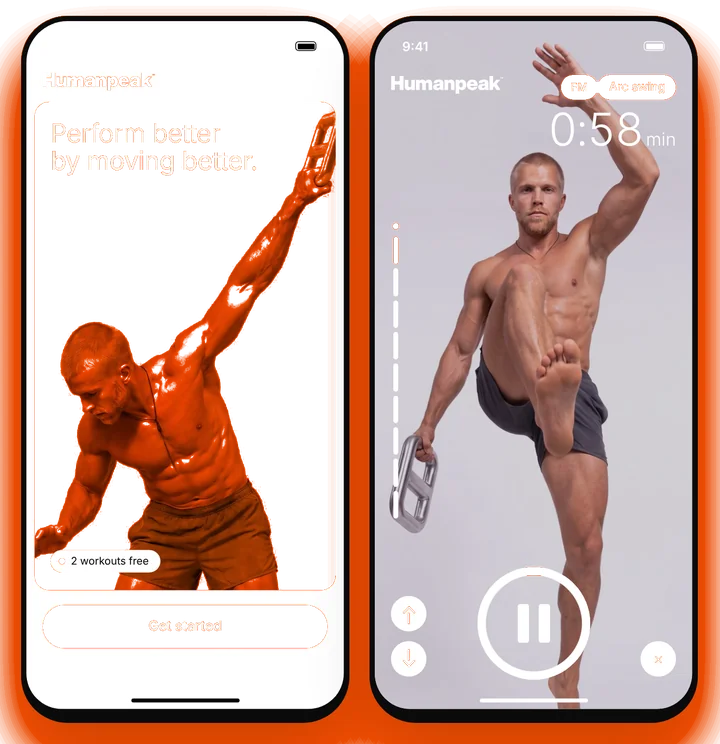
Why strength doesn't transfer by itself
This is where the reel's audience lives: athletes who have built strength and don't see it in their sport. The research here is clearer than most people expect.
Brughelli and colleagues reviewed the research on change-of-direction ability, from correlation studies to resistance training interventions [9]. Two findings. No strength or power variable correlated significantly with how well athletes changed direction on a consistent basis. And training programs built on traditional, bilateral, vertical exercises, including squats, deadlifts, Olympic lifts and vertical jumps, mostly failed to improve change-of-direction performance, while programs that more closely mimicked the movement did.
That does not mean lifting is useless. It means strength is a prerequisite, not a result. The force is there. What decides whether it arrives is the chain between the muscle and the ground: the sequencing, the stiffness of the tissue it travels through, and whether the pattern has been practiced at speed and in the direction the sport demands.
Kibler's kinetic chain model describes the same thing from the other end [11]. In throwing and striking, force is generated in the legs and trunk and transferred, segment by segment, to the hand. The trunk is the link. A motion analysis of 38 pitchers shows what a well-organized chain buys: the professionals rotated the trunk later in the pitch and had the lowest shoulder rotational torque of all skeletally mature groups. The authors concluded that their timing conserved the momentum generated by the trunk [13]. More of the force is handed forward instead of made locally.
The cleanest demonstration of transfer as a separate quality is a baseball study [10]. Two groups of players trained with the same lifting program and the same bat swings for twelve weeks. One group added rotational and full-body medicine ball exercises. At the end, both groups had gained the same strength in the squat and bench press. The rotational group had gained 17 to 18 percent in torso rotational strength versus 10 percent, and 10.6 percent in a medicine ball hitter's throw, a sequential hip-torso-arm test, versus 3.0 percent. Same engine. Different transmission.
What "power without more muscle" actually means for training
So the viral idea survives, in corrected form. You can get more usable power out of the muscle you have. The gains come from three places, and none of them is a new power source.
Transfer. A share of every contraction travels through connective tissue into neighboring muscles and across joints. Training that loads those connections, in the directions sport loads them, teaches the body to use that route instead of fighting it. The Back Functional Line, shoulder to opposite hip, is the obvious example: it is the line of a throw, a strike, a sprint stride and a cut.
Coordination. The baseball study is the proof. Identical strength, different output, because one group practiced sequencing force through the trunk. Motor learning is the most established mechanism in this whole article. Your nervous system learns the patterns you give it.
Rate. Most athletic actions end before maximal force is available. What matters is how much force you can produce in the time the ground contact or the swing allows. That quality responds to fast, light, reactive loading, not to heavier bars.
A note on what this does not replace. Tendon stiffness, the spring that returns energy, adapts to training, and loading intensity is the decisive variable [14]. If you want a stiffer Achilles, heavy strength work is still the tool. Light, fast, multidirectional loading trains how you use the spring and how you organize the chain. It does not build the spring's raw capacity. Both matter. The reel skips that part; we won't. How the spring works, and how much of it is fascia, is covered in elastic recoil training and how much of you is fascia.
- FOCUS: force transfer through the trunk
- LOAD: light, fast, rotational
- TEMPO: fast reversals, controlled stops
- DIRECTION: every plane your sport uses
How Humanpeak trains this
Humanpeak was built on the gap this article describes: you've built strength, now make it transfer. The 12-Week Movement Protocol runs 5 workouts per week, about 20 minutes each, across three phases, Restore, Build and Perform. The protocol holds over 450 movement flows, and every flow combines mobility, control and targeted fascial loading through multidirectional movement, so the lines in this article, shoulder to opposite hip, hip to foot, get loaded the way your sport loads them rather than one muscle at a time.
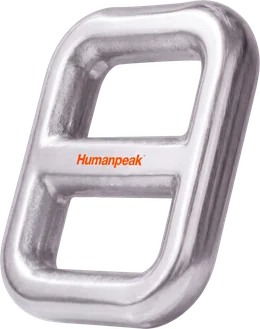
The Humanpeak™ Movement Tool is the reason the loading is different. It weighs 2.2 kg, cast in one piece from aluminum, with most of its mass sitting outside your grip. Accelerate it and the offset mass creates torque that changes direction mid-movement, so the whole chain, from stance through trunk to hand, has to organize against a pull that never arrives from the same angle twice. When your alignment is clean, the pull travels through the line. When it isn't, you feel it in that rep. That feedback is how the chain learns. Heavy load builds how much force you can create. The Movement Tool trains how fast you can create it, and how well it travels. The principles behind the Humanpeak method are established training science. Studies on the specific tool are still to come.
The reel was right that your body is one connected system. It was wrong about where the power comes from. Muscle makes it. The chain delivers it. Train the chain.
Move better. Perform better.
Fact check
Frequently asked questions
Humanpeak follows clear sourcing guidelines: we rely on peer-reviewed studies, scientific institutions and professional bodies, and aim for primary sources. Spotted an error? Write to us.
This article is for educational purposes only and does not replace medical advice. If you have symptoms, talk to a doctor.


