How Athletes Train Fascia: What Elite Programs Actually Do


Ask how athletes train fascia and the internet answers with footage: a sprinter being worked over with a roller, a quarterback bouncing on a soft mat, a striker taking a massage gun to the quad an hour before kickoff. It looks like a method. Most of it is the visible five percent of a week that is organized around something far less photogenic.
This guide separates two things that get sold as one. What is common practice in professional sport, which is culture, and what is demonstrated in research, which is evidence. Both are worth knowing. Only one of them is a reason to change your training.
Elite athletes train fascia mostly indirectly: heavy and fast loading that adapts tendon and connective tissue, plyometric spring work, and full-range strength. Rollers, guns and massage appear in the warm-up and recovery layer, where measured effects are small and short-lived. Load drives the adaptation, not passive treatment.
How Athletes Train Fascia: The Honest Version
Almost no elite program has a block on the calendar called fascia training. What they have is loading that connective tissue responds to: heavy resistance work, fast elastic work, sprinting, change of direction, and full-range strength. Connective tissue adapts as a consequence of what the body is asked to do.
The tissue-specific case is well described for tendon, which is connective tissue and the part of the system that can actually be measured in living humans. A meta-analysis of exercise interventions in healthy adults found a moderate effect on tendon stiffness, a comparable effect on material properties, and a much smaller effect on cross-sectional area [1]. Structure changes slowly. Mechanical behavior changes first.
The rest of what gets filmed - the rollers, the guns, the hands - sits in a different category. It is prepared, felt, and often useful. It is not where the adaptation comes from.
- DRIVER: LOAD
- SUPPORT: PREPARATION
- TIMELINE: WEEKS TO MONTHS
What You See on Camera Is the Warm-Up
Foam rolling is the most studied of the visible tools, and the picture is consistent rather than exciting. A multilevel meta-analysis of 26 trials found a large acute effect on range of motion compared with doing nothing, and essentially no difference compared with static stretching [4]. So the tool works about as well as the cheapest alternative to it.
For performance, a separate meta-analysis found that rolling before training produced small changes: sprint performance improved by 0.7 percent, flexibility by 4.0 percent, with jump and strength effects that rounded to nothing. Rolling after training reduced perceived muscle soreness by 6.0 percent and produced small effects on sprint and strength [3]. The authors' conclusion is the useful sentence: the evidence justifies foam rolling as a warm-up activity rather than as a recovery tool [3].
Over weeks, the comparison holds. Static stretch training and foam rolling training both improved range of motion, with no statistically significant difference between them overall, though in interventions of four weeks or less the stretching arm came out ahead [5]. None of this makes the tools worthless. It makes them supporting cast.
There is a reason the visible layer survives anyway. It is immediate, it feels good, it costs nothing in fatigue, and before a competition it functions as a ritual that tells the nervous system the work is about to start. Professional staff keep it for exactly those reasons. The mistake is not using a roller. The mistake is believing the roller is the training.
What Actually Changes Connective Tissue
The clearest number in this field comes from the tendon literature. In the pooled analysis of loading interventions, work above roughly 70 percent of maximum produced a weighted effect size of 0.90 on tendon adaptation, while lower-intensity work produced 0.04 [1]. Isometric, eccentric and combined contractions performed similarly once intensity was matched, which tells you the tissue is reading force, not exercise names [1].
Two practical consequences follow, and elite programs are built around both.
- Magnitude before variety. Connective tissue responds to how hard it is loaded. Novel drills without meaningful force are entertainment for the nervous system, not a stimulus for the tissue.
- Duration before impatience. In the same analysis, interventions of twelve weeks or longer produced slightly larger effects than shorter ones [1]. Connective tissue works on a slower clock than muscle.
This is why the professional model is layered rather than replaced. The heavy work builds the capacity to produce force. The elastic work teaches the body to release it. As Bill Parisi frames it in The Anatomy of Speed, the connected system stores, transfers and expresses force, and speed is what happens when all three work together [7]. The barbell builds the engine. The movement layer wires it in.
Built around fascial lines. 20 minutes per session, 5 times a week, guided step by step in the app.
Start the protocol 14-day money-back guarantee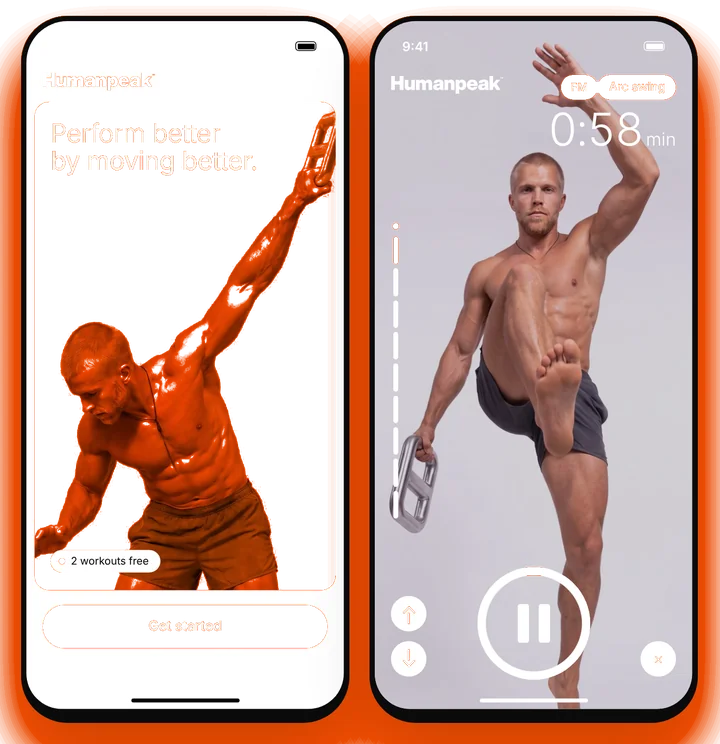
The Spring Work: Why Elite Programs Bounce
The bouncing, hopping and skipping that fills athlete footage is not a fascia ritual. It is plyometric training, and it is one of the better-supported methods in sport science. A 2025 systematic review and meta-analysis of 70 studies in 1,703 trained adults reported improvements in countermovement jump, squat jump and standing long jump, in reactive strength index, and in sprint times over 10, 20 and 30 meters [2].
Reactive strength index is the number worth understanding, because it describes how quickly the body turns a landing into a takeoff. That quality depends on the stretch-shortening cycle, where elastic tissue - primarily tendon and series-elastic structures - stores strain energy and returns most of it, supported by the nervous system's reflexive timing. Trainable, measurable, and available at any age with appropriate progression.
For anyone outside professional sport, the entry point is lower than the footage suggests. Low hops with clean landings, skips, short direction changes, controlled swings of a light implement - the requirement is intent and quality of contact, not height. Force equals mass times acceleration, so a light tool moved fast is a real stimulus, while the same tool moved slowly is choreography. Short. Sharp. Fresh.
What elite programs get right here is dosage. Spring work is done fresh, in short exposures, with quality as the limiter. It is the first thing in a session, never the last. Precision beats volume.
- FOCUS: ELASTICITY
- POSITION: EARLY IN SESSION
- LIMITER: QUALITY
Range, Rotation and the Unglamorous Part
Modern professional practice has moved away from long passive stretching as the route to range, and the data supports the move. A systematic review and meta-analysis of eleven studies in 452 participants found no significant difference between strength training and stretching for improving range of motion [6]. If loaded work delivers the same range and also builds capacity in that range, the choice makes itself.
So the mobility work in a serious program looks like training, not like a cool-down. Positions are entered actively, held under control, loaded through their end range, and taken into rotation, because sport does not happen in one plane. The useful distinction is between range you can reach and range you can use.
Rotation is the part most amateur programs skip entirely. Sprinting, throwing, kicking and cutting are diagonal events in which force crosses the body through connected chains, an idea described in the anatomical literature and popularized by Tom Myers as Anatomy Trains. Elite programs train those diagonals on purpose. Most general training stays in one plane and then wonders why the first rotational demand in a match feels foreign.
Then there is the part nobody films. Sleep is treated as a performance variable in professional environments, and a systematic review of sleep interventions in athletes found that sleep extension had the most beneficial effects on subsequent performance [8]. Alongside it: frequency. Short daily exposures, repeated, with the same movements revisited until they are owned.
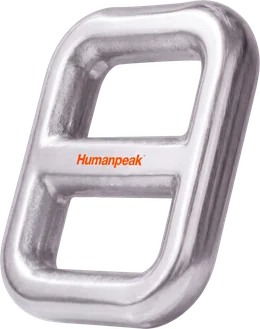
That is the part any non-professional can copy exactly. The 12-Week Movement Protocol is built on the same logic: 5 workouts per week, about 20 minutes each, across three phases (Restore, Build, Perform), with the 2.2 kg Humanpeak™ Movement Tool. Every flow combines mobility, control and targeted fascial loading through multidirectional movement, as a layer on top of the training you already do.
Pliability and the Line Between Culture and Evidence
The most famous connective-tissue idea in modern sport is pliability, the concept a career and a brand were built on: keep tissue long, soft and hydrated through targeted pressure and it stays durable. It is a compelling story, taken seriously by serious people, and it belongs in the cultural column rather than the evidence column. There is no controlled comparison showing that this specific approach outperformed conventional strength and conditioning, and one athlete's longevity is a sample size of one.
The same caution applies to every method that arrives with a famous name attached. Practices spread through professional sport for reasons that have nothing to do with data: tradition, sponsorship, the fact that the previous coach did it, and the plain human preference for interventions that feel good immediately.
Honest limitation, stated plainly: no study cited here shows that training remodels fascia specifically. Tendon can be measured, and it adapts [1]. Fascial force transmission and network-level adaptation remain emerging areas without a standard way to verify tissue change in living humans. What can be observed is function - range, elastic quality, coordination, force transfer through connected chains - and function is what deserves to be claimed.
So the pro-sport answer to how athletes train fascia is unglamorous. Load it. Spring it. Use it in every direction. Repeat it for years.
Strip the footage away and elite practice converges on something ordinary: meaningful load, elastic quality, full usable range, and a frequency that never breaks. The rollers and the guns stay in the program, in the role the evidence gives them - preparation and comfort, not adaptation.
Copy the structure, not the theater. Loaded. Elastic. Connected.
Fact check
Frequently asked questions
Humanpeak follows clear sourcing guidelines: we rely on peer-reviewed studies, scientific institutions and professional bodies, and aim for primary sources. Spotted an error? Write to us.
This article is for educational purposes only and does not replace medical advice. If you have symptoms, talk to a doctor.


