Usable Range Is Usable Strength: A Guide to Active Range of Motion Training


Every joint carries two numbers. The first is how far it can be moved when something else does the moving. The second is how far it can be moved, held and left under the body's own effort. Active range of motion training works on the second number, because that is the one that survives contact with load, speed and fatigue.
The gap between the two numbers is where most programs quietly fail. Passive range gets tested in a held stretch and then forgotten. Usable range gets expressed in a sprint, a lift, a rotation, a stumble on a curb. The research on how range is actually built has moved considerably in the last decade, and it points somewhere specific: range responds to resistance applied through range [1][2].
Active range of motion training is strength work performed through the range a joint can produce and control on its own, rather than passive stretching at the end of that range. Meta-analyses show resistance training improves range of motion as effectively as stretching, which makes usable range a strength quality rather than a flexibility one [1][2].
What is active range of motion training?
Active range of motion training is strength work performed through the range a joint can produce and control without help. The body enters the position under its own effort, holds it under tension, and leaves it under control. Nothing pushes. Nothing pulls. What remains after that test is the range the nervous system is willing to use when the situation is not chosen and not slow.
- Passive range. What a joint allows when an external force does the work — a strap, a wall, a partner, gravity in a held stretch.
- Active range. What the body reaches and holds with its own muscular effort, with no external assistance and no momentum.
- Usable range. Active range that holds up once load, speed or fatigue is added. The full comparison sits in the guide on mobility vs flexibility.
The distinction changes what a mobility session is for. A passive session asks how far the body can be taken. An active session asks how much of that territory the body can occupy on its own terms. Only the second answer transfers, because force is produced by muscle acting across a joint, and muscle can only act where the body has learned to organize itself.
Why range you cannot control does not count
A joint that can be pushed into a deep position but cannot hold that position under its own effort does not have a length problem. It has a control deficit. The tissue reaches the position; the system has no strategy for producing force there. Under load, the body treats that end range as unfamiliar territory and borrows the movement from a neighbouring segment that does have a strategy.
Clinicians who work with athletes describe the same observation in plainer language. Mobility is presented as flexibility you can use, and owning a position is defined as keeping it under load and speed rather than merely arriving at it [7]. That framing is coaching reasoning rather than trial evidence, but it maps cleanly onto how range is measured in the laboratory: passively and actively, with two different numbers as the result.
| PASSIVE RANGE | ACTIVE RANGE | |
|---|---|---|
| Produced by | An external force | The body's own effort |
| Tested in | A held, supported stretch | An unsupported, loaded position |
| Primary adaptation | Tolerance to lengthening [4][5] | Strength and control through range [1][3] |
| Shows up as | A number on a goniometer | Movement that holds under load |
This is also why the honest version of the mobility conversation is less dramatic than the marketing version. Nobody needs a maximal split. Everybody needs a hip that can flex deeply and still push, a shoulder that can reach overhead and still stabilize, an ankle that can travel forward over the foot and still return force to the ground. Range earns its place by being usable.
What the evidence shows about building range
For most of the last century, range was treated as a flexibility problem with a stretching solution. Two independent meta-analyses have since put the two methods side by side. A 2023 systematic review of 55 studies, 222 effect sizes and 2,756 participants found that resistance training improved range of motion against control groups with a moderate effect (ES = 0.73), and found no significant difference between resistance training and stretching (ES = 0.08) [1]. A 2021 meta-analysis of 11 randomized controlled trials with 452 participants reached the same conclusion, with no difference between strength training and stretching for range outcomes [2].
That does not retire stretching. It clarifies what stretching is doing. A 2025 systematic review with meta-regression found that range improvements after chronic static stretching were associated with both reduced tissue stiffness and increased stretch tolerance, with no significant effect on muscle fascicle length [4]. The earlier position stands: gains observed after a single session or a short program are attributed to modified sensation rather than to a permanently longer muscle [5]. The body is not being lengthened. Its willingness and its stiffness are being renegotiated.
One subgroup result deserves attention precisely because it is inconvenient. In the 2023 review, body-weight exercise alone did not produce a significant improvement in range of motion; the gains came from resistance applied through range [1]. The same analysis found untrained participants improved more than trained participants (ES = 1.042 versus 0.43), and its meta-regression detected no moderating effect of age, program duration or weekly frequency [1]. Movement on its own is not automatically training. Resistance through range is.
For a longer look at where static stretching still earns its place — and where it does not — see the guide on static stretching.
A science-based protocol built around fascial lines to support multidirectional movement.
Start the protocol 14-day money-back guarantee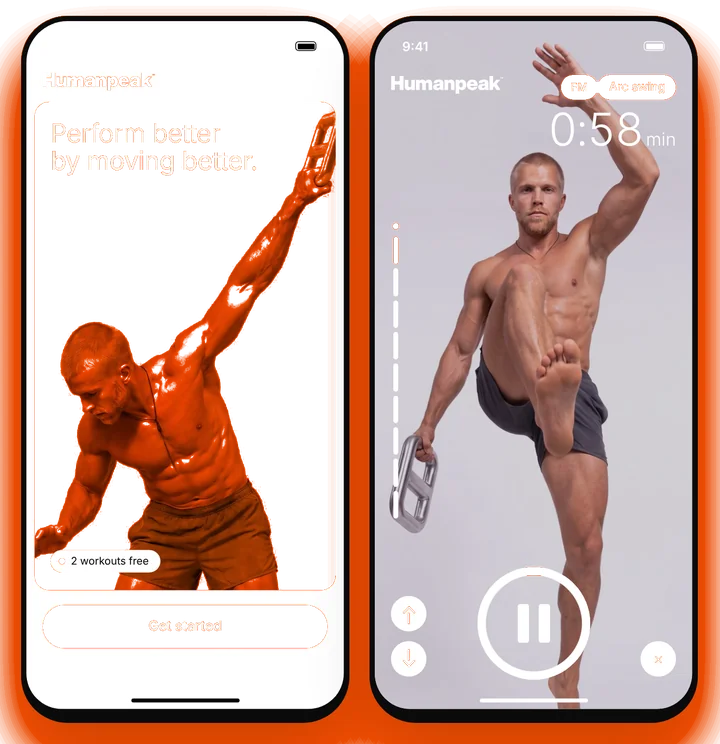
Where the range goes when a joint cannot deliver
Range a joint cannot deliver rarely disappears from the movement. It gets redistributed. A 2025 computer simulation study of squat and landing depth showed that any given depth can be reached through many different combinations of ankle, knee and hip angles, which is why a single restricted joint does not produce a single predictable fault [6].
The same study puts numbers on the demand. Around 8 degrees of ankle dorsiflexion was sufficient for a shallow position at a quarter of leg length, while deeper positions required roughly 26 degrees at half and 35 degrees at three quarters of leg length [6]. Increasing ankle range shifted the pattern toward more knee flexion and less hip flexion, and restrictions at the knee or hip constrained depth in much the same way an ankle restriction did [6].
The practical reading is unglamorous. Blaming one joint is usually wrong. The body solves the task with whatever range it can reach, and the compensation appears as a pattern across several segments rather than as one obviously stiff part. That is the argument for training patterns instead of parts, and for testing range in the position where it is meant to be used. The guides on ankle mobility and stiff versus tight cover the two most common misreadings of this.
PATTERN, NOT PART — The same depth can be produced by many joint-angle combinations. A restriction shows up as a redistribution across the chain, not as a single failing segment [6].
End-range capacity: the part most programs skip
If range is a strength quality, the next question is how much range to train through. A 2023 meta-analysis of partial versus full range of motion resistance training found a trivial advantage for full range across outcomes (SMD 0.12, 95% CI −0.02 to 0.26), with all effects sitting between 0.05 and 0.2 [3]. The authors' conclusion is appropriately measured: using a full or long range may improve most outcomes, while partial-range work performed at long muscle lengths remains a legitimate option [3].
Trivial in a pooled analysis is not the same as irrelevant in a training decade. Averaged across short studies the gap is small. Applied across years to the positions a body actually needs — deep hip flexion, overhead reach, rotation under load — it is the difference between a range that exists on a test and a range that holds when the task is unplanned.
End range is also where control is thinnest, for the simple reason that it is the least-visited part of the day. Sitting, walking and most gym patterns operate through the middle of the available range, in one plane, at moderate speed. The end of the range is where the body has the least practice producing force, which makes it the region with the most to gain and the region most often skipped.
- FOCUS: END-RANGE CONTROL
- PLANE: MULTIPLANAR
- LOAD: LIGHT, ACCELERATED
How to train active range of motion
The method follows from the evidence rather than from tradition. Enter the position under your own effort, apply resistance where the body is least practiced, and stay long enough to organize it. Five working rules:
- Find the end of the range the body reaches without help — no strap, no wall, no partner, no momentum.
- Add resistance there. Resistance through range is what the research supports [1]. A long lever or one light implement creates load in a position that a passive hold leaves unloaded.
- Move under tension: controlled entries, controlled exits, short holds at the least familiar angle rather than the deepest one.
- Train rotation as well as flexion and extension, since the positions that fail in life are usually diagonal.
- Repeat often rather than heroically. The meta-regression found no moderating effect of program duration or weekly frequency, which argues against chasing a perfect protocol [1].
Progress is judged by what the range does, not by how far it goes. A range is improving when the position can be entered more slowly, held with less shake, left with more control, and reproduced on both sides. Those are observable markers, and they show up long before any number on a measurement chart changes.
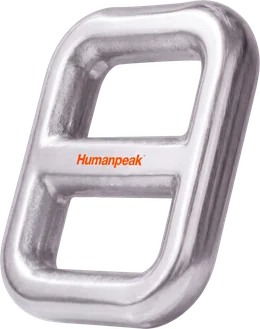
This is the reasoning behind the structure of the Humanpeak 12-Week Movement Protocol: 5 workouts per week, about 20 minutes each, across three phases (Restore, Build, Perform), with one light tool, the 2.2 kg Humanpeak™ Movement Tool. Positions are trained under control instead of held passively, so the body builds strength and range in parallel, as a layer on top of the training you already do. Frequency questions are covered in the guide on how often to train mobility.
- FOCUS: USABLE RANGE
- DURATION: 20 MIN, 5× PER WEEK
- BEST FOR: ALL LEVELS
Usable range is not a stretch that got deeper. It is a capacity: built by resistance through range, expressed under control, kept by repetition. The number worth tracking is not how far the body can be moved by something else, but how far it can move itself and stay in charge of the position.
Train the end of the range and the middle takes care of itself. Controlled. Loaded. Repeatable.
Fact check
Frequently asked questions
Humanpeak follows clear sourcing guidelines: we rely on peer-reviewed studies, scientific institutions and professional bodies, and aim for primary sources. Spotted an error? Write to us.
This article is for educational purposes only and does not replace medical advice. If you have symptoms, talk to a doctor.


