Mobility vs Flexibility: The Difference That Decides Everything


Mobility vs flexibility is the highest-volume question in the whole movement category, and most answers stop at a tidy definition. The definition is the easy part. The useful part is what follows from it: the two describe different capacities, they respond to different training, and they predict different things about how a body behaves when it is loaded, tired, or moving fast.
Flexibility is what a joint allows when something else does the work — gravity, a hand, a strap, a partner. Mobility is what the joint allows when you do the work yourself, under your own control. Between those two numbers sits a gap. That gap is where most movement problems live, and it is the part of the picture that training can actually move. This guide separates the two, checks each against the research, and sets out what is genuinely trainable.
Flexibility is passive range: how far a joint can be moved by an outside force. Mobility is active range: how far you can move that joint yourself, with control. The gap between the two is the trainable part. Research shows loaded strength work through range improves range as reliably as stretching.
Mobility vs flexibility: the actual difference
Flexibility, in the exercise-science sense, is range of motion about a joint. It is the number a clinician records when they move your leg for you and stop where tissue resistance stops them. Professional guidance treats it as its own fitness component, trained alongside cardiorespiratory, muscular and neuromotor work, with recommendations of at least two to three sessions per week and better results from daily practice [7].
Mobility is the range you can reach and hold under your own power. Same joint, different question: not how far it can be taken, but how far you can take it and still be in charge when you get there. The framing that made this distinction mainstream comes from Kelly Starrett and The Ready State, who describe mobility as flexibility you can actually use — range plus control plus strength at the end of it [8].
| FLEXIBILITY | MOBILITY | |
|---|---|---|
| What produces the range | An external force: gravity, a hand, a strap | Your own muscular effort |
| What it measures | Tissue extensibility and stretch tolerance | Range plus neural control of that range |
| How it is tested | Passive straight-leg raise, seated reach | Active leg raise, controlled overhead reach, deep squat without support |
| What it predicts | How far a joint can be moved | How much of that range shows up in real movement |
The gap between passive and active range
Test any joint both ways and two numbers come back. Passive range is almost always the larger one. Lie down, have someone lift your straight leg, and the hip goes further than when you lift it yourself. The distance between those two numbers is the part of your range that exists on paper but not in your movement.
That gap is the practical content of the mobility vs flexibility question. Range you cannot reach on your own does not appear in a stride, a squat, a throw or a save. The body will not send force through a position it cannot stabilize, so it substitutes: the spine turns instead of the hip, the low back extends instead of the shoulder, the knee collapses inward instead of the ankle bending. The range was there. Access to it was not.
- Passive range sets the ceiling. It is the outer limit the joint and its surrounding tissue currently permit.
- Active range sets the working floor. It is the portion of that ceiling available when nothing is holding you.
- The gap is the training target. Closing it means adding strength and control at the far end, not adding more ceiling.
One honest caveat: the passive-to-active gap is a useful coaching construct, not a validated diagnostic threshold. No study defines a cutoff above which the gap becomes a problem, and normal values differ by joint, sport and age. Treat it as a direction for training, not as a test you pass or fail.
What stretching actually changes
Stretching increases measured range. That much is not in dispute. What has been in dispute for over a decade is why. The influential review on this question concluded that gains after a single stretching session, and after short-term programs of three to eight weeks, are best explained by modified sensation — the nervous system tolerating more stretch — rather than by tissue becoming permanently longer. The authors were explicit that effects beyond eight weeks had not been evaluated [3].
The picture has since gained detail. A 2025 systematic review with meta-analysis and multivariate meta-regression in Sports Medicine found that acute stretching produced a small decrease in overall stiffness without a measurable rise in stretch tolerance, while chronic stretching improved range through both routes: lower muscle-tendon stiffness and a higher maximum tolerable passive resistive torque. Neither acute nor chronic protocols changed muscle fascicle length [4].
Two consequences follow. First, the popular claim that stretching lengthens muscles is not supported by the fascicle data. Second, tolerance and stiffness are real adaptations worth having — they simply are not the same as being able to use the position. That distinction shows up most clearly in injury data: a meta-analysis of 25 randomized controlled trials covering 26,610 participants found no protective effect of stretching on injury rates, with a relative risk of 0.96 [5].
A science-based protocol built around fascial lines to support multidirectional movement.
Start the protocol 14-day money-back guarantee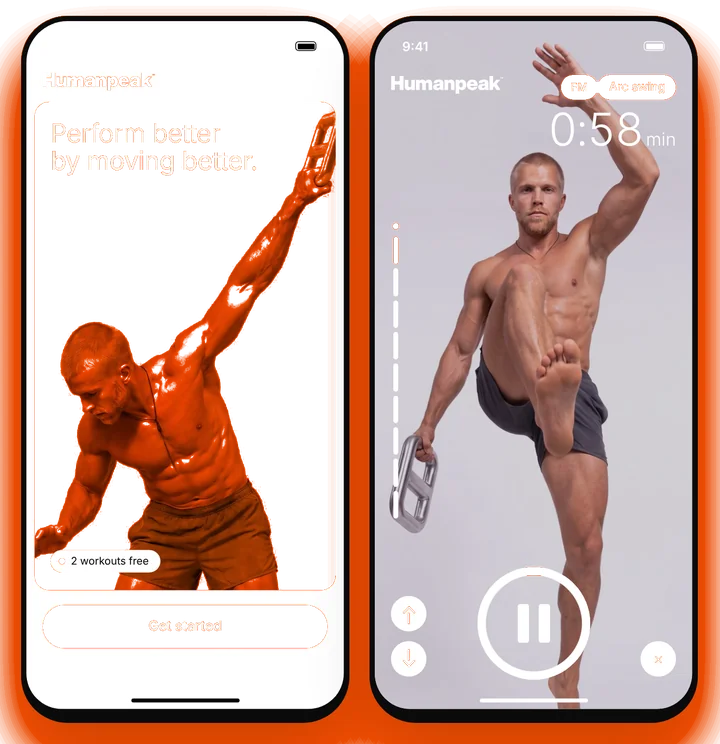
Why strength through range does the same job
The most consistent finding of the last five years is that you do not have to choose between building range and building strength. A 2023 systematic review and meta-analysis in Sports Medicine pooled 55 studies and 2,756 participants and found that resistance training produced a moderate improvement in range of motion against no-training controls, with an effect size of 0.73. Compared directly against stretch training, the difference was 0.08 and not statistically significant. Adding stretching on top of resistance training produced no further advantage [1].
An earlier meta-analysis of 11 randomized controlled trials with 452 participants reached the same verdict from a smaller dataset: strength training and stretching were not different in their effects on range of motion [2]. Two independent reviews, different study pools, the same conclusion.
RT vs CONTROL: ES 0.73 · RT vs STRETCHING: ES 0.08 (n.s.) · STUDIES: 55 · PARTICIPANTS: 2,756
The asymmetry is what makes this decisive. Loaded work through range delivers the range and the strength together. Passive stretching delivers the range alone. And in the injury literature, the same 25-trial meta-analysis that found nothing for stretching reported that strength training was associated with injury rates around one third of control, and overuse injuries close to halved [5]. That is a comparison of training strategies in the published record, not a promise about any individual body.
None of this makes stretching pointless. It is low-cost, it is easy to do anywhere, and it reliably raises the ceiling. It is simply not the tool that closes the gap between what a joint permits and what you can do with it.
Is more flexibility always better?
No, and this is where the mobility vs flexibility distinction stops being semantic. Range without control is a liability, and the clearest data comes from athletes at the far end of the distribution. A 2021 systematic review and meta-analysis found that athletes with joint hypermobility had roughly threefold higher odds of shoulder injury than non-hypermobile athletes, with an odds ratio of 3.25. Localized shoulder hypermobility carried a considerably stronger association than generalized hypermobility [6].
The authors rated the evidence quality as low, and hypermobility is a clinical presentation rather than a description of a person who stretches often. The signal is still worth reading in the right direction: the useful variable is not how much range exists, but how much of it is governed.
The practical version is simple. Range you own is capacity. Range you cannot govern is exposure. More is not the goal. Usable is.
How to train mobility instead of chasing flexibility
Training mobility means training strength and control at the positions you currently only reach passively. The mechanics are unglamorous and the principles are consistent across the reviewed literature.
- Take the joint to the end of the range you can reach without help, then hold it there under your own tension for several seconds.
- Add load or leverage in that outer position rather than deeper in the middle of the range, where control is never the limiting factor.
- Train the neglected directions — rotation and internal rotation above all, since most programs are built almost entirely in the sagittal plane.
- Move through the range slowly and deliberately at least as often as you hold it, because control is direction-specific.
- Repeat it often in short doses rather than monthly in long ones.
Frequency matters more than session length. The ACSM position stand recommends flexibility work on at least two to three days per week and notes that greater gains are attained when it is done daily; for neuromotor training — the coordination, balance and agility category that mobility work sits closest to — it recommends 20 to 30 minutes on at least two to three days per week [7]. Frequent, structured, moderate. That is the shape of the adaptation.
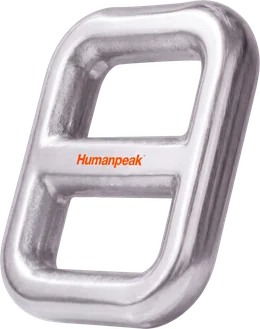
This is the logic behind the Humanpeak 12-Week Movement Protocol: 5 workouts per week of about 20 minutes each, in three phases, Restore, Build and Perform, with the Humanpeak™ Movement Tool (2.2 kg). Every flow combines mobility, control and targeted fascial loading through multidirectional movement, so range and control are built in the same rep instead of in two separate programs. Range under load. Rotation as a default. Five times a week rather than every so often.
Controlled. Loaded. Owned.
The mobility vs flexibility debate resolves cleanly once the question is framed correctly. Flexibility is the range a joint permits. Mobility is the range you command. The first is a measurement; the second is a capacity, and only the second reliably shows up when you stand, turn, load and accelerate.
The research supports the practical conclusion without needing to overstate it. Strength through range builds range as effectively as stretching does, and brings the control along with it. Passive range on its own has not shown a protective effect, and at the extremes it comes with its own risk profile. So the useful instruction is not stretch more. It is own more of what you already have. Strong. Controlled. Usable.
Fact check
Frequently asked questions
Humanpeak follows clear sourcing guidelines: we rely on peer-reviewed studies, scientific institutions and professional bodies, and aim for primary sources. Spotted an error? Write to us.
This article is for educational purposes only and does not replace medical advice. If you have symptoms, talk to a doctor.


