How Long Does It Take to Improve Mobility? A Realistic Adaptation Timeline


How long does it take to improve mobility is the most repeated question under every mobility post, and it is usually answered badly — with a number that sounds like marketing, or with a shrug. There is no single clock. The body adapts in layers, and each layer runs on its own schedule.
Control changes first, within days. Range follows over a handful of weeks. Muscle, tendon and bone move on a calendar measured in months. Most people stop somewhere in the gap between the fast layers and the slow ones, which is precisely the part worth understanding before you arrive there.
How long it takes to improve mobility depends on the layer. Coordination and control change within days to weeks. Range of motion improves measurably across two to eight weeks, mostly through altered tolerance rather than longer tissue. Tendon stiffness needs high load sustained past twelve weeks, and bone is measured in months to years.
How long does it take to improve mobility?
The useful version of the answer starts by separating what is being measured. Mobility, in everyday language, bundles together several capacities that adapt at very different speeds: the ability to organize a movement, the range a joint will allow, and the material properties of the tissue crossing that joint. They do not share a timeline, and averaging them is what produces the bad advice.
| LAYER | FIRST MEANINGFUL CHANGE | WHAT IS ACTUALLY CHANGING |
|---|---|---|
| Coordination and control | Days to weeks | Neural drive, recruitment and timing [1] |
| Range of motion | 2–8 weeks | Stretch tolerance and passive stiffness, not fiber length [2][3] |
| Muscle | 8–10 weeks | Cross-sectional area, once early swelling settles [4] |
| Tendon | Beyond 12 weeks | Stiffness under high, repeated load [5] |
| Bone | Months to years | Small, site-specific structural change [6] |
Read the table as a sequence, not a menu. The fast layers make the slow ones reachable: tissue cannot be loaded well through a position the nervous system will not allow the body to enter.
Days to weeks: the nervous system adapts first
The first changes are neural. In explosive efforts, the force produced in the initial 25 to 75 milliseconds is governed largely by neural drive — how quickly motor units are recruited and how fast they discharge — while the mechanical properties of the muscle contribute more to the later phase of the contraction [1]. That early window is exactly the part that improves when a movement becomes familiar.
It is why the first two weeks of a new practice feel disproportionately good. Positions become easier to find. Transitions get quieter. The body spends less effort stabilizing what it has not yet learned to control. Nothing has been rebuilt. Something has been organized.
The honest flip side is that neural change is also the fastest to fade when practice stops. It is held by repetition, which is the practical case for frequent short sessions over a weekend effort, the argument developed in consistency beats intensity.
Weeks: why range improves before tissue changes
Range of motion moves next, and the mechanism is not the one most people assume. A 2025 systematic review and meta-analysis pooling 65 studies and 1,542 participants found that range gains after chronic static stretching were associated with reduced passive stiffness and an increased maximum tolerable passive resistive torque, while fascicle length changed after neither acute nor chronic stretching [2].
The finding is not new. Fifteen years earlier, a review in Physical Therapy concluded that increases in muscle extensibility after a single session and after short-term programs of three to eight weeks are explained by modified sensation rather than by tissue that has become permanently longer [3].
- What improves. Access to a position, tolerance of the end range, and the control that lets the body stay there under load.
- What does not. Fiber length. Pooled stretching data show no measurable change in fascicle length in either acute or chronic protocols [2].
- What follows from that. Range you can enter and hold under your own control is the range that transfers. Range that only appears when something else pushes you into it does not.
So the two-to-eight-week window is real, but what changes inside it is access, not architecture. That distinction is the whole difference between mobility and flexibility, and the reason the honest reading of static stretching is narrower than its reputation.
Months: what muscle and tendon actually require
Muscle is slower than the mirror suggests. In a 10-week controlled study of untrained men, cross-sectional area appeared to rise 2.7 percent by week three, while muscle echo intensity rose 17.2 percent over the same period — a signature of edema-induced swelling following muscle damage rather than new contractile tissue. By week ten, cross-sectional area had increased 10.4 percent with the swelling marker settled, which the authors treat as the point where the measurement can be read as hypertrophy [4].
Tendon is slower again, and more particular about how it is loaded. A systematic review and meta-analysis of tendon adaptation in healthy adults identified loading magnitude as the key variable and concluded that an effective intervention applies high loading intensity over a longer duration, beyond twelve weeks [5].
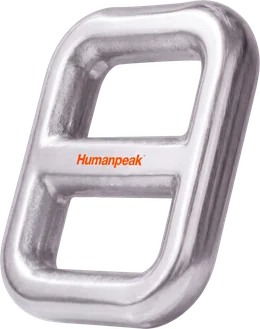
Humanpeak is not a maximal-strength program and does not present itself as one. Force is mass times acceleration: the 2.2 kg Humanpeak™ Movement Tool moved fast produces real force, and what follows is power, elasticity and force endurance rather than the tissue response a heavy barbell drives. The timeline above is the reason the 12-Week Movement Protocol runs for twelve weeks and not for four.
Built around fascial lines. 20 minutes per session, 5 times a week, guided step by step in the app.
Start the protocol 14-day money-back guarantee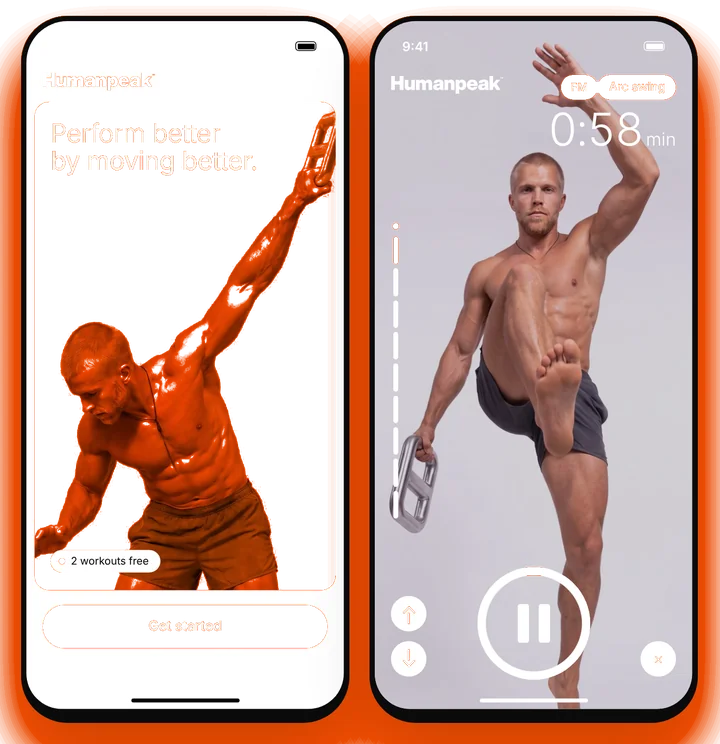
Months to years: the slowest layer
Bone runs the longest clock of all. A 2023 meta-analysis of randomized trials of moderate- to high-impact exercise reported intervention durations ranging from 10 weeks to 7 years, with fifteen of the included trials running longer than twelve months and only five shorter than six months. The effects that reached significance were small and site-specific: roughly 3.11 percent at proximal femur total density, 1.78 percent for mid and proximal radius cortical thickness, and 0.54 percent at distal tibia trabecular density, with no effect at several other sites [6].
That deserves to be stated plainly rather than dressed up. Structural change in dense tissue is slow, modest, and specific to where load was applied. It is a reason to hold a practice for years, not a promise for a season — the loading detail is unpacked in bone responds to load.
Why progress seems to stall around week four
There is a predictable dip, and it is worth naming before it arrives. The neural layer pays out fastest at the beginning and then flattens. The tissue layers have not yet produced anything a person can perceive. Nothing has gone wrong at that point: the fast clock has simply run down and the slow one has not finished its first turn.
The dip sits exactly between two bodies of evidence — the two-to-eight-week window in which tolerance and control improve [2][3], and the eight-to-twelve-week horizon at which muscle and tendon measurements begin to carry meaning [4][5]. It is also the most common moment for a practice to be abandoned, which is a scheduling problem disguised as a motivation problem.
The response is to change the marker, not the program. Ease in a position that used to require negotiation. Repeat quality on the fifth round rather than the first. Control at end range under load. How the body reads on the second morning after a demanding day. These move while the tissue-level numbers are still silent, and they are the honest evidence that the slow layers are being fed.
What the timeline means for your practice
If the layers adapt at different speeds, the dose question answers itself: the schedule has to outlast the slowest layer you actually care about.
Dose-response data give that schedule a usable shape. In a meta-analysis of balance training in healthy older adults, the largest improvements clustered around eleven to twelve weeks of training, three sessions per week, 36 to 40 sessions in total, and roughly 91 to 120 minutes per week [7]. A modest weekly total, held for a season. That is the profile of short, regular sessions, not of two heroic sessions.
- FOCUS: REGULAR DOSE
- DURATION: 20 MIN, 5× / WEEK
- HORIZON: 12 WEEKS
Tracking the right marker at the right time is what keeps expectations honest:
- Weeks 1 to 2 — positions are easier to find and transitions feel less hesitant. Neural.
- Weeks 3 to 8 — usable range increases and holds between sessions. Tolerance and control.
- Weeks 8 to 12 — capacity in end range improves and tissue measurements start to mean something.
- Beyond week 12 — tendon stiffness and, far more slowly, bone respond where they were loaded.
The World Health Organization frames the baseline the same way: any amount of physical activity is better than none, and all physical activity counts [8]. Adaptation is not gated by heroic intensity. It is gated by repetition across time. Consistent. Patient. Cumulative.
An honest timeline is not a softer promise. It is a more useful one. Expect control to change in days, usable range in weeks, muscle and tendon across months, and structural tissue over years — and expect the early wins to be real without being the whole story.
Nothing in that sequence is discouraging once it is named. It is the reason twenty structured minutes, five times a week, outperforms a burst of enthusiasm that ends in week three. Start where the fast layers are. Stay for the slow ones.
Fact check
Frequently asked questions
Humanpeak follows clear sourcing guidelines: we rely on peer-reviewed studies, scientific institutions and professional bodies, and aim for primary sources. Spotted an error? Write to us.
This article is for educational purposes only and does not replace medical advice. If you have symptoms, talk to a doctor.


