Foam Rolling Feels Good. Loading Is What Changes Your Fascia


Fascia isn't trained by rolling on it. It's trained by loading it.
Every athlete knows the ritual. A few minutes on the roller before practice, slow passes over the quads, a long pause on the spot that hurts. It feels like maintenance. It feels like you are doing something for the tissue.
You are doing something. Just not the thing the ritual promises. The roller changes how a region feels. It doesn't change what that region can carry, how it glides under load or how fast it returns force when you cut, jump or throw. That part needs movement.
Foam rolling gives a real but short-lived boost in range, mostly by changing what your nervous system reports, not by releasing tissue. Fascia adapts to load: it glides when it moves, and it learns the directions it is loaded in. Use rolling to prepare a session. Use loaded, multidirectional movement to change what your body can do.
What the roller actually does
Start with what holds up. A meta-analysis of 26 controlled trials found that foam rolling produced a large short-term gain in range of motion compared with doing nothing [1]. That effect is real, and it's why the roller has stayed in every warm-up area for twenty years.
The same analysis found something that gets mentioned less: compared with stretching, rolling showed no advantage at all [1]. Two tools, same short-term result.
And the way it works is different from the story on the packaging. A review in Sports Medicine looked at the idea that rolling breaks up adhesions or releases restricted fascia and found too little evidence for it. The authors concluded that calling a roller a self-myofascial release device is misleading [2]. What they found more plausible: pressure stimulates receptors in skin and fascia, turns down pain signals and lowers muscle tone for a short window [2]. Your nervous system lets you go further. The tissue is the same tissue.
That isn't a weakness. It's useful, as long as you know what you are buying.
Why the knot keeps coming back
More and more coaches describe a knot differently: not as a lump in the muscle, but as layers of fascia that no longer slide well over the muscle underneath, with movement as the way out. That picture gets the important part right.
Between deep fascia and muscle sits a thin layer rich in hyaluronan, a slippery molecule that lets the layers move across each other. Researchers who described this layer in human tissue suggest that when it packs more densely, the fascia and the muscle beneath it work less freely [5]. It is a model, and nobody has shown that every "knot" is the same thing. But it points in a clear direction. Glide is something your tissue keeps by moving, not something you press back into it.
Which explains the loop most athletes know. You roll the same spot, it feels free, and by the next session it's back. In one study, the gain in hip range was still there three minutes after rolling and gone by ten [3].
Pressing changes how it feels. Loading changes what you can carry.
More on the fluid side of fascia: fascia hydration.
Rolling, stretching and movement do three different jobs
Rolling and stretching sit on the same short timescale. Both give you range for the next few minutes [1]. Both can build range over time if you treat them as a program. Across 11 rolling training studies, programs longer than four weeks produced clearly better results than shorter ones, and rolling the calves didn't improve ankle range at all [4]. So rolling works like any other training input: programmed, repeated, given time.
Movement under load does a different job. It asks the tissue to produce force, absorb it and return it, in the positions your sport demands. That's the part neither the roller nor the stretch can deliver.
- Rolling changes what a region reports. For minutes.
- Stretching changes how far you tolerate going. For minutes, longer with programming.
- Loaded movement changes what the region can do. Over weeks and months.
Fascia carries force, so it needs load
Here is the part that matters for performance. Fascia doesn't just wrap your muscles. It transfers force.
In animal studies with the surrounding fascia left intact, the force measured at the two ends of the same muscle differed by up to about 23 percent. The connective tissue carried part of the load away to neighboring structures [6]. Roughly a fifth of your force is transmitted through connective tissue rather than the tendon, yet most training doesn't load that layer deliberately.
A layer that carries force adapts to how it is loaded. In the directions it is loaded, at the speeds it is loaded. A roller presses on it while you lie still. Your sport pulls on it while you rotate, brake and change direction at full speed.
Training builds the engine. Nobody trains the transmission. And no amount of rolling trains it either.
Your sport never asks for the same rep twice. Your training does. If your loading only ever goes up and down, the tissue learns up and down. Rotation, diagonals and quick reversals teach it the rest, so the strength you've built can travel through your body and into the ground. The elastic side of that story is in elastic recoil training.
Fascia makes up about a fifth of you. Our protocol trains it in every direction: 20 minutes, 5 times a week.
Start the protocol 14-day money-back guarantee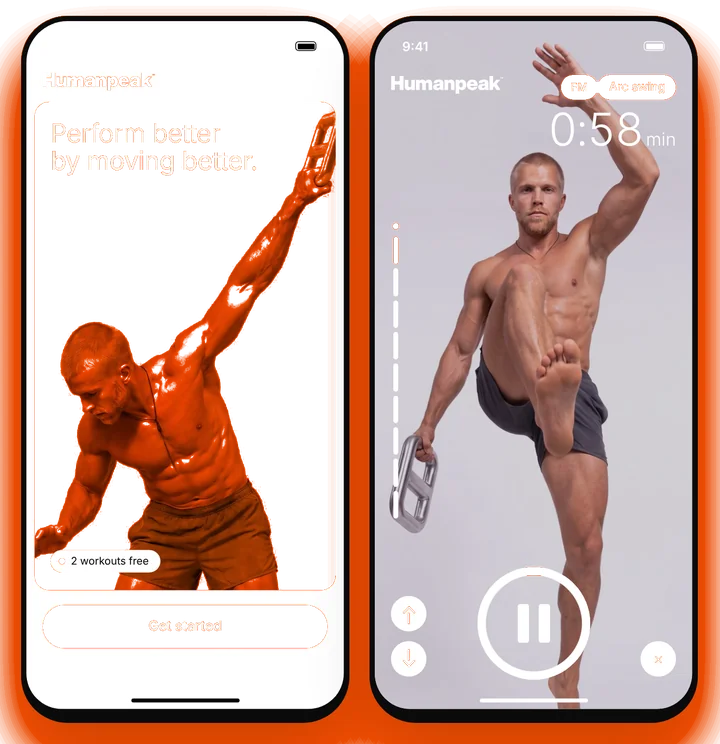
Where rolling still belongs
Nothing here says throw your roller away. Rolling before training raises your range for the session ahead [1]. If a few passes make a hip feel ready, that's a reasonable way to start. The same goes for massage, with the same limits: massage vs training.
The cost is the belief, not the roller. The belief that a tender spot is a fault in the tissue, and that pressing on it is the fix. That belief keeps athletes rolling the same spot for years while the capacity underneath stays exactly where it was.
Roll if it helps you start. Then put something into the window it opens.
How to build your week
Five principles carry most of the effect:
- Roll to prepare, not to train. About 60 to 90 seconds per area before the session, then move on.
- Use the window. Take the range you just gained straight into movement while it's there, so your body learns to control it under load.
- Every direction. Rotation, diagonals, lateral steps and changes of direction, because that is how your sport loads your fascia.
- Slow and fast. Slow reversals teach control in a position. Fast, rhythmic reversals load the spring.
- Regular and progressive. Connective tissue changes over weeks and months, not in one session. Short, frequent work with a clear progression beats the occasional long one.
How Humanpeak trains the layer rolling can't reach
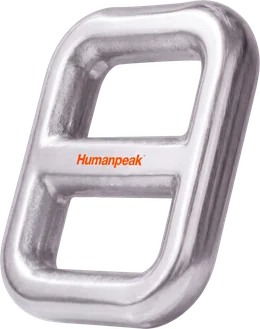
Humanpeak is built on the loaded side of this article. The 12-Week Movement Protocol runs 5 workouts per week, about 20 minutes each, in three phases: Restore, Build, Perform. You train with the Humanpeak™ Movement Tool (2.2 kg). Every flow combines mobility, control and targeted fascial loading through multidirectional movement, so your fascia gets the one thing a roller can't give it: load, in every direction.
It doesn't replace your training. Keep your strength work, and keep the roller if you like it. Humanpeak adds the layer in between, so the strength you've built actually transfers.
The principles behind Humanpeak are established training science. Studies on the specific tool are still to come.
Frequently asked questions
Humanpeak follows clear sourcing guidelines: we rely on peer-reviewed studies, scientific institutions and professional bodies, and aim for primary sources. Spotted an error? Write to us.
This article is for educational purposes only and does not replace medical advice. If you have symptoms, talk to a doctor.

Related articles


