Why You Wake Up Stiff: Stillness Is the Cause, Movement Is the Answer


You didn't stop training. You just stopped moving for eight hours.
You trained yesterday. You slept well. And the first minutes of the morning still feel like someone else's body: a back that doesn't want to rotate, hips that need a moment, calves that would rather not load yet. Then, once you're up and moving, most of it fades.
That pattern is the answer. Stiffness after a normal night isn't a sign that something is wrong. It is what stillness does to a system that is designed to be loaded, moved and turned in every direction. And if stillness is the cause, movement is the answer.
You wake up stiff because hours of stillness change how your body handles fluid and load. Your discs refill and resist bending, the layers of your fascia glide less freely, yesterday's hard session may still be in your legs, and your nervous system hasn't been asked for anything yet. Ordinary morning stiffness eases with movement. Getting warm and moving through range is what clears it.
Four things stack up overnight
Morning stiffness isn't one thing. It's several, and all of them answer to movement.
- Your discs refill. Lying down lets the discs in your spine take up water, which changes how your back handles bending [1].
- Your fascia glides less. The layer between fascia and muscle works best when it moves. Hours without movement leave it less ready [2].
- Yesterday's session. Hard braking work, like decelerating a sprint or landing a jump, leaves soreness that peaks a day or two later and takes some range with it [6].
- Your nervous system is still offline. Nothing has asked your body for balance, coordination or speed yet, so the first movements feel unfamiliar.
Your spine is fuller in the morning
Across a normal day, upright load slowly presses water out of the discs in your spine. Lying down reverses it. By morning the discs are at their fullest.
Researchers who reviewed these day-and-night changes describe what that means mechanically: the water content and height of the discs shift across the day, and so does how load is shared between disc, joints and ligaments. A fuller disc resists bending more than the same disc in the evening [1].
The practical read for athletes is simple. The first hour of the day is not the moment to test your deepest loaded forward bend. Rotation, easy range and gradual weight-bearing are better first questions for your spine.
Your fascia runs on fluid and movement
A popular way to describe the stiff morning is that fascia loses its glide overnight because it hasn't moved for hours, and that movement in the morning brings it back. That idea holds up, as long as you keep it at the level of glide and fluid.
Between deep fascia and muscle, and between the layers of fascia itself, sits a thin layer rich in hyaluronan. It lets the layers slide across each other. Researchers who described it in human tissue suggest that when this layer packs more densely, the fascia and the muscle beneath it work less freely [2]. Movement keeps it working. Stillness lets it settle.
There is also a fluid side to the story. In a lab study, isolated fascia from pigs and mice was stretched and then left to rest. During the stretch, fluid was pressed out of the tissue. During rest it flowed back in, and with enough rest the tissue ended up holding more water than before, and it was stiffer, not softer [3]. That was animal tissue outside the body, so it shows a mechanism, not a measurement in a living athlete. But it describes something athletes feel every morning: load and release move fluid through your fascia, and the tissue answers by getting ready to carry load.
What matters for you isn't how much water you went to bed with. It's whether the fluid in your tissue is moving. That's what we mean when we say rehydrate and mobilize your fascial system: load, release and move, so fluid and glide keep working. Hydrated doesn't mean soft. It means ready.
More on that in fascia hydration.
Why the morning after a hard session is worse
If your stiffest mornings come after your hardest days, that's not a coincidence. Braking a sprint, landing a jump and decelerating into a cut are all eccentric work: the muscle lengthens while it's under load. That kind of work produces soreness that peaks a day or two later, and with it comes less range and altered muscle timing [6].
The same review points to what helps most while you're sore: movement. Exercise was the most effective way to ease the pain, even if the relief is temporary [6]. So the morning after a heavy braking day, the first minutes should restore range and coordination before anything fast.
Fascia makes up about a fifth of you. Our protocol trains it in every direction: 20 minutes, 5 times a week.
Start the protocol 14-day money-back guarantee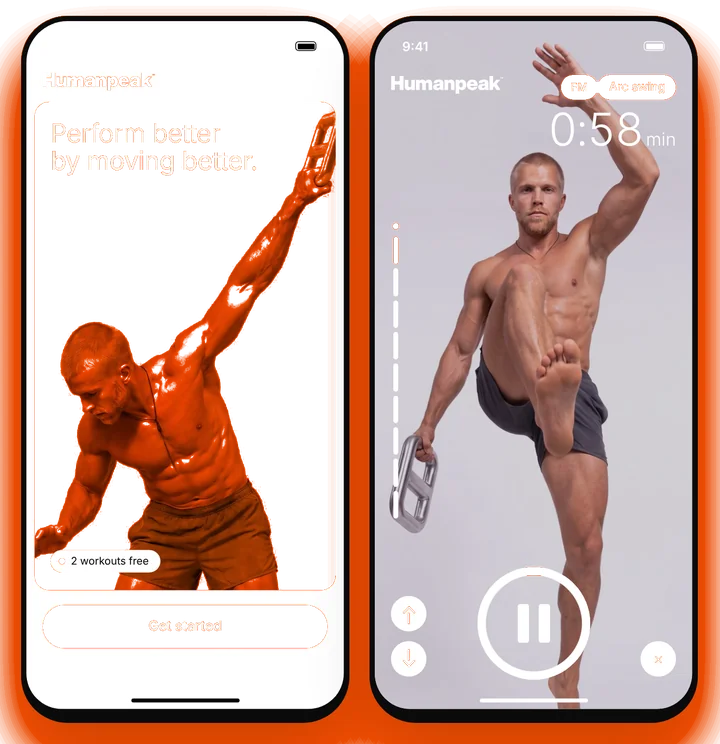
Feeling stiff isn't the same as being stiff
Here is the finding that changes how you read your mornings. In three experiments, people with back pain who described their backs as stiff were not measurably stiffer than people who didn't. What they showed was a protective pattern: they overestimated the force pressing on their spine. And when a sound was played in sync with the pressure, their sense of how stiff their back felt changed, while the actual stiffness stayed the same [4].
The researchers read the feeling of stiffness as a protective guess by the nervous system. The study looked at people with chronic back pain and the groups were small, so take the mechanism, not a diagnosis. But the message for athletes is useful: the sensation is real, and it's information about your system, not a caliper reading of your tissue. It also explains why a morning can feel rigid and ease within minutes. The best way to change that guess is better input, and better input is movement. More on reading those signals: pain does not equal damage.
Movement is the active ingredient
Rollers, massage guns and stretching routines are all sold as the answer to a stiff morning. The research points somewhere simpler. A meta-analysis of 38 studies with 1,134 participants compared stretching and foam rolling with other warm-ups, such as cycling, walking or strength work. For short-term range and stiffness, rolling and stretching did no better [5]. The certainty of the evidence is low to moderate, and the authors say so.
Read that the right way. Rolling isn't useless, and the relief it gives is real. It just isn't special. Getting warm and moving through range is what does the work, so choose the version that also builds something: control, coordination and capacity you keep. More in foam rolling vs movement.
Pressing changes how it feels. Loading changes what you can carry.
The first minutes
Before you pick up your phone, give your body better input than stillness. This is reasoning from the studies above, not a tested routine:
- Lying down: let your knees drop slowly from side to side, ten easy reps, so your spine rotates before it bends.
- Sitting: hip circles in both directions, then ankle circles and a few seconds of pressure through the ball of each foot.
- Standing: two minutes of easy movement in every direction. Reach, rotate, squat to a comfortable depth, walk.
- Save the deep end for later. Loaded forward bends and max range belong in the session, once you're warm.
- Repeat it. Most mornings, every week. Consistency carries the effect, intensity doesn't.
If morning stiffness lasts well beyond half an hour, morning after morning, wakes you in the second half of the night or comes with a swollen joint, get it checked by a physician. Acute? Calm it down first. Then build.
How Humanpeak trains the morning you want
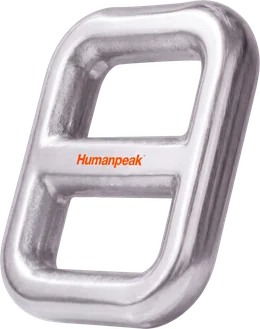
The logic of the first minutes scales up. The 12-Week Movement Protocol runs 5 workouts per week, about 20 minutes each, in three phases: Restore, Build, Perform. Phase 1 starts exactly where a stiff morning starts: rehydrate and mobilize your fascial system, restore usable range of motion and improve control through key joints. You train with the Humanpeak™ Movement Tool (2.2 kg). Every flow combines mobility, control and targeted fascial loading through multidirectional movement.
Your body is a connected system that stores, transfers and expresses force. Move it that way, regularly, so the range and glide you win become capacity you keep. Humanpeak sits on top of the training you already do.
The principles behind Humanpeak are established training science. Studies on the specific tool are still to come.
Frequently asked questions
Humanpeak follows clear sourcing guidelines: we rely on peer-reviewed studies, scientific institutions and professional bodies, and aim for primary sources. Spotted an error? Write to us.
This article is for educational purposes only and does not replace medical advice. If you have symptoms, talk to a doctor.

Related articles


