Fascia Hydration: How Load and Release Keep Your Fascia Gliding


Your fascia is full of water. Movement is what moves it.
You know the feeling. A hip that feels stuck after a long drive. A calf that feels like one big knot after weeks of the same drill. You press on it, roll it, stretch it, and it feels better for a while. Then it comes back.
Most of that gets blamed on the muscle. Researchers think part of it sits between the muscle and the tissue around it, in a thin layer that is supposed to glide [1]. Too little movement lets that layer settle. The same movement over and over keeps loading the same spots. What keeps it working is what your sport asks for anyway: varied movement, in every direction, loaded and released.
That is what we mean when we say the 12-Week Movement Protocol rehydrates your fascia.
Rehydrating your fascia means moving fluid through it. Loading fascia presses fluid out, releasing it lets fluid return, and in lab tissue it came back above its starting level. A thin, water-binding layer between fascia and muscle keeps your layers gliding, and movement keeps that layer working. You can't measure the water in your own fascia. You can feel the result: freer rotation, more usable range, a lighter first step.
What does fascia hydration mean?
Fascia hydration covers two things that matter for an athlete.
- Fluid flow. How fluid is pressed out of the tissue under load and drawn back in during release.
- Glide. How easily neighboring layers slide over each other when you rotate, reach or decelerate.
Both depend on movement. Both show up in how you move. When you cut, the tissue around your ankle and knee has to slide and carry load at the same moment. When you rotate to throw, layers across your back and hips move against each other. Glide is part of how a connected system moves without the same spot taking all the friction.
Where the water sits
Much of the water in fascia is held by hyaluronan, a long sugar molecule that binds water far beyond its own weight. It forms a slippery layer exactly where fascial sheets meet muscle and where the layers of deep fascia meet each other. Researchers who described it in human tissue put it plainly: this layer lets the fibrous layers slide freely over one another [1].
The amount isn't the same everywhere, and the pattern is the best part of the story. Measured directly in human fascia, hyaluronan reached about 90 micrograms per gram in the bands around the ankle, about 35 in the fascia of the thigh and about 6 in the fascia over the trapezius and deltoid [3]. The tissue that has to slide the most carries the most lubricant.
Read that as a map of demand. The ankle is where every sprint start, landing and cut meets the ground, in every direction. The tissue there is built to glide.
Load and release: the sponge effect
The sponge image comes from a lab experiment. Researchers held isolated fascia from animals under a stretch for 15 minutes and then let it rest. Under the stretch, the tissue lost fluid. During rest, it took fluid back up. With enough rest, it overshot: it ended up holding more water than at the start [2].
Load out. Release back. A little extra on top. That is the core of fascia hydration, and it is why loading and unloading rehydrate your fascial system.
The same experiment adds a detail that matters for sport. The extra water came together with higher stiffness [2]. More water, stiffer tissue. That's good news for an athlete. Softer was never the goal. A cut, a throw and a landing all need tissue that responds to load and passes it on. Hydrated fascia glides where it should and carries force where it should.
This was tissue on a lab bench, not a living athlete, and the fluid shift played out over minutes. So it describes a response you repeat, not a fix you get once.
Stillness and sameness both cost glide
The glide layer responds to what you do with it. A review of the research describes movement as stimulating the production and turnover of hyaluronan, while immobility can make it thicker and reduce how well the layers of fascia and muscle slide [4].
It works the other way too. After intense exercise, acidity inside a muscle can rise far enough to make hyaluronan about 20 percent more viscous, which the review links to a feeling of short-term stiffness [4]. So the same hip can feel different after a long drive, after an easy session and after a very hard one.
Put together, that points in one direction. Too little movement lets the layer settle. Repeating the same pattern over and over keeps stressing the same spots. Varied, moderate movement in many directions gives every layer its share of load and release. Repetition builds patterns. Variation builds adaptability.
More on the morning version of this in why you wake up stiff.
Fascia makes up about a fifth of you. Our protocol trains it in every direction: 20 minutes, 5 times a week.
Start the protocol 14-day money-back guarantee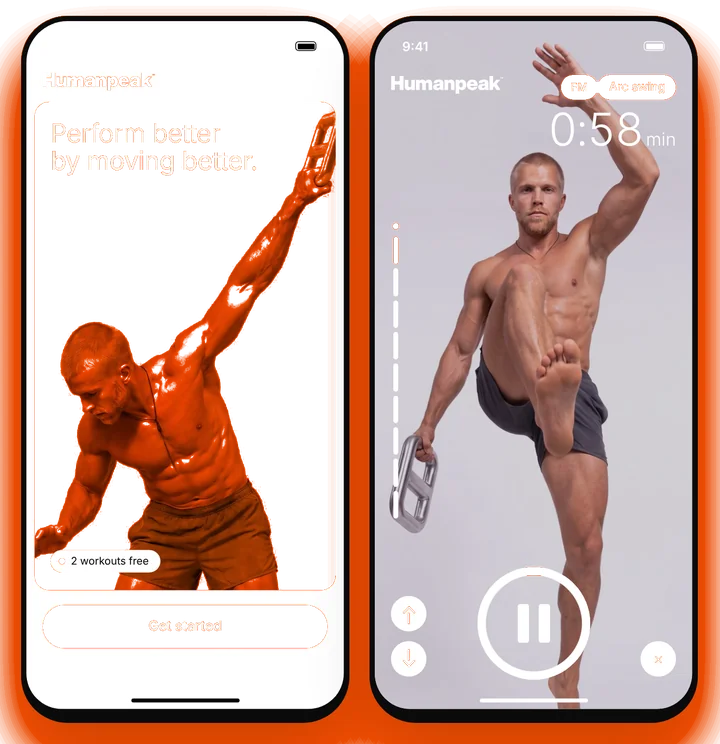
Water in, movement through
Drinking enough matters. Water makes up roughly 70 to 75 percent of your fat-free mass, and your body keeps that balance tightly in check through thirst and the kidneys [5]. Being well hydrated is the baseline for every session.
Your body decides where that water goes, though, not your bottle. Drinking keeps the whole system supplied. Loading and releasing the tissue is what moves fluid through your fascia and keeps its layers gliding. You need both. Only the second one is training.
How to train for hydrated fascia
You can't measure the water in your own fascia. You can feel what it does: how freely you rotate, how much range you can use, how the first cut of a session feels. Loaded range counts here too. A meta-analysis of 55 studies found resistance training improved range of motion as much as stretching did [6]. Mobility only counts when you can control and load it.
Five principles follow:
- Load and release. Rhythmic movement that loads tissue and lets it go, instead of holding one position.
- Full range. Move through all the range you have, not only the short middle where most training lives.
- Every direction. Rotation, diagonals and changes of direction, so every layer gets moved against its neighbors.
- Repeat across the week. Short, frequent sessions give your tissue repeated cycles of load and release.
- Leave room for recovery. In the sponge experiment, the return phase was part of the response, not a gap in it [2].
How Humanpeak trains this
Phase 1 of the 12-Week Movement Protocol is called Restore, and its first goal is to rehydrate and mobilize your fascial system. In practice, that means repeated cycles of loading and releasing tissue, in many directions and through full range, so the layers that should glide get moved and the range you have becomes range you control. Build then develops movement capacity and multidirectional control under progressive load. Perform turns it into speed, elasticity and efficient force transfer.
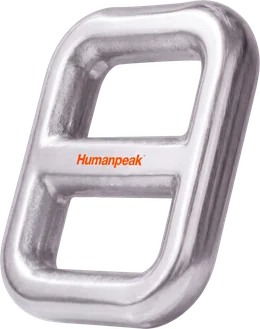
The protocol runs 5 workouts per week, about 20 minutes each. You train with the Humanpeak™ Movement Tool (2.2 kg). Every flow combines mobility, control and targeted fascial loading through multidirectional movement, as a layer on top of the training you already do.
The principles behind Humanpeak are established training science. Studies on the specific tool are still to come.
For the tissue itself, read what fascia is.
Frequently asked questions
Humanpeak follows clear sourcing guidelines: we rely on peer-reviewed studies, scientific institutions and professional bodies, and aim for primary sources. Spotted an error? Write to us.
This article is for educational purposes only and does not replace medical advice. If you have symptoms, talk to a doctor.

Related articles


