The Thoracolumbar Fascia: Where Every Throw and Swing Changes Sides


Your lower back isn't built to avoid rotation. It's built to carry it.
Every throw, every golf swing, every cut off the outside foot runs through one sheet of tissue. The back hip drives, the pelvis turns, the opposite shoulder finishes. Between them, across your lower back, sits the thoracolumbar fascia, the place where force from your legs changes sides on its way to your arms.
When the lower back feels tight or sore, the natural reaction is to protect it. Brace, stay square, stop twisting. For a short time, that can make sense. Over months, it leaves the tissue that is built for rotation without the load it needs to stay capable.
The thoracolumbar fascia is a large, layered sheet of connective tissue across the lower back. It connects the pelvis, spine, abdominal wall and shoulder girdle, carries tension between the hips and the opposite arm, and is densely supplied with sensory nerves. For athletes, it is the crossing point of every rotation, and it gets more capable when you load it, in every direction, step by step.
What is the thoracolumbar fascia?
The thoracolumbar fascia covers your lower back in several layers. The outer layer is formed largely by the broad tendon sheet of your lat. A deeper layer wraps the muscles along your spine like a sleeve. At the side, a dense seam collects tension from the abdominal muscles and feeds it into the sheet [1].
What makes the structure interesting is where it ends. At the base of the lumbar spine, the layers fuse into a thick composite that anchors firmly into the back of the pelvis and into a strong ligament that runs from the sacrum to the sitting bone [1]. The sheet doesn't fade out at your waistline. It ends on the same bony landmarks your hip muscles use.
Researchers also describe the sleeve around your spinal muscles as a kind of hydraulic amplifier. When those muscles contract, they widen, the sleeve resists, and the tension adds support to the lower spine [1]. It is a model built from anatomy, not a measurement taken during sport. But it shows that this tissue is part of how your back produces stiffness, not just a wrapper around it.
The crossroads between hip and opposite shoulder
Your lat feeds into the upper part of the sheet. Your glute tensions it from below. Arm muscle and hip muscle end in the same tissue.
Dissection research shows what happens when they pull. Traction on the lat, the glute and the back extensors each tensioned the same layer, and below the lower lumbar spine that tension crossed to the opposite side [2]. The authors described an integrated system between spine, pelvis, legs and arms [2]. Your glute and your opposite lat form a diagonal across the back, and the thoracolumbar fascia is where they meet. That diagonal is called the posterior oblique sling.
The crossing has been tested in living people. In 37 participants, contracting the lat shifted the resting position of the opposite hip and increased its stiffness [3]. The effect is modest and was measured in the lab. Still, it shows that load arriving at one side of the sheet shows up on the other.
The missing fifth
Here is why the sheet matters for performance. Force doesn't only travel from a muscle into its own tendon. In animal studies with the surrounding fascia intact, the force at the two ends of the same muscle differed by up to about 23 percent, with the difference leaving through the connective tissue [4].
Roughly a fifth of your force is transmitted through connective tissue rather than the tendon, yet most training doesn't load that layer deliberately. The thoracolumbar fascia is where you can see that principle at full size: a sheet arranged to take force from the hip and hand it to the opposite arm.
Train the hips and shoulders as if they had nothing to do with the back, and the tissue connecting them never sees the diagonal, rotational load it is built for.
A sheet that senses
Fascia is not just packing material. A systematic review of 23 studies on how fascia is supplied with nerves found mainly two kinds of nerve endings: ones that report position and movement, and ones that report threat [5]. The thoracolumbar fascia carries both.
The first kind matters for training. A sheet that stretches every time your hip extends against the opposite shoulder is a sheet that reports on that movement. That sensory feedback is part of how your body learns to organize rotation, and every well-controlled rep gives it something clear to report. More on that in fascia is a sensory organ.
The second kind is why researchers study this sheet in the context of back pain. Its sensitivity is real. It is also a reason to load it with care and progression, not a reason to stop loading it.
Fascia makes up about a fifth of you. Our protocol trains it in every direction: 20 minutes, 5 times a week.
Start the protocol 14-day money-back guarantee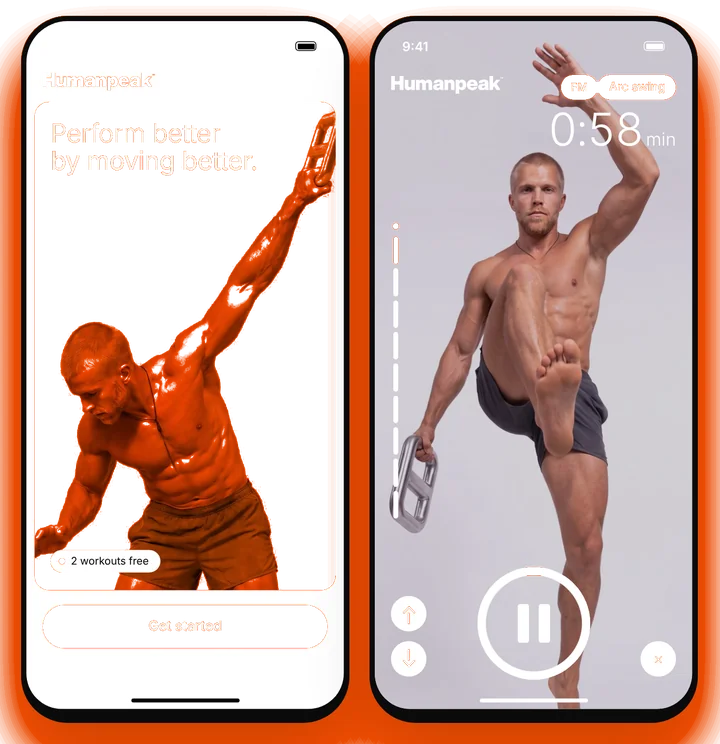
Why avoiding rotation isn't the answer
The tissue responds to how you use it. In one study, runners and non-runners both showed the link from lat to opposite hip, but the runners' lower backs stiffened more under the same contraction [6]. The pathway is the same in everyone. What changes with use is how the tissue handles load.
That cuts both ways. Your pain comes from a lack of movement. As range, speed and elastic movement start to slip, your body has fewer ways to absorb and distribute load. The same areas take over again and again. A back that only ever stays square never gets the rotational load it is arranged for.
Rest, massage and rolling can calm a sore back, and that relief is real. Pressing changes how it feels. Loading changes what you can carry. Fascia isn't trained by rolling on it. It's trained by loading it.
If pain is sharp, new or runs down your leg, see a physician or a physical therapist first. Acute? Calm it down first. Then build.
How to load your thoracolumbar fascia
Five principles carry most of the effect:
- Control before range. Start with slow, controlled rotation in a range that feels easy. Own the position before you ask more of it.
- Hip extension with the opposite reach. Extend one hip while the opposite arm reaches or pulls. That loads the sheet from both corners, the way a throw, a swing or a sprint stride does.
- Rotate and brake. Let the trunk turn, then stop it under control. The stop is where the sheet is tensioned hardest.
- Open the overhead range. Your lat feeds the sheet, so shoulder range and lower-back tension belong together. Train the reach overhead and behind you.
- Progress slowly and stay regular. Add range first, then load, then speed. Connective tissue adapts over weeks and months, so short, frequent sessions beat the occasional hard one.
How Humanpeak trains the crossroads
The 12-Week Movement Protocol is built around fascial lines and loads the diagonal across your back in nearly every session. It runs 5 workouts per week, about 20 minutes each, in three phases. Restore brings back the hip extension and overhead range the diagonal depends on. Build loads it in rotation. Perform makes it fast and elastic.
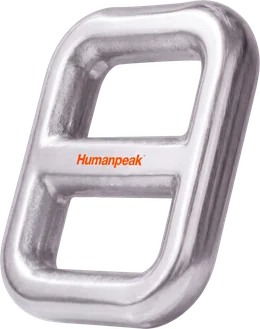
You train with the Humanpeak™ Movement Tool (2.2 kg). Its mass sits off-center, so every arc from one hip toward the opposite shoulder creates a pull that changes direction during the movement. Your hip, your lower back and your shoulder have to organize against it together, and when your alignment is off, you feel it in that rep. Every flow combines mobility, control and targeted fascial loading through multidirectional movement to train your body as one connected system.
It doesn't replace your training, and it doesn't replace treatment. It rebuilds the movement capacity your back needs to carry rotation.
The principles behind Humanpeak are established training science. Studies on the specific tool are still to come.
Frequently asked questions
Humanpeak follows clear sourcing guidelines: we rely on peer-reviewed studies, scientific institutions and professional bodies, and aim for primary sources. Spotted an error? Write to us.
This article is for educational purposes only and does not replace medical advice. If you have symptoms, talk to a doctor.

Related articles


