Fascia Is a Sensory Organ: Your Body Feels Every Rep


Your fascia doesn't just hold you together. It reports back.
Every time you land, rotate or brake, the connective tissue around your muscles stretches, shears and slides. And it isn't silent while it does that. It is wired with nerve endings that turn those changes into signals for your nervous system. That is why fascia can feel tight, why it can hurt, and why the way you load it changes how movement feels.
You'll often hear fascia called the body's largest sensory organ. What research clearly shows is the core of that idea: fascia is a densely innervated sensory tissue, and an active part of how you feel and control movement.
Fascia is densely innervated with endings that sense load, stretch and pressure, and endings that signal threat. That makes it a sensory tissue that contributes to how you feel and control movement, and one that can generate pain. What athletes can train is how the nervous system uses that signal.
What makes fascia a sensory organ?
A sensory organ turns physical events into nerve signals. Fascia does exactly that. The most complete map so far, a systematic review of 23 anatomical studies in humans and animals, concluded that fasciae are well innervated, with a particular distribution and location, and that the nerve supply consists especially of endings for position and movement and endings for threat and pain [1]. They range from simple free nerve endings to specialized receptors that respond to pressure, vibration and sustained stretch [1].
The wiring differs from region to region. In the low-back fascia, researchers found free nerve endings only, no specialized receptors. But many of those free endings have a low mechanical threshold, so they react to ordinary load [2]. They can report movement, not just damage.
The low-back fascia shows one more thing. A large share of its nerve fibers belongs to the autonomic nervous system: in rat tissue, about 40 percent of the nerve supply was estimated to be sympathetic, and most of those fibers likely regulate blood flow [2]. So your fascia is wired into more than movement. It is also part of how your body manages its own circulation.
What your fascia senses when you move
Think of fascia as a sensor layer that wraps every muscle and runs between them. When you move, it deforms. It stretches when you reach, shears when you rotate, compresses when you land. The endings inside it respond to that deformation and send a steady stream of information to your spinal cord, alongside what your muscles, joints and skin already report.
Movement creates the signal. Little movement, little signal. One direction, one kind of signal.
That is the link to training. If your sessions only ever load your body in straight lines, up and down, forward and back, your nervous system only ever gets information from those lines. Your sport asks for more: rotation, diagonals and sudden changes of direction, and every one of them sends a different message through the tissue.
Isolated movement trains a muscle. Interconnected movement trains the chain.
How this sensory side of fascia feeds your sense of position is covered in fascia and proprioception.
Why fascia can hurt
Sensing load is one job. Signaling threat is the other, and here the research is clear: fascia can be a source of pain.
In a study with 12 healthy people, researchers injected a small dose of salt solution, a standard way to create brief, harmless pain, into three layers of the low back: the tissue under the skin, the back muscle and the fascia between them [3]. The fascia injections produced pain that lasted longer, spread further and felt more unpleasant than the same injection into the muscle. The authors concluded that the thoracolumbar fascia is the deep tissue of the back most sensitive to this kind of chemical stimulation [3]. More on that tissue in the thoracolumbar fascia.
Then there is a finding every athlete will recognize. After eccentric training, the braking work that leaves you sore two days later, researchers tested where that sensitivity sits [4]. A day after training one leg, a painful injection at the level of the fascia of the trained muscle hurt more than any other injection, including the same one on the untrained leg. Deep in the muscle itself there was no difference between the legs. A parallel animal experiment found that the nerve endings at the trained site had become more sensitive [4]. The study was small, but it suggests that part of what you feel after hard braking work sits in the connective tissue around the muscle.
What this means for you: when something feels tight or sore, fascia may be part of the story. It is rarely the whole story. How much something hurts depends on how your nervous system weighs everything it receives.
Your pain is a warning. Not a verdict. It says your body is carrying more than it can carry right now.
Pressing, stretching, loading
Rolling, massage and stretching put pressure and stretch on that sensor layer, and that can feel genuinely good. Tissue feels looser, soreness eases for a while. That relief is real, and treatment has its place, especially when something is acute.
But a sensory signal is information, and information changes what you feel, not what you can carry. If you want your body to handle more load in more directions, it has to experience that load. Pressing changes how it feels. Loading changes what you can carry.
Treatment gives you your movement back. Capacity lets you keep it.
More on that difference in foam rolling vs movement.
Fascia makes up about a fifth of you. Our protocol trains it in every direction: 20 minutes, 5 times a week.
Start the protocol 14-day money-back guarantee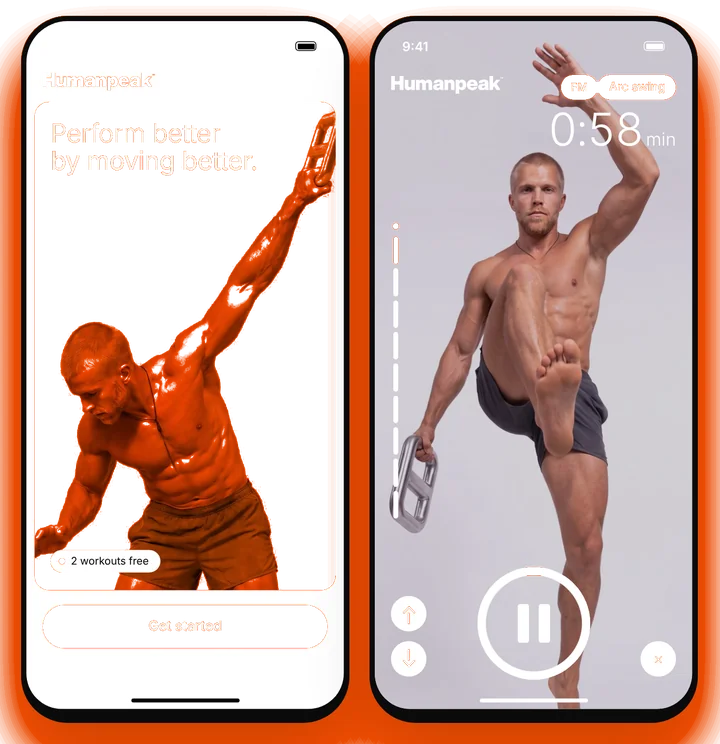
Train the reading, not the receptors
Can you train the nerve endings in your fascia? So far, no study has shown that. What is well established is the other side of the loop: how your nervous system reads the signals it already gets, and how quickly it turns them into a clean landing, a sharp cut or a well-timed throw. That is motor learning, and it responds to practice.
Two findings point the way.
Focus outside your body. Across 73 studies on performance and 40 on learning, focusing on the effect of the movement or on an object, the ball, the target, the tool in your hands, beat focusing on your own body parts. It improved performance, retention and transfer to new tasks, and in the studies that measured it, muscle activity was more efficient [5]. Your body organizes the signal better when you give it a problem outside the body to solve.
Vary the task. A meta-analysis of 34 studies found that varied practice transferred better to new tasks than repeating one drill in blocks. The effect was clear in the lab and smaller and less certain in applied sport settings [6]. The direction still fits what athletes know. Your sport never asks for the same rep twice. Your training does.
How to train with a sensory system in mind
Five principles carry most of the effect:
- Move to create the signal. Active movement through range, under load, gives your fascia something to report.
- Load every direction. Rotation, diagonals, lateral steps and turns send signals that straight-line training never produces.
- Look outside your body. Put your attention on the tool, the ball or the target [5].
- Change the problem. Vary angle, grip, tempo and direction, so your nervous system learns to adapt instead of repeat [6].
- Respect the warning. Irritated fascia becomes more sensitive [1][2]. Build load progressively. Acute? Calm it down first. Then build.
How Humanpeak trains the sensory layer
The 12-Week Movement Protocol runs 5 workouts per week, about 20 minutes each, in three phases: Restore, Build, Perform. Every flow combines mobility, control and targeted fascial loading through multidirectional movement.
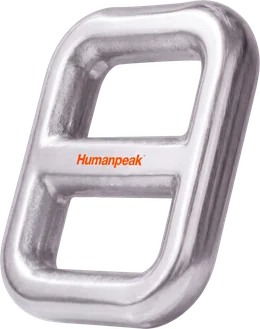
You train with the Humanpeak™ Movement Tool (2.2 kg). Its offset mass keeps pulling after you accelerate it, and the direction of that pull changes through the movement. So every rep sends a slightly different signal through your fascia, and every rep tells you right away whether the force traveled cleanly through the chain. Your attention stays on the tool. Your body sorts out the rest.
It doesn't replace your training or your treatment. It adds the layer they leave out: load in every direction, so your body learns to read and use what it senses.
The principles behind Humanpeak are established training science. Studies on the specific tool are still to come.
Frequently asked questions
Humanpeak follows clear sourcing guidelines: we rely on peer-reviewed studies, scientific institutions and professional bodies, and aim for primary sources. Spotted an error? Write to us.
This article is for educational purposes only and does not replace medical advice. If you have symptoms, talk to a doctor.

Related articles


