Your Sport Never Asks for the Same Rep Twice: Why Variable Movement Builds Better Athletes


Your sport never asks for the same rep twice. Your training does. That contrast sits at the center of a reel that keeps circulating among athletes: a "multidimensional workout" that moves through every plane instead of repeating one isolated exercise for sets of ten. Next to it runs a popular line you have probably seen too: repetitive isolated movement is a one-way street to dysfunction.
Millions of athletes watched, saved and shared these clips. They recognize something in them. The squat went up, the bench went up, and the first step in the game, the cut, the brake before the rebound, didn't follow.
This article checks the idea against the research. What does your sport actually demand? Does repetition really fail to prepare you for it? Is variable practice a better teacher, and how much better? And where does the claim overreach? Every statement carries its evidence tier: Established, Supported or Emerging. Where the evidence stops, we say so.
Your sport is a stream of changing problems: thousands of accelerations, decelerations, turns and reactions per game, no two of them identical. Strength built through repeated, mostly sagittal lifts is the base, but research shows it doesn't automatically transfer to changes of direction. Variable, multidirectional practice teaches the nervous system to solve new movement problems, and it improves transfer in controlled studies. So the answer is not to stop repeating. It is to stop only repeating.
What does your sport actually ask your body to do?
Start with the data, because it is more extreme than most training plans assume.
A systematic review of 81 time-motion studies across soccer, basketball, handball, field hockey, futsal and volleyball found that athletes change activity between 500 and 3,000 times over the course of a competition, roughly once every 2 to 4 seconds [1]. Soccer studies reported up to 800 cuts per game. Basketball studies reported up to 450 lateral movements per game. Those are upper values, not averages, but even the lower end describes a body that is constantly switching task.
Direction matters as much as frequency. In an analysis of 55 English Premier League players, only 48.7 percent of purposeful movement time was spent moving directly forward [2]. The rest went backward, sideways, diagonally, in arcs, or holding position. The players performed the equivalent of 726 turns per match. Most of those turns, 609 on average, were small, between 0 and 90 degrees. That detail is the point: a match is not a few big direction changes. It is hundreds of small reorientations, each one a slightly different load on ankle, knee, hip and trunk.
Then there is braking. A meta-analysis of GPS data from elite male team sports compared high-intensity accelerations with high-intensity decelerations [3]. In six of seven sports, decelerations were more frequent than accelerations. Only American football went the other way. Soccer showed the largest gap. Your sport spends at least as much effort stopping force as starting it, and every stop arrives at a different angle and speed.
Put the three findings together and you get a clear picture. The demand is multidirectional, high-frequency and variable. No two cuts, no two landings and no two decelerations are identical.
Does repeating the same lift prepare you for that?
Partly. This is where the honest answer matters, because the viral version tends to skip the first half.
Strength is the foundation. Without force capacity, there is nothing to transfer. Lifting builds that capacity better than anything else, and nothing in this article argues against it. The question is narrower: does strength built in one pattern show up in a different pattern on its own?
The most useful review on this question looked at change of direction ability and its relationship to strength and power [4]. Two findings stand out. First, no strength or power measure correlated with change-of-direction performance on a consistent basis, and most correlations were small to moderate. Second, training studies built on traditional programs, exercises performed bilaterally in the vertical direction such as squats, deadlifts, Olympic-style lifts and vertical jumps, mostly failed to improve change-of-direction performance. The programs that did improve it used movements closer to the demand: horizontal and lateral jumps, unilateral work, change-of-direction drills.
A classic training study makes the same point from the speed side [5]. Thirty-six men trained twice a week for six weeks, either with straight sprints or with change-of-direction sprints. Straight sprint training improved straight sprinting but produced limited gains in the agility tests. The more complex the change of direction, the less transfer. Agility training improved the change-of-direction tests but not the straight sprint. Each method improved what it practiced, and little else.
That is specificity, one of the oldest principles in training science. Your body adapts to the pattern, the direction and the speed you train. Lift in one plane, and you get strong in that plane. Your sport then asks for the force in a different one.
| WHAT THE CLAIM SAYS | WHAT THE RESEARCH SHOWS |
|---|---|
| Sport moves in every direction | 500 to 3,000 activity changes per game [1]; less than half of purposeful movement straight forward [2]. Established |
| Repeating one isolated exercise doesn't prepare you | Traditional vertical, bilateral programs mostly failed to improve change of direction; specific programs did [4][5]. Supported |
| Variable training builds better movement | Mixed practice improved transfer in a meta-analysis; medium effect in the lab, small and not significant in applied settings [9]. Supported, with nuance |
| Repetitive isolated movement leads to dysfunction | Lower movement variability is linked with pain, and pain reduces variability; cause and effect is not proven [7][8]. Emerging |
| Stop doing isolated exercises | Not supported. Strength remains the base; the gap is in transfer, not in lifting [4]. Corrected |
Why is good movement never the same twice?
Here the reel's intuition turns out to have a long scientific history.
The Russian physiologist Nikolai Bernstein recorded professional blacksmiths striking a chisel with a hammer. The hammer's path was remarkably consistent from strike to strike. The joint angles of the arm that swung it were not. Shoulder, elbow and wrist combined differently every time, yet they produced the same result. Bernstein called it "repetition without repetition" [6].
Modern motor control research has turned that observation into a framework. Your body has far more joints and muscles than any single task needs. For decades this was framed as a problem the nervous system had to solve by eliminating options. The current view, summarized by Mark Latash, flips it: the extra options are an asset, not a problem [6]. Skilled performers show large amounts of what researchers call "good variance," variation in how the joints combine that does not change the outcome. That variance lets the system absorb unexpected perturbations and handle secondary tasks without losing the main one.
Translate that to sport. A great point guard doesn't run the same crossover twice. A striker doesn't plant the same way before every shot. Their outcome is consistent because their solutions are flexible. The skill is not the pattern. It is the ability to find a working pattern under changing conditions.
Does variable practice actually beat repetition?
This is the claim most worth checking, because "variety" is easy to sell and harder to prove.
Motor learning researchers have tested it for decades under the name contextual interference. In blocked practice, you repeat one task many times before moving to the next. In random or variable practice, tasks are mixed so that no two attempts in a row are the same. Blocked practice usually looks better during the session. The question is what remains afterward, and whether it transfers to a new task or context.
A 2024 systematic review and meta-analysis pooled the transfer data: 42 studies in the review, 34 in the meta-analysis [9]. Overall, mixed practice beat blocked practice on transfer with a medium effect size. In laboratory studies, the effect was medium and statistically significant. In applied settings, closer to real sport, the effect still favored mixed practice but was small and not statistically significant.
That is the honest version. Variable practice improves transfer in controlled conditions. In the messy reality of a sports season, the advantage is smaller and not yet secured. It points the right way. It is not magic.
A second body of research adds a piece the variety argument often misses: where your attention goes. A large set of meta-analyses compared an external focus, attention on the effect of the movement or an object, with an internal focus on body parts [10]. Across 73 studies on performance and 40 on learning, external focus won for performance, retention and transfer, with more efficient muscle activity on EMG. Athletes learn faster when they organize around a result in the world, not around a joint angle.
Combine the two and you get a precise recipe. Practice that changes from rep to rep, organized around an external target, is the condition under which motor learning transfers best.
Built around fascial lines. 20 minutes per session, 5 times a week, guided step by step in the app.
Start the protocol 14-day money-back guarantee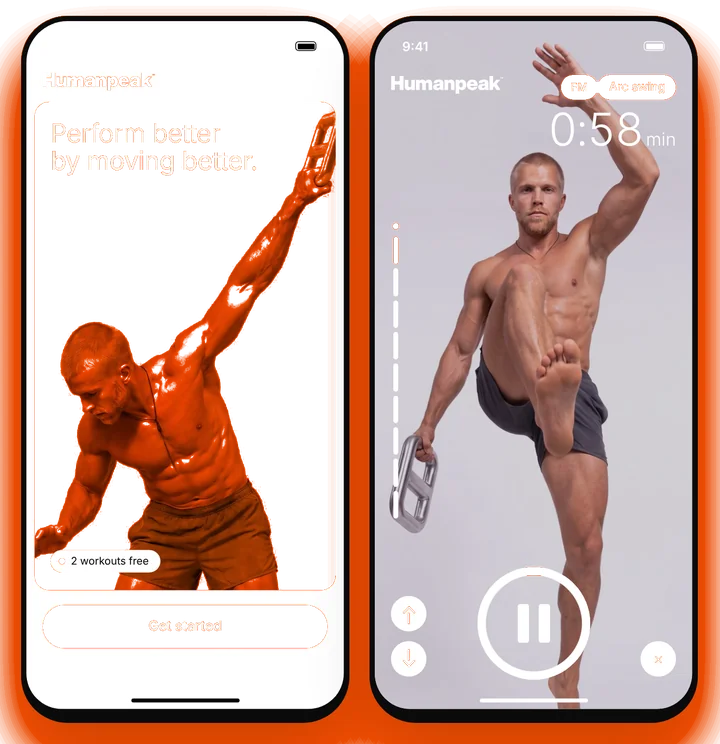
Is repetitive isolated movement really a one-way street to dysfunction?
The line is a provocation, and the direction holds. The causal chain behind it is a model, not a proven fact. Here is what the research supports.
First, there is a link between low movement variability and pain. In running data from people with patellofemoral pain, the coordination between lower-limb segments was less variable than in people without pain [7]. The authors interpreted it as joint actions repeating within a very narrow range. They were careful to add that their methods cannot determine cause. It is possible that narrow movement contributes to pain, that pain narrows movement, or both.
Second, there is a well-developed theory of how pain changes movement. Paul Hodges proposed that pain makes the nervous system redistribute activity within and between muscles to protect the painful area [8]. In the short term that helps. In the long term, he argues, it can cost: more load on certain structures, less movement and less variability. The system that should spread load across many options starts funneling it through a few.
Third, specificity works in both directions. If you only train one pattern, the rest of your movement options don't get trained. They don't vanish overnight, but they don't get practiced at speed, under load, in the directions your sport demands.
Put those together and the logic behind "a one-way street" is reasonable: fewer movement options mean fewer ways to absorb and distribute load, and the same areas end up taking over again and again. What the research does not show is that any single isolated exercise causes dysfunction. A set of leg extensions is not the problem. A training diet made only of them can be.
What should athletes actually do with this?
Keep lifting. The research on transfer does not argue for less strength. It argues for strength plus something that most programs leave out.
Keep the base. Heavy, repeated lifts build force capacity, and repetition is exactly what that job needs. You groove a pattern so you can load it heavily and safely. That is repetition used well.
Add direction. Your sport happens in every plane. Add work that moves sideways, diagonally and rotationally, that brakes as hard as it accelerates, and that changes angle from rep to rep. The programs that improved change of direction did exactly this [4].
Add variability on purpose. Mixing tasks and changing the conditions of each rep is the condition under which motor learning transfers best in controlled studies [9]. You don't need chaos. You need reps that are similar enough to learn from and different enough to force a new solution.
Put your focus outside. Organize the movement around an object, a target or a result, not around a body part [10]. It is the most consistent finding in motor learning, and it costs nothing.
Train the brakes. Decelerations outnumber accelerations in most team sports [3]. Every variable rep that has to be stopped and redirected is braking practice.
- FOCUS: changing direction and braking
- LOAD: light to moderate, fast
- TEMPO: variable, fast reversals
- DIRECTION: every plane your sport uses
- ATTENTION: external, on the object
For how this fits with hypertrophy and heavy lifting, read Muscle Builds the Engine. What Builds the Transmission?. For how force moves through the connected body once you produce it, read Power Without More Muscle.
How Humanpeak trains this
Sport is multidirectional. Most training isn't. Humanpeak was built for that gap. The 12-Week Movement Protocol runs five workouts per week, about 20 minutes each, in three phases: Restore, Build and Perform. It draws on over 450 movement flows. Every flow combines mobility, control and targeted fascial loading through multidirectional movement to train your body as one connected system. It is built to sit next to your strength work, not to replace it.
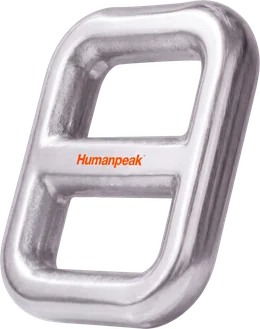
The variability comes from the Humanpeak™ Movement Tool itself. It weighs 2.2 kg, cast in one piece from aluminum, with offset mass that sits outside your grip. Accelerate it and that mass creates torque that changes direction mid-movement, so no two reps load your body identically. Your whole chain has to find a new solution each time, which is the condition the motor learning research describes. Your attention stays on the tool, outside your body. And the feedback principle tells you in the same rep when your alignment is off, because the pull doesn't travel cleanly through the chain. The principles behind the Humanpeak method are established training science. Studies on the specific tool are still to come.
The reel had the right instinct. Your sport never repeats itself, so a training plan that only repeats leaves a gap. Keep the reps that build your engine. Then add the reps that teach your body to use it in every direction.
Move better. Perform better.
Fact check
Frequently asked questions
Humanpeak follows clear sourcing guidelines: we rely on peer-reviewed studies, scientific institutions and professional bodies, and aim for primary sources. Spotted an error? Write to us.
This article is for educational purposes only and does not replace medical advice. If you have symptoms, talk to a doctor.


