Posture Is Not a Position. It Is How Your Body Distributes Load


Stand up straight. Shoulders back. Chin in. It is probably the most repeated movement advice there is, and it rests on one picture: a single correct position, stacked on a plumb line, held like a pose.
A reel that keeps circulating flips that picture. Posture, it says, is your body's answer to its environment. Your skeleton floats inside a web of fascia, and under stress that "fascial suit" tightens and compresses the bones. Millions of athletes watched it. Part of it holds up. Part of it doesn't.
Here is where the evidence lands. The reel is right that posture is a response, not a pose. It overreaches on floating bones and on stress squeezing the skeleton. And it leaves out the idea that matters most for an athlete: posture is how your body distributes load, and that is trainable.
Posture is not a fixed position. It is the ongoing strategy your nervous system uses to organize the body against gravity and against the forces of the next movement, adjusting before and during every action. Research does not support a single correct posture: reviews find no consistent causal link between spinal alignment and back pain. For athletes, what matters is how load is distributed across the whole chain, and how many options the body has to do it.
What the viral claim gets right: posture is a response
Your body never waits for a movement to happen before it organizes for it. Throw a fast punch, reach for a pass, swing a racket, and the forces of that limb movement push back on your trunk. If the trunk did nothing, your own arm would disturb your balance.
It does something, and it does it early. In a classic study, researchers placed fine-wire electrodes in the deep abdominal muscles of 15 people and asked them to move an arm forward, sideways or backward as fast as possible in response to a visual signal [7]. The deepest abdominal muscle, the transversus abdominis, switched on before the shoulder muscle that moved the arm, in every direction. The other trunk muscles behaved differently: their timing depended on the direction, and each fired earliest when its action opposed the reactive force the arm was about to create [7].
Read that again in athletic terms. Before your arm moves, your nervous system has already predicted the load and built a trunk position to meet it. Some of that preparation is general. Some is tailored to the exact direction of the force. That is posture. Not a shape you hold, but a plan for the force that is coming.
Sports medicine describes the same idea from the other end. A widely cited review defines core stability as the ability to control the position and motion of the trunk over the pelvis, so that force and motion can be produced, transferred and controlled all the way to the terminal segment: the hand, the foot, the racket, the ball [10]. The authors describe it as proximal stability for distal mobility, with force building from the center outward [10]. Posture, in that sense, is the base that force transfer starts from.
So the reel's first line is sound. Posture is a response. The question is what it responds to, and the answer is not only the environment. It is the next movement.
Does your skeleton float in fascia?
The floating skeleton comes from a model called biotensegrity. In a tensegrity structure, rigid parts are held in place by a continuous network of tension, so they never press directly on each other. Applied to the body, the bones are the rigid parts and the connective tissue and muscle are the tension network.
As a teaching model, it earns its place. It explains why tension changes in one region can show up somewhere else, and why the body behaves like a connected system rather than a stack of blocks. We use the same logic when we talk about myofascial chains. But a model is not a measurement, and on the specific point of floating bones, the measurements disagree.
Your joints carry compression, a lot of it. The clearest data come from instrumented hip implants, which measure the force inside the joint directly. In four people with such implants, the average hip contact force during walking at about 4 km/h was 238 percent of body weight. Climbing stairs produced 251 percent, and walking down stairs 260 percent [3]. Those are walking and stair numbers. Sport asks for more.
Bone, cartilage and joint surfaces are built to take that compression. Muscle, tendon and fascia manage it: they control where it goes, how fast it arrives and how it is shared. Tension and compression work together. Neither replaces the other.
| WHAT THE CLAIM SAYS | WHAT THE RESEARCH SHOWS |
|---|---|
| Posture is the body's response to its environment | Accurate with nuance: posture is organized in advance for each movement, partly direction-specific [7] |
| The skeleton floats in a web of fascia | Not supported as a literal description. Joints carry compressive forces of over twice body weight even in walking [3]. Biotensegrity is a model |
| Under stress, the fascial suit contracts and compresses the skeleton | Fascia contains contractile cells and can stiffen over minutes to hours, but the measured forces are far below those of muscle, and the authors call the direct mechanical effect minimal [1] |
| There is a correct posture that prevents pain | Not supported. Reviews find no consistent causal link between spinal posture and back pain [4][5] |
| Fascia links regions, so load in one place affects another | Supported as a principle. Force and motion are transferred from the trunk to the limbs [10] |
Can stress make your fascia contract?
This is the most interesting part of the reel, because it starts from real biology and then runs ahead of it.
Fascia is not inert packing. It contains myofibroblasts, connective tissue cells with contractile machinery similar to smooth muscle. In 2019, a research group around fascia researcher Robert Schleip tested what those cells can actually do [1]. They examined human lumbar fascia, fascia lata and plantar fascia from 31 donors, and measured contraction in thoracolumbar fascia from 40 rats in an organ bath.
The findings, in numbers:
- Where the cells are. In human lumbar fascia, myofibroblasts made up a median of about 1.5 percent of cells. In plantar fascia and fascia lata, the median was zero [1].
- What makes them contract. In rat fascia, the growth factor TGF-β1 produced the strongest contraction, an increase of about 445 μN per square millimeter over a three-hour recording. Other substances caused smaller contractions that typically peaked within 20 to 40 minutes [1].
- How strong it is. The authors estimated the total contractile force of the fascia around the lower spine at roughly 1 newton, well below the forces needed for spinal stability in standing, and at least two orders of magnitude below muscle of comparable size [1].
Their own conclusion is careful. Fascial contraction "can impose only minimal direct mechanical effects on the body" [1]. What it might do is change tissue stiffness over minutes to hours, and the authors suggest, as a hypothesis, that such changes could feed into how motor units are coordinated [1]. That is a far cry from a suit that compresses your skeleton.
Where does stress come in? Fascia is wired to the sympathetic nervous system, the branch that ramps up under stress. In rat thoracolumbar fascia, a semiquantitative estimate put about 40 percent of the fascial nerve supply as postganglionic sympathetic fibers, most of them probably regulating blood vessels [2]. The Schleip group notes that sympathetic signaling can influence TGF-β1 expression, and that their result "could possibly support" an older hypothesis linking fascial stiffness to sympathetic activation [1]. Could possibly support. That is the strongest wording the data allow.
So the honest version reads like this: stress and fascial tone may be linked through slow cellular processes, and that is an emerging research question. Stress crushing the skeleton through a contracting fascial suit is not what the data show. When the body protects itself against pain or threatened pain, the change runs through muscle activity, redistributed by the nervous system [9].
Is there a correct posture?
If there were, the research would find it. It has looked hard.
An umbrella review screened 4,285 publications and included 41 systematic reviews on spinal posture, prolonged standing and sitting, bending and twisting, awkward postures and heavy physical work [4]. Both positive and null associations with low back pain were reported. Meta-analyses leaned toward an association, prospective studies were less consistent, and evidence that these factors come before a first episode of pain, or show a dose-response pattern, was mixed. The conclusion: no consensus on causality. Association, yes. Explanation, no [4].
An earlier systematic review of 54 epidemiological studies looked specifically at the curves of the spine seen from the side. It found no strong evidence linking them to any health outcome, spinal pain included, and rated most of the studies as low in methodological quality [5].
Sports physical therapists have drawn the practical conclusion. A viewpoint in the Journal of Orthopaedic & Sports Physical Therapy points out that the common belief that pain comes from sitting, standing or bending "incorrectly" persists despite the absence of strong evidence for it [6].
Now look at the athletes you admire. Nobody plays from one posture. A sprinter at the start, a goalkeeper reading a penalty, a fighter in stance, a golfer at address, each uses a different position, and each changes it constantly. Sports biomechanics has taken this seriously: even elite athletes cannot reproduce identical movement patterns after years of training, and that variability, far from being noise, may be functional, helping the body adapt to changing conditions and change its coordination [8].
That is the real definition for an athlete. Good posture is not a shape. It is a position from which force can start in any direction, and the ability to change it as fast as the game changes.
Built around fascial lines. 20 minutes per session, 5 times a week, guided step by step in the app.
Start the protocol 14-day money-back guarantee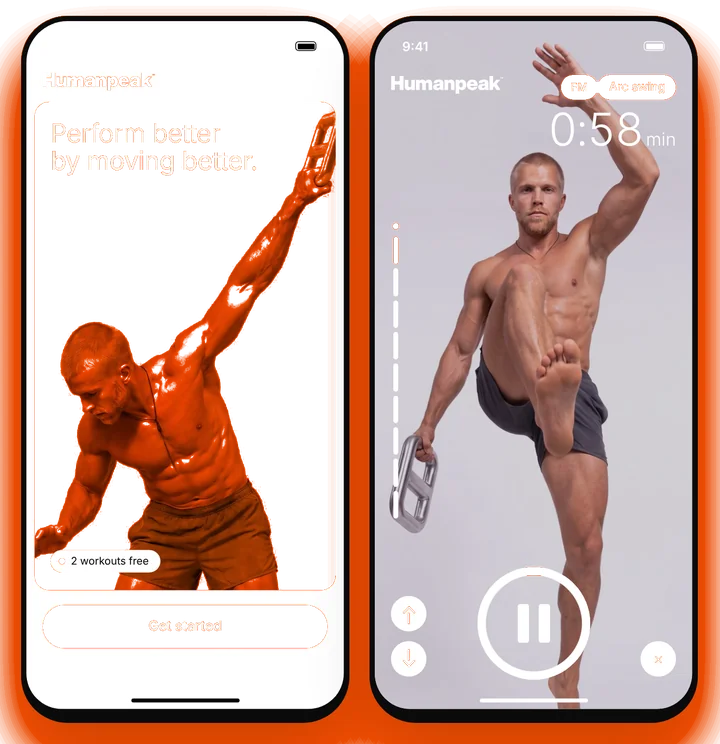
Why the same areas take over again and again
If posture is a strategy, it can also become a narrow one.
A leading model of how the body adapts to pain describes exactly that [9]. When something hurts, or threatens to, the nervous system redistributes activity within and between muscles to protect the area. In the short term, that helps. Over time, the model predicts consequences: increased load on some tissues, decreased movement, and decreased variability [9]. The body settles into fewer ways of moving, and the same structures carry the load, rep after rep.
That is a model, not a proven chain of cause and effect, and we label it as one. But it fits what athletes describe: the same tight spot, the same ache, in the same place. Your strategy for distributing load has narrowed. As range, speed and elastic movement slip, your body has fewer ways to absorb and distribute load, and the same areas take over again and again.
It also explains why "fixing" posture by holding a better position rarely solves anything. Holding a different static position is still one position. What the body needs is more options.
What athletes should train instead of standing straight
If posture is a plan for load, you train it by giving the body more loads to plan for. Four principles follow from the evidence.
- Train anticipation, not alignment. Your trunk organizes before the force arrives [7]. Movements where the load shifts and pulls ask the body to plan again on every rep.
- Use every direction. Core function should be assessed in all three planes of motion, not only forward and back [10]. Rotation, diagonals and lateral reach build positions your sport actually uses.
- Keep variability alive. Variation is functional, not sloppy [8]. Repeating one perfect rep forever trains one strategy. Changing the problem trains the ability to find a new one.
- Build capacity through range. A position only helps if you can control it and load it. Range you can't own under load is range your body won't choose.
- FOCUS: LOAD DISTRIBUTION
- LOAD: LIGHT, OFF-CENTER
- TEMPO: SLOW TO ORGANIZE, FAST TO REACT
None of this means alignment is irrelevant. How you stack under a heavy barbell matters, and good technique in a lift is good technique. The point is narrower: outside that one task, there is no single position to hold. There is a strategy to train.
How Humanpeak trains this
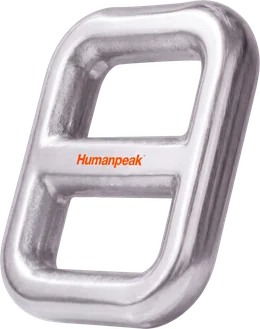
The 12-Week Movement Protocol is built on the idea that posture is a strategy, not a pose. It runs 5 workouts per week, about 20 minutes each, across three phases: Restore, Build and Perform, with over 450 movement flows. Every flow combines mobility, control and targeted fascial loading through multidirectional movement. The Humanpeak™ Movement Tool, 2.2 kg of aluminum cast in one piece, carries offset mass that creates torque, and that torque changes direction mid-movement. Your trunk can't settle into one posture and wait. It has to organize again on every rep, in every direction the flow asks for. And when your alignment is off, the brief pull of the offset mass tells you in that exact rep: the feedback principle.
The principles behind Humanpeak are established training science. Studies on the specific tool are still to come. What we claim is what you can feel and observe: more positions you control, load that travels through the whole chain instead of piling up in the same spot. More on the connected system in the thoracolumbar fascia, on the nerves inside fascia in fascia is a sensory organ, and on the full approach in the Humanpeak method.
The viral reel got the first sentence right. Posture is a response. The skeleton does not float, and stress does not crush your bones through a contracting suit. What the research supports is more useful anyway: your nervous system plans your posture for the force that is coming, and the more options it has, the more evenly that force is shared. Stop trying to hold the right position. Train the body to find one, in any direction, at speed.
Move better. Perform better.
Fact check
Frequently asked questions
Humanpeak follows clear sourcing guidelines: we rely on peer-reviewed studies, scientific institutions and professional bodies, and aim for primary sources. Spotted an error? Write to us.
This article is for educational purposes only and does not replace medical advice. If you have symptoms, talk to a doctor.


