Hip Mobility and Lower Back Pain: What the Link Actually Is


The connection between hip mobility and lower back pain is one of the most repeated ideas in movement content. The short version circulating on social feeds is blunt: the back hurts because the hips stopped moving. It is repeated because it feels true. People with stiff hips often do have cranky backs, and the first time a hip opens up, the lower back frequently feels different by the end of the week.
The mechanics behind that observation are real. The evidence behind the strong version of the claim is thinner than the confidence with which it is stated. Both things can be true at once, and an honest guide has to hold them together: the hip is one of the most sensible places to invest movement work, and it is not the proven cause of most back pain. This article separates the reasoning from the proof, then covers which hip ranges are worth training.
Hip mobility and lower back pain are consistently associated: people with non-specific back pain tend to show less hip range, especially internal rotation. Association is not proof of cause. Restricted hips plausibly shift demand toward the lumbar spine, and hip-focused exercise has shown short-term benefit in trials rated at low certainty.
Does hip mobility affect lower back pain?
Hip mobility and lower back pain travel together in the data. Across 24 studies comparing people with non-specific back pain to controls without back pain, restricted hip internal rotation was the one movement restriction that showed a significant association with back pain, though the authors rated the supporting evidence as very low quality [1]. A 2024 systematic review of 54 studies on hip biomechanics reached a similar conclusion: reduced hip range, internal rotation above all, plus weakness in the hip abductors and extensors [2].
What neither review can tell you is direction. A back that has hurt for two years changes how a person walks, turns, sits and sleeps, and those changes reduce hip range on their own. Stiff hips may load the spine. A guarded spine may stiffen the hips. Cross-sectional data photographs both at the same moment and cannot say which moved first.
How the hip shares load with the lumbar spine
The reasoning is simple, and it is mechanical rather than mystical. Every task the body performs in the sagittal, frontal and rotational planes is shared between the hip joints and the lumbar spine. Bending to lift, striding out at speed, turning to look behind, standing from a chair — each one splits a fixed movement demand between two neighboring regions. The demand is set by the task. The distribution is set by what is available.
Take walking. The trailing leg needs hip extension at push-off. When that range is not accessible, the movement does not disappear; it gets sourced from the nearest joint that will give it, and the lumbar spine extends a little more with every step. Take turning. A golf swing, a padel backhand, a reach into the back seat of a car all require rotation. The hips rotate, the thoracic spine rotates, and the lumbar spine — built for stability and limited rotation — absorbs whatever is left over.
That is the model. It is coherent, it matches what clinicians see in the room, and it explains why one region gets loud when its neighbor goes quiet. It is still a model. Written honestly, it belongs in the reasoning tier: the body transfers force through connected chains, and where a chain cannot move, the load appears somewhere else.
What the evidence on hip mobility and lower back pain shows
Four bodies of evidence matter here, and they say four different things. Read together, they justify training the hip without overselling it.
| Question | What the research reports |
|---|---|
| Do people with back pain have less hip range? | Yes, most consistently in internal rotation; evidence quality very low [1][2]. |
| Does hip restriction cause back pain? | Not established. The studies are cross-sectional and cannot establish direction [1]. |
| Does hip range predict anything over time? | In older adults with chronic back pain, hip extension range and hip abduction strength predicted physical function twelve months later [4]. |
| Does hip-focused exercise change symptoms? | Hip strengthening and stretching added to back exercise reduced reported pain and disability short term; certainty very low, with no clear medium- or long-term advantage [3]. |
The fourth line is the one to sit with. It is a real finding and a modest one. Exercise in general performs the same way in this field: a Cochrane review of chronic low back pain found exercise improved pain by roughly 15 points on a 100-point scale versus no treatment, with smaller effects on disability and no single exercise type proving superior [5]. Meanwhile, for nearly everyone with back pain, no specific structural source can be identified at all [6].
That last fact reframes the whole conversation. If the majority of back pain is non-specific, the search for the single broken part — the tight hip flexor, the weak glute, the one bad disc — is a search for something the imaging usually does not confirm. What remains is capacity: how much range the body can access, control and repeat. See why back pain keeps returning for the same logic applied over a longer timeline.
Rotation: the direction most training misses
Of every hip range measured, internal rotation is the one that keeps surfacing in the back pain literature [1][2]. That is worth a moment, because it is also the range almost nobody trains. Squats, deadlifts, lunges, cycling, running: forward and back. Life and sport: turning, cutting, reaching across, swinging.
Hip internal rotation is what allows the pelvis to travel over a planted leg while the foot stays where it is. Without it, the turn has to come from somewhere, and the lumbar spine is the nearest supplier. This is the practical version of a principle that runs through the whole system: training is usually linear, and life is rotation. Hip internal rotation covers how to test and load it directly.
- FOCUS: ROTATION + EXTENSION
- DURATION: 20 MIN
- FREQUENCY: 5× / WEEK
The second range that earns its place is hip extension. In the Delaware Spine Studies cohort, hip extension range and hip abduction strength at baseline predicted chair-rise performance, gait speed and walking distance a year later in older adults with chronic back pain [4]. That is a prospective result about function, measured over twelve months. It does not claim to change pain. It says the hips people can extend and stabilize are the hips that keep doing work.
A science-based protocol built around fascial lines to support multidirectional movement.
Start the protocol 14-day money-back guarantee
Why stretching is not the same as usable range
Most people meet the hip through stretching, hold a pigeon pose, feel looser for an hour and conclude that the tissue got longer. The evidence points elsewhere. Reviewing the biomechanical work, increases in muscle extensibility after a single stretching session and after short-term programs of three to eight weeks are attributed to modified sensation — a change in what the body tolerates — rather than to a change in tissue length [7].
That is not an argument against stretching. It is an argument about what stretching is doing. A range that exists only when the body is passive and supported is not the range available in the third hour of a workday or in the second half of a match. The distinction between passive range and range you can produce and control is the entire point of mobility versus flexibility.
- Passive range. What a limb reaches when something else moves it. Easy to gain, easy to lose, poorly defended under load.
- Active range. What the body reaches under its own control. Slower to build, and the range that shows up in real tasks.
- Loaded range. Active range with force running through it. This is where mobility work stops being a warm-up and starts being training.
The practical rule the field keeps arriving at is that you can only express force in positions you can access and control — the framing Kelly Starrett has built into a daily-range checklist for non-athletes and athletes alike [8]. Range first. Control second. Load third.
How to train hips that carry their share
A hip program that reflects the evidence looks unglamorous. It runs several times a week, it covers more than one plane, and it loads the ranges it opens rather than collecting them.
- Open the range actively — rotation and extension, produced by the hip rather than gravity.
- Control the end of the range — slow, owned positions where the pelvis stays where you put it.
- Add speed and load — rotational and elastic work through the range you just proved you own.
- Repeat it often, in short exposures on most days, over months rather than a single long weekly session.
Frequency matters more than duration here. Motor learning is driven by repetition of coordinated, varied movement, and neither range nor control is a one-session acquisition.
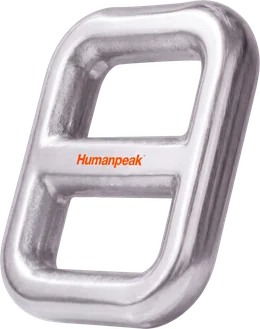
That is the structure the 12-Week Movement Protocol is built on: three phases, Restore, Build and Perform, 5 workouts per week of about 20 minutes each, with the Humanpeak™ Movement Tool (2.2 kg). Every flow combines mobility, control and targeted fascial loading through multidirectional movement, with rotation treated as a primary direction rather than a finisher. Active movement instead of passive treatment. Full-body.
When back pain belongs with a clinician
Mobility work is a training decision, not an assessment. Back pain with numbness, weakness in the leg, changes in bladder or bowel function, unexplained weight change, fever, a history of cancer, or pain following significant trauma belongs with a physician promptly. Pain that intensifies steadily over weeks, or that keeps you awake at night, deserves the same call.
For everything else, movement is the standard first-line recommendation, and staying active is part of it [6]. If you are unsure where you sit, get assessed and train around what you learn. Read non-specific back pain for what that diagnosis does and does not mean.
The viral version of the claim overstates its case. Restricted hips are not the established cause of most lower back pain, and no honest reading of the current evidence supports that sentence. What the research does support is quieter: people with back pain move their hips less, internal rotation is the range most often involved, hip extension and hip strength track with how well people function a year later, and hip-focused exercise produces modest short-term change in trials of low certainty [1][2][3][4].
That is still a good reason to train the hip. Not because it is the broken part, but because range you can access, control and load is capacity — and capacity is what carries the next twenty years of walking, lifting and turning. Train the direction your program skips. Move better. Perform better.
Fact check
Frequently asked questions
Humanpeak follows clear sourcing guidelines: we rely on peer-reviewed studies, scientific institutions and professional bodies, and aim for primary sources. Spotted an error? Write to us.
This article is for educational purposes only and does not replace medical advice. If you have symptoms, talk to a doctor.


