Non-Specific Back Pain: Most Back Pain Has No Structural Cause


Roughly 90% of back pain is non-specific back pain: pain that cannot be traced to one identifiable disease or structural lesion [1]. The number circulates constantly, usually stripped of its source and delivered as a punchline about how little medicine knows. The figure is real. The punchline is wrong.
Non-specific is not a shrug. It is the outcome of a triage process that has already asked whether something serious is going on and concluded that it is not. What the label removes is a single villain — one disc, one vertebra, one line on a report. What it leaves is a more useful question: how much load, range and control does this body currently have, and how is that changing.
Non-specific back pain is back pain that cannot be traced to a single identifiable disease or structural lesion. The World Health Organization puts it at about 90% of cases. It is not a diagnosis of nothing. It means the pain is real, the source is distributed rather than singular, and movement capacity matters more than the picture.
What Is Non-Specific Back Pain?
Non-specific back pain is back pain for which no specific disease or structural reason can be identified as the explanation. The World Health Organization uses exactly that framing and states that non-specific presentations account for about 90% of low back pain [1]. The remaining share covers the identifiable causes clinicians screen for: nerve root compression, fracture, infection, inflammatory disease, tumour. Those are rare. They are also the reason assessment exists.
The scale is not marginal. WHO reports that low back pain affected 619 million people globally in 2020, that the figure is projected to reach 843 million by 2050, and that it is the single leading cause of disability worldwide [1]. A condition this common, in a body this well studied, still resists a tidy anatomical answer in nine cases out of ten. That tells you something about the problem, not about the diagnostics.
- It is a category, not a cause. The term describes what has been ruled out. It makes no claim about which tissue is generating the symptom.
- It is not the same as minor. Non-specific complaints account for the largest part of the global disability burden attributed to back pain [1].
- It is not permanent. The classification describes the current picture. Capacity, load and sensitivity all change over time — and so does the picture.
Where the 90% Figure Comes From
The clip version of this statistic almost never carries a citation, so here is one that can be checked in a single click. The WHO fact sheet on low back pain, published in June 2023, states that non-specific low back pain is the most common presentation, at about 90% of cases, and defines it as pain where it is not possible to identify a specific disease or structural reason [1]. The same year, WHO published a full guideline on the non-surgical management of chronic primary low back pain in adults, which treats that population as the default rather than the exception [5].
Now the part the viral version leaves out. Ninety percent is a triage estimate, not a laboratory measurement. It counts how often clinicians cannot assign a specific pathoanatomical diagnosis — a number that necessarily depends on the setting, the definition and the thresholds used. It is a statement about classification. It is not a statement that nothing physical is happening in the body.
That distinction matters because both popular readings of the number are wrong. One says the pain is imaginary. The other says medicine is hiding a structural answer that better imaging would reveal. The evidence supports neither. The honest reading is narrower and more useful: in most cases, the symptom does not map onto one structure, so care that targets one structure has a poor prior.
Why Scans Rarely Settle It
The instinct after a bad week is to get a picture. The problem is that pictures of the spine are noisy. A systematic review of imaging in 3,110 asymptomatic people — people with no back pain at all — modelled how common degenerative findings are by age. The results reframe what a report actually tells you [3].
| Finding on MRI or CT | Asymptomatic 20-year-olds | Asymptomatic 80-year-olds |
|---|---|---|
| Disk degeneration | 37% | 96% |
| Disk bulge | 30% | 84% |
| Disk protrusion | 29% | 43% |
| Annular fissure | 19% | 29% |
The authors concluded that these findings are present in high proportions of people without symptoms and increase with age, consistent with normal ageing rather than with pathology requiring intervention [3]. Read that back onto a symptomatic scan and the logic becomes uncomfortable: a bulge found next to a painful back may be the cause, or it may be the same bulge that a third of symptom-free twenty-year-olds are already carrying.
International guidance has drawn the obvious conclusion. The Lancet low back pain series described a global mismatch between evidence and practice, with limited use of recommended first-line treatments alongside inappropriately high use of imaging, rest, opioids, spinal injections and surgery, and argued for care that reduces the focus on spinal abnormalities [4]. The 2023 WHO guideline likewise emphasises avoiding unnecessary diagnostic imaging in primary low back pain [5].
None of this is an argument against imaging. It is an argument against imaging by default. When the assessment raises a specific concern, a scan answers a specific question. When it does not, the scan mostly supplies vocabulary — and words like degeneration land harder than they deserve to. See pain does not equal damage for how that vocabulary changes behaviour.
A science-based protocol built around fascial lines to support multidirectional movement.
Start the protocol 14-day money-back guarantee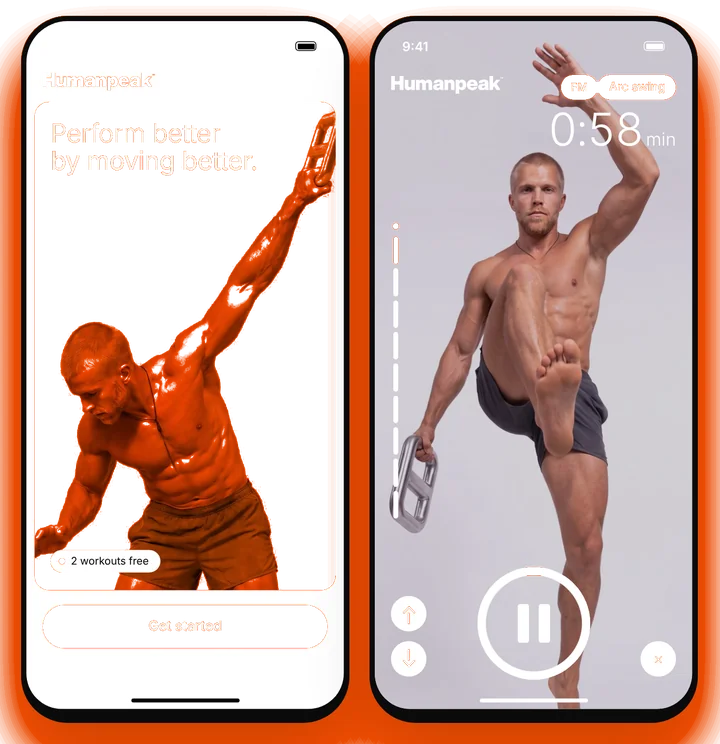
If Not Structure, Then What?
If one tissue is not carrying the explanation, several things are carrying it together. The current model is multifactorial, and the individual weighting is exactly that: individual. Three contributions are worth stating plainly, at the confidence level each one deserves.
- Capacity against demand. Symptoms tend to appear where the load asked of a region — hours, positions, sport, a long week — exceeds what it currently tolerates. The gap can close from either side.
- A protective nervous system. Pain is a protective output, and protection can persist after the original provocation has settled. This is biology, not imagination.
- Range and control. Force can only be expressed in positions the body can access and hold. Restricted, unrehearsed range shifts work elsewhere. Supported as clinical reasoning, not proven as a cause of any individual case.
The second point has direct evidence behind it in the domain people find most convincing: the feeling of a stiff back. Researchers measured actual spinal stiffness with a mechanical indentation device and compared it with what participants reported feeling. There were no significant relationships between perceived and actual stiffness, and objective stiffness did not differ between those who reported feeling stiff and those who did not. People who felt stiff overestimated the force applied to their spine, while detecting changes in that force more accurately than controls [6].
This is the quiet reason passive input keeps disappointing over the long run. Pressure, heat and hands can lower sensitivity, sometimes quickly. They do not train range, control or tolerance, so the demand side of the equation returns unchanged. More on that loop in why pain keeps coming back.
What the Evidence Actually Supports
Guidelines across countries agree on the shape of first-line care for non-specific presentations: education that supports self-management, resumption of normal activity, and structured exercise, with pharmacological and surgical options held back rather than led with [4][5]. The interesting part is how honest the numbers are when you open them.
The Cochrane review of exercise therapy for chronic low back pain pooled the trial evidence and found that exercise probably reduces pain compared with no treatment, usual care or placebo, by roughly 15 points on a 0–100 scale, with moderate-certainty evidence. Functional limitations improved by around 7 points on the same scale — moderate certainty again, but below the review's own threshold for clinical importance [2]. Real benefit. Modest size. Anyone quoting exercise as a solved problem is overselling it.
Prevention of the next episode has its own literature. A Cochrane review of exercises for preventing recurrences found moderate-quality evidence that post-treatment exercise was more effective than no intervention at reducing recurrence rates, with very low-quality evidence for a reduction in sick leave. The authors noted that the exercise programmes differed so much across trials that the optimal content could not be specified [7].
Read those two findings together and a practical rule appears. The evidence supports movement as an ongoing input rather than a course of treatment, and it does not crown one method. What the trials cannot tell you, your own week can: which exercise you will still be doing in six months.
- EVIDENCE: MODERATE CERTAINTY
- EFFECT: REAL, MODEST
- VARIABLE THAT DECIDES: ADHERENCE
Training Capacity Instead of Chasing a Label
If the label is non-specific, then non-specific inputs are not a compromise — they are the match. The body is a connected system that stores, transfers and expresses force, a framing we take from Bill Parisi's work in Anatomy of Speed. Trained that way, the target stops being a segment and becomes a set of capacities: range you can reach under your own control, rotation you can produce and absorb, tissue that tolerates load without protest.
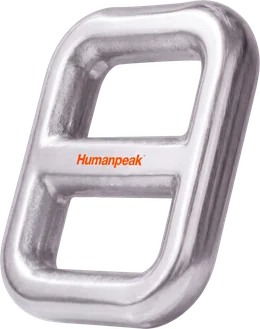
That is the design brief behind the 12-Week Movement Protocol: 5 workouts per week, about 20 minutes each, in three phases, Restore, Build and Perform, with the Humanpeak™ Movement Tool (2.2 kg). It adds the missing layer on top of the training you already do instead of replacing it. Most training is linear and sagittal. Life is rotational, and rotation is where a back is asked to do its least rehearsed work. The protocol is built to make that work ordinary.
- FOCUS: ROTATION + USABLE RANGE
- DURATION: 20 MIN, 5X PER WEEK
- Keep moving during a flare, adjusting the dose rather than stopping — this is what guidelines mean by resumption of normal activity [4].
- Train range you can control, not range you can only be placed into.
- Add rotation and diagonal patterns before adding load.
- Hold the frequency. Regular and modest beats occasional and heroic, because adherence is the variable the trials keep pointing at [2][7].
- Reassess by function: what you can carry, reach, twist and repeat without a cost the next day.
Related reading: hip mobility and back pain for where restriction commonly shifts work into the lumbar spine, and stiff or tight for the difference between what a back feels like and what it measures. Consistent. Controlled. Connected.
Non-specific back pain is the most common back pain there is, and the label is better news than it sounds. It means the search for a dangerous cause has been run and has come back clear. It also means the thing most people go looking for next — a picture that names the culprit — is unlikely to deliver, because degenerative findings are already sitting quietly in bodies that feel nothing at all [3].
What remains is unglamorous and entirely actionable. Stay in motion. Build range you can control. Train the system rather than the segment, and keep the dose small enough that it survives a normal week. No single villain. No single fix. Just capacity, built daily.
Fact check
Frequently asked questions
Humanpeak follows clear sourcing guidelines: we rely on peer-reviewed studies, scientific institutions and professional bodies, and aim for primary sources. Spotted an error? Write to us.
This article is for educational purposes only and does not replace medical advice. If you have symptoms, talk to a doctor.


