Why Does My Pain Keep Coming Back After Every Treatment?


The appointment works. You walk out looser, taller, with the ache turned down two notches, and for a few days the body feels like it did five years ago. Then it drifts back. Same side, same spot, same story. If you have asked yourself why does my pain keep coming back, you are asking the most common and least answered question in the entire pain market.
The answer is not that the treatment was fake, and not that you did something wrong. It is that relief and capacity are two different outcomes, produced by two different kinds of input. Most of what is sold as pain care is very good at the first one. Almost nothing in that category is designed to deliver the second.
Pain keeps coming back because most treatments change symptoms rather than capacity. Hands-on care reliably reduces pain in the short term, but the effect fades once the input stops. Recurrence is the norm: in one cohort, 69% of people had another episode within 12 months. Regular, continued movement is what measurably shifts those odds.
Why Does My Pain Keep Coming Back?
Because symptom relief and load tolerance are not the same result. Something can genuinely reduce what you feel this week and leave untouched what your body can handle next month — and recurring pain is largely a story about next month. The numbers are blunt. In a prospective inception cohort of people who had just recovered from an episode of low back pain, 69% had a recurrence of an episode within 12 months, 40% had a recurrence that limited activity, and the median time to the next episode was around 139 days [1].
The same cohort found that having had more than two previous episodes, sitting for more than five hours a day and regular awkward postural exposure were associated with recurrence [1]. Read that list again. None of those are things a table, a roller or a pair of hands can change. They describe the demand side of the equation: how much the body is asked for, in which positions, for how long.
So the honest version of the answer is uncomfortable and useful at once. The treatment worked. It worked on the part of the problem it was built for. Then you went back to the same week, with the same capacity, and the week won again.
Relief Is Real. It Is Just Not the Same as Change.
This is not an argument that hands-on care is worthless. It is an argument about what it is for. The Cochrane review on massage for low back pain found benefits for pain in the short term against inactive controls, improvements in function only in subacute and chronic groups, and no advantage over inactive controls in the long term — with the certainty of evidence graded low to very low across all comparisons [4].
Spinal manipulation lands in a similar place. A BMJ systematic review and meta-analysis of randomized trials in chronic low back pain found that manipulative therapy produced effects similar to other recommended therapies, with a small short-term improvement in function and no clinically relevant difference in pain at one, six or twelve months [5]. Similar to recommended care is a respectable result. It is not a different category of result.
That is the honest read on the entire passive tier — rolling, massage, adjustments, static stretching held as a fix, pressure techniques of every brand name. They can lower symptom load, restore confidence and open a window in which moving feels possible again. Compare the mechanisms in detail in massage or training and foam rolling vs active movement. The error is not using them. The error is mistaking the window for the destination.
The Relief-Relapse Loop
Once you see the loop, you cannot unsee it. It runs in four beats, and it is remarkably consistent across bodies, brands and price points.
- Symptoms spike. Load, position or a long week exceeds what the tissue currently tolerates, and the body files a complaint.
- Passive input arrives. Hands, pressure, heat, a roller. Sensitivity drops quickly, which is exactly what the technique is good at.
- The window opens. For days or weeks the complaint is quiet. Nothing about range, control or tolerance has been trained yet — the alarm is simply turned down.
- Demand returns unchanged. Same hours, same chair, same sport, same capacity. The threshold is crossed again, and the cycle restarts at beat one.
The loop persists partly because care systems reinforce it. The Lancet low back pain series described a global pattern of limited use of recommended first-line treatments alongside inappropriately high use of imaging, rest, opioids, injections and surgery, and called for care that promotes activity and function rather than focusing on spinal abnormalities [7]. The 2023 WHO guideline for non-surgical management of chronic primary low back pain points the same way: structured exercise and education belong in care, while several passive modalities including traction and therapeutic ultrasound are advised against [8].
Worth saying plainly: a scan finding is a weak explanation for a recurring ache. That argument is unpacked in pain does not always mean damage.
A science-based protocol built around fascial lines to support multidirectional movement.
Start the protocol 14-day money-back guarantee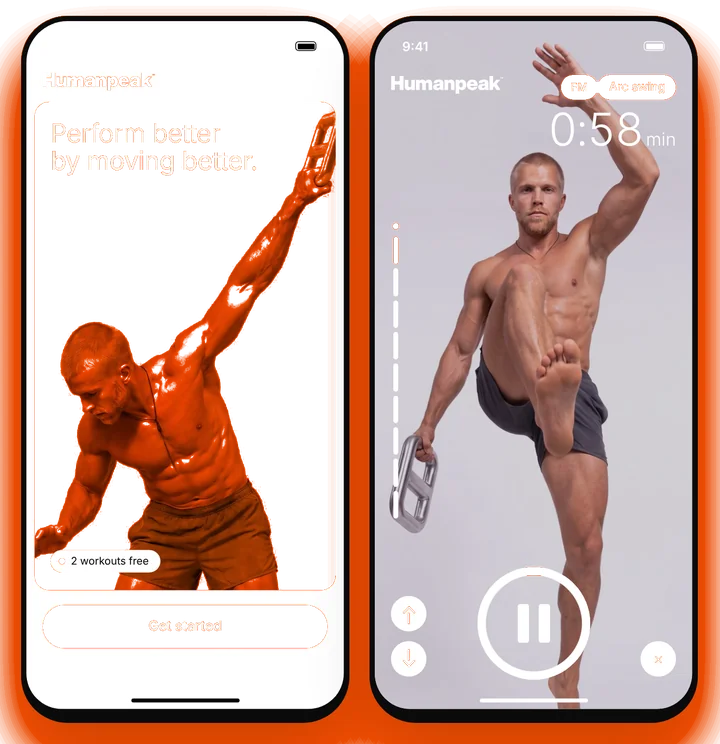
What Actually Changes the Odds
One input in this literature behaves differently from the rest. A Cochrane review of exercise for preventing recurrences of low back pain found moderate-quality evidence that post-treatment exercise programs were more effective than no intervention, with a rate ratio of 0.50 for recurrence at one year — roughly half the recurrence rate — and fewer recurrences over follow-up periods of six months to two years [3].
Prevention trials agree. A meta-analysis of 21 randomized trials with about 30,850 participants reported that exercise alone reduced the risk of an episode of low back pain (RR 0.65) and exercise combined with education did slightly better (RR 0.55) in the short term [2]. And here is the part most brands leave out: beyond twelve months, the protective effect of exercise alone was no longer detectable (RR 1.04), because the programs had ended [2].
That is not a failure of exercise. It is the definition of a training effect. Capacity is a state you hold, not an object you acquire — which makes frequency, not intensity, the variable that matters. The same logic runs through consistency beats intensity.
Keep the expectations calibrated. The 2021 Cochrane review on exercise therapy for chronic low back pain found a clinically important reduction in pain compared with no treatment, about 15 points on a 0–100 scale with moderate-certainty evidence, but only small differences compared with other conservative treatments [6]. Movement is the most durable lever available. It is not a switch.
What Capacity Actually Means in Training Terms
Capacity sounds abstract until you break it into what can be trained and observed. Four components carry most of the weight for people whose complaints keep returning.
- Usable range: the positions the body can reach and control under its own power, not the positions someone else can push it into.
- Control at end range: strength expressed where range ends, which is precisely where recurring complaints tend to appear.
- Rotation and lateral work: most training and most rehab happen in one plane, while work, sport and a turned-around reverse park do not.
- Daily load tolerance: the accumulated hours of sitting, standing, carrying and rushing that decide whether a week fits inside your current ceiling.
None of that requires a heavier barbell. It requires a repeated, structured input that visits every joint in more than one direction, often enough for the nervous system to keep the pattern. Learning new coordinated movement changes neural control at any age — which is why a new movement vocabulary does something that being treated cannot. Related reading: usable range is usable strength and your training is linear, your life is rotation.
- FOCUS: DAILY CAPACITY
- DURATION: 20 MIN, 5× PER WEEK
- BEST FOR: ALL LEVELS
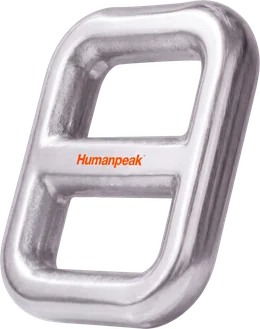
This is the design brief behind the Humanpeak 12-Week Movement Protocol: 5 workouts per week, about 20 minutes each, across three phases (Restore, Build, Perform), with the 2.2 kg Humanpeak™ Movement Tool. Every flow combines mobility, control and targeted fascial loading through multidirectional movement, as a layer on top of the training you already do. A practice you can actually hold.
How to Use the Window After Treatment
The most efficient version of this is not either-or. It is a sequence. Passive care first if symptoms are loud, active capacity immediately after, while movement is comfortable and motivation is high.
- Keep the appointment. If hands-on work lowers your symptoms, use it — as a door, not a room.
- Start moving inside the relief window, in the first days, at an intensity that feels boring rather than heroic.
- Train often rather than once a week. Short sessions spread across the week, such as 20 minutes on five days, keep the input regular, because the adaptation follows frequency.
- Add rotation and end-range control deliberately, since standard programs almost never include them.
- Keep going after it stops complaining. The complaint disappears long before the capacity arrives.
- Get persistent, severe, spreading or night-time symptoms assessed by a physician or qualified therapist before training around them.
Osteoporosis, acute tendon irritation and any undiagnosed change in symptoms are reasons to speak with a clinician first, not reasons to push harder. The point of the sequence is not to prove anyone wrong. It is to stop paying for the same window twice a year.
The pain market has trained an entire generation to be excellent patients: to book, to lie down, to be worked on, to feel better, to come back. It is a coherent system, and for the acute phase it earns its place. It simply has no mechanism for the part that decides what happens in six months.
That part is trainable, and it responds to the least glamorous input available — the one you repeat. Twenty minutes. Five days a week. The body stops being something you get fixed and starts being something you run. Structured. Connected. Yours.
Fact check
Frequently asked questions
Humanpeak follows clear sourcing guidelines: we rely on peer-reviewed studies, scientific institutions and professional bodies, and aim for primary sources. Spotted an error? Write to us.
This article is for educational purposes only and does not replace medical advice. If you have symptoms, talk to a doctor.

Related articles


