Strong but Sore: Why Heavy Lifters End Up With Aching Joints


You pull more than most people your age. Your press has never been better. And your shoulder has an opinion every morning, your knees speak up on stairs, and your low back keeps its own schedule. Joint pain from lifting weights is one of the most confusing experiences in training, because it appears to contradict the entire point of getting strong.
It does not. Read closely, the pattern is consistent and unglamorous: heavy training builds enormous capacity inside a narrow slice of range, in one plane, on a fast clock — while the joint end of the system needs range, direction and time. Nothing below argues for lighter barbells. It argues for the layer most strength programs never install.
Joint pain from lifting weights usually reflects a mismatch between load and current capacity, not damage caused by being strong. Heavy training loads a narrow slice of range in a single plane, and tendons adapt more slowly than muscle. What is usually missing is not more load, but more usable range, rotation and daily movement.
What Causes Joint Pain From Lifting Weights?
Joint pain from lifting weights rarely means a joint is being destroyed. In most cases it is a capacity report: a tissue is being asked for more than it can currently tolerate, in a position it does not often visit. Strength sport data supports that reading. An updated systematic review of weightlifting and powerlifting found training injury incidence of roughly 1.0 to 4.4 injuries per 1,000 hours — low next to field sports — while the prevalence of ongoing complaints ran far higher, reaching 70% at a single point in time in one powerlifting sample [1]. Lifters are not breaking often. They are aching repeatedly, in the same places.
Meanwhile, strength training itself is one of the best-supported protective strategies in sports medicine. A meta-analysis of randomized controlled trials covering 7,738 participants found strength programs reduced sports injuries by roughly two thirds, with more training volume associated with lower risk [2]. So the honest framing is not that lifting harms the body. Lifting protects it — and the standard way of lifting leaves a gap.
Imaging rarely settles the question either. Among people with no symptoms at all, disk degeneration appeared in 37% of 20-year-olds and 96% of 80-year-olds, and disk bulges in 30% and 84% respectively [3]. Findings on a scan are ordinary in people who feel entirely fine, which is why a picture is a weak explanation for why a back aches after a heavy week. More on that in pain does not always mean damage.
Where Lifters Actually Hurt, and Why Those Sites
The map is remarkably stable across studies. In weightlifting, the knee, lower back, shoulder and hands or fingers dominate. In powerlifting, the lower back and pelvis, the shoulder and the elbow or upper arm lead the list [1]. A scoping review focused on the shoulder in weight-training athletes found overuse presentations and anterior instability to be the most common categories, with technique, vulnerable end-range positions and accumulated training volume among the contributing factors [4].
| SITE | TYPICAL DEMAND | OFTEN MISSING |
|---|---|---|
| Shoulder | Overhead and pressing positions near end range | Controlled overhead range, mid-back rotation |
| Low back / pelvis | Bracing under high compressive load | Hip range, loaded rotation, unloaded spine movement |
| Knee | Deep flexion under load, repeated at one angle | Ankle range, hip control, varied entry angles |
| Elbow / wrist | Fixed grip on a fixed bar path | Grip variation, forearm rotation |
Read the table as an anatomy of repetition. Bars travel fixed paths. Racks fix the plane. Plates fix the tempo. The joints that ache are the ones asked to absorb the same vector, session after session, at the same two or three angles — and the tissue that never gets asked for anything else quietly narrows to what it is asked for. Same path. Same plane. Same tissue.
Strength Is Range-Specific. That Is the First Gap.
Strength does not generalize across positions as freely as lifters assume. A systematic review and meta-analysis comparing partial with full range-of-motion resistance training found only a trivial overall difference between the two approaches — but one clear and practical signal inside the data: training in the range being tested produced the greater strength result [5]. Strength is largely expressed where it is built.
That is entirely workable while life stays inside the rack. It becomes a problem at the edges: the shoulder reaching behind a car seat, the hip loaded deep and turned, the knee absorbing a landing at an angle nothing in the program rehearsed. Capacity ends where trained range ends, and the joint absorbs the difference. This is the whole argument behind usable range is usable strength.
One honest caveat, because the popular version of this idea overreaches. In a study of eighteen experienced lifters, hip range of motion, limb proportions and low-load movement-control tests showed no meaningful association with how much the lower back and pelvis flexed during a heavy back squat — and greater ankle dorsiflexion range was associated with more lumbopelvic flexion, the opposite of the textbook prediction [6]. Mobility screens are not a reliable map of what a joint will do under load. Range is worth training as capacity, not treated as a diagnosis.
A science-based protocol built around fascial lines to support multidirectional movement.
Start the protocol 14-day money-back guarantee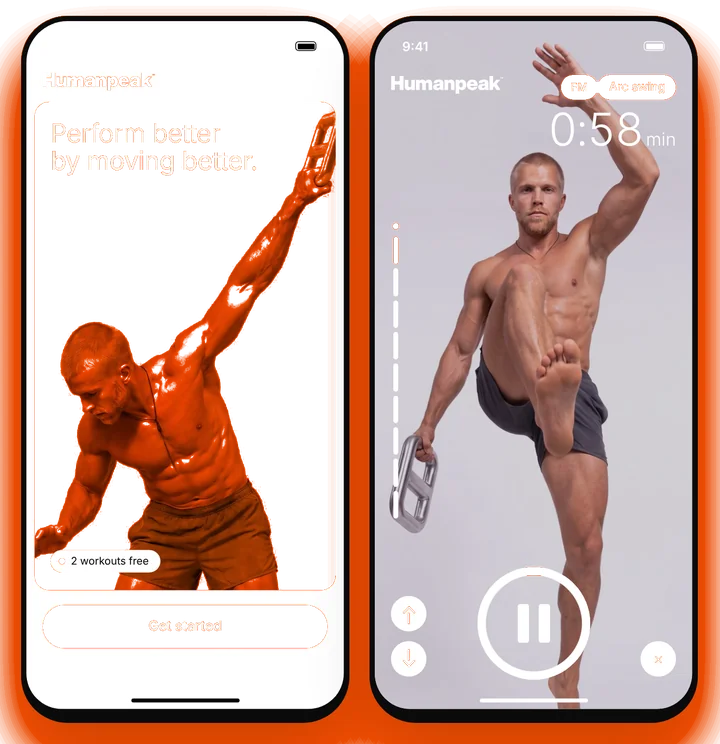
The Second Gap: Almost Nobody Loads Rotation
Squat, hinge, press, row, carry. Five patterns, essentially one plane. Your training is linear. Your life is rotation — every throw, swing, sprint, stumble and reach across the body asks the ribcage to travel over the pelvis under load.
The body transfers force in connected diagonal chains: glute to the opposite shoulder through the sheet of tissue across the low back, hip to opposite ribcage through the front of the trunk. The chain framing comes from Tom Myers' Anatomy Trains and the sling models used across movement work [7]. Its anatomy is described; in-vivo functional force transmission through those lines is still being characterized, so treat it as a working model rather than settled mechanism. The observable part needs no defense at all: rotation happens constantly, and most strength programs never load it.
Untrained rotation does not disappear. It gets borrowed. A shoulder that cannot find range through the mid-back tends to take it at the joint itself; a hip short on internal rotation tends to export demand upward and downward. That reasoning is clinical rather than proven, but it matches the complaint map above and it is why knee pain usually starts above and below the knee and why rotation training belongs in a strength athlete's week rather than in a warm-up footnote.
- FOCUS: ROTATION
- DURATION: 20 MIN
- PLACE: 5× PER WEEK, AROUND LIFTING
Why Tendons Complain Before Muscles Do
Muscle responds quickly. Connective tissue does not. A meta-analysis of loading interventions in healthy adults found tendon stiffness increased primarily as a function of loading magnitude — high-intensity protocols above roughly 70% of maximum voluntary contraction produced a large effect while lower intensities produced almost none — and that the change came mainly from material properties rather than tendon thickening [8]. Contraction type mattered little once magnitude was matched. Duration did matter: effects were present at eight to twelve weeks and larger beyond twelve.
That timing mismatch explains a great deal of ordinary aching. Strength climbs on a monthly cycle; connective tissue capacity climbs on a quarterly one. Add plates faster than the slow tissue can follow and the joint end of the system registers the difference first — usually as a dull, morning-flavored ache rather than a dramatic event.
It also explains why total rest so rarely resolves the situation. Removing load lets capacity drift down while the demand waiting on the other side stays exactly where it was. In healthy tissue, capacity is built by loading — sized correctly, repeated often, sustained across months.
Keep Lifting Heavy. Add the Missing Layer.
Nothing here is an argument for smaller numbers. The evidence points the other way [2]. The argument is narrower and more useful: the barbell trains one quality superbly and leaves three untouched — range you can control, rotation under load, and the patience that slow tissue needs.
- RANGE, ACTIVELY. Work the ends of a joint's range with tension and control rather than passive holds. What is trained is what stays available under load [5].
- ROTATION, LOADED. Train the diagonals — hip to opposite shoulder, ribcage over pelvis — resisted, controlled, and in both directions.
- MONTHS, NOT WEEKS. Tendon adapts on a slow clock: measurable changes appear from around eight weeks of high-magnitude loading and keep developing past twelve [8].
- VARIED VECTORS. Change stance, angle, tempo and plane so the same tissue is never asked for the identical vector every single session.
- ACHE AS INFORMATION. Soreness that settles within a day reads differently from an ache that greets you every morning. The second one is a load conversation — and one worth having with a clinician if it persists.
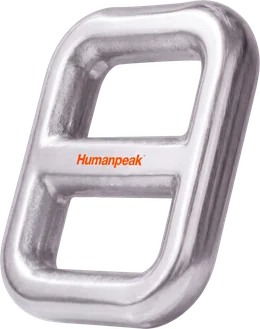
That layer is what the 12-Week Movement Protocol is built to install: 5 workouts per week, about 20 minutes each, across three phases (Restore, Build, Perform), with the 2.2 kg Humanpeak™ Movement Tool, trained through range and through rotation. It sits on top of your lifting rather than replacing it. Just the layer the barbell does not cover.
The barbell builds the engine. This wires it in. Strong. Fluid. Connected.
Strong and sore is not a contradiction. It is an accurate description of a body that became excellent at one thing and was never asked for the rest. The complaint sites are predictable, the timelines are known, and the missing pieces are unglamorous: range that is owned rather than borrowed, rotation that is actually loaded, and frequency that respects tissue adapting on a slower clock than muscle.
Keep the heavy days. Keep the numbers. Add five short sessions a week that train everything the rack cannot reach, and the joints stop paying for the gap. Move better. Perform better.
Fact check
Frequently asked questions
Humanpeak follows clear sourcing guidelines: we rely on peer-reviewed studies, scientific institutions and professional bodies, and aim for primary sources. Spotted an error? Write to us.
This article is for educational purposes only and does not replace medical advice. If you have symptoms, talk to a doctor.

Related articles


