Does Pain Mean Damage? What the Evidence Actually Shows


Pain is a reliable signal that something matters. It is not a reliable readout of tissue condition. That distinction sits underneath the question almost everyone asks when a back locks up or a knee starts to complain: does pain mean damage. The careful answer from modern pain science is that it sometimes does, often only partly, and almost never in proportion to how much it hurts.
This article is not an argument that pain is exaggerated or imagined. It is the opposite. Pain is always a real, biological event. The point is that the event is produced by a protective system, and protective systems can be accurate, over-cautious, or slow to stand down long after the tissue itself has settled.
Not always. Pain is an output of the nervous system, not a direct measure of tissue damage. Serious injury can hurt little, and severe pain can occur with intact tissue. Scans show degeneration and tears in many people with no symptoms at all. Pain is always real - it is simply not a reliable damage gauge.
Does Pain Mean Damage?
Not reliably. In 2020 the International Association for the Study of Pain revised its definition and attached a set of explanatory notes. One of them settles the question at the level of terminology: pain and nociception are different phenomena, and pain cannot be inferred solely from activity in sensory neurons [1]. The definition itself is careful in the same way, describing pain as an experience associated with, or resembling that associated with, actual or potential tissue damage [1].
Nociception is the detection of a potentially damaging stimulus by specialised nerve endings. It is input. Pain is what the nervous system produces after that input has been weighted against context, history, expectation and perceived threat. It is output. The two usually travel together, which is why the confusion is so understandable. They can also come apart, in both directions.
- Damage without much pain. Athletes finish matches on fractures. Soldiers walk out of incidents and notice the wound later. The tissue is compromised; the protective output is low because the situation demands movement.
- Pain without much damage. A locked back after nothing more than bending toward a shoe can be severe, disabling and completely disproportionate to what any scan would find.
So the honest answer to the question is: sometimes, partly, and rarely in proportion. Pain reports how threatened the system feels. Tissue is one input into that judgement, not the whole of it.
Why Scans Find Things in People Without Pain
The clearest evidence that structure and symptoms are only loosely coupled comes from imaging people who feel nothing at all. A systematic review pooling imaging studies of asymptomatic adults found disk degeneration in 37% of 20-year-olds and 96% of 80-year-olds, and disk bulges in 30% and 84% of the same age groups [2]. Every one of those people was symptom-free at the time of the scan.
The knee tells the same story. When researchers imaged 230 knees of 115 uninjured, symptom-free adults at high field strength, 97% of knees showed an abnormality in at least one structure. Meniscal tears appeared in 30%, cartilage lesions in 62%, bone marrow changes in 52% [3]. Participants scored well on function questionnaires throughout.
| Finding in people without symptoms | Prevalence |
|---|---|
| Disk degeneration, age 20 | 37% [2] |
| Disk degeneration, age 80 | 96% [2] |
| Disk bulge, age 80 | 84% [2] |
| Any knee abnormality, median age 44 | 97% [3] |
| Meniscal tear, median age 44 | 30% [3] |
The correct reading is not that scans are useless. They are decisive for fractures, red flags and surgical planning. The correct reading is narrower and more useful: a degenerative finding on its own does not explain a symptom, because the same finding sits quietly in a large share of people who feel fine. Grey hair on the inside is a crude phrase, but it captures the statistics well. For the wider picture on what does and does not explain back symptoms, see most back pain has no structural cause.
When the Alarm System Turns Its Gain Up
If tissue does not account for the whole experience, something else has to. The current model is sensitivity. A protective system can change its own threshold. After injury, illness, poor sleep, sustained stress or long periods of guarded movement, the system can keep responding strongly to inputs that would previously have passed unnoticed.
Pain research has given this a formal home. Alongside nociceptive pain (driven by tissue) and neuropathic pain (driven by nerve lesion), a third descriptor - nociplastic pain - describes pain arising from altered nociception without clear evidence of tissue damage or nerve disease. Clinical criteria and a grading system for the musculoskeletal version were published in 2021 [4].
TIER: EMERGING: Sensitisation is well described as a clinical pattern and formally classified. The precise mechanisms in any individual person remain difficult to measure directly. Treat it as a working model, not a diagnosis you can give yourself.
This matters practically because it reframes the recurring experience of pain that keeps returning after every passive treatment. If the driver is a sensitive system rather than a broken part, then repeatedly targeting the part will keep producing short relief and no change in the pattern. That loop is examined in detail in why pain keeps coming back.
A science-based protocol built around fascial lines to support multidirectional movement.
Start the protocol 14-day money-back guarantee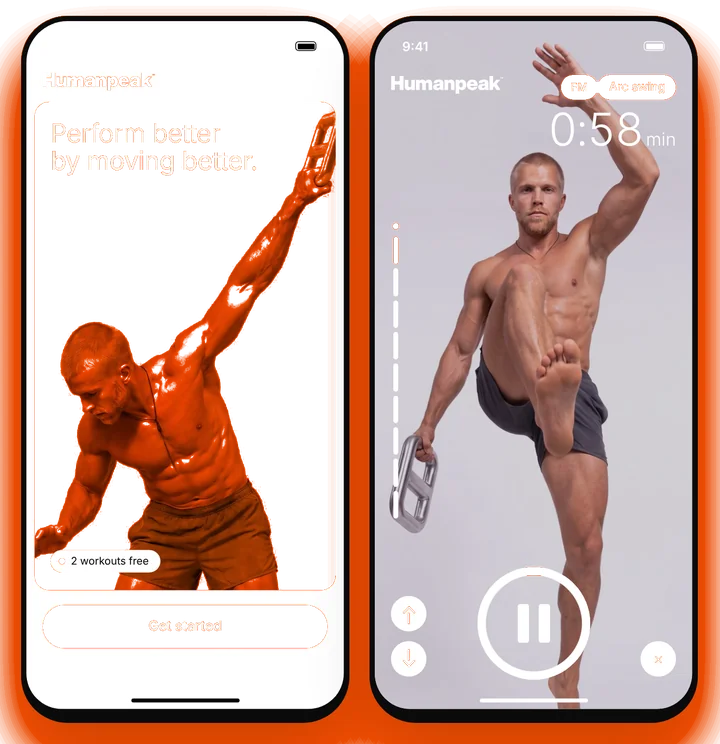
None of This Means the Pain Is Imagined
This is where pain education is most often misused. The sentence "pain does not mean damage" gets shortened online into "there is nothing wrong with you", which is both wrong and insulting to anyone living with it. Pain produced by a sensitive nervous system is not less real, less biological, or less disabling than pain produced by a fracture. It is simply generated differently, and therefore responds to different things.
The reason the distinction is worth making is that beliefs measurably track outcomes. In a study of 88 workers with non-specific low back pain, higher kinesiophobia - fear of movement - and higher pain catastrophizing were associated with longer sickness absence and greater self-reported disability [5]. That is an observational finding in a small sample, so it shows association rather than cause. It is still consistent with a large body of work: what a person believes their pain means shapes what they do, and what they do shapes the trajectory.
- Threat narrows movement. The belief that a joint is fragile produces guarding, avoidance and less varied loading.
- Less varied loading feeds sensitivity. Tissue and nervous system both adapt to what they routinely meet. A narrow diet of movement narrows tolerance.
- Narrow tolerance confirms the belief. The next unusual demand hurts, and the story appears validated.
Breaking that circuit is the point of pain education, not dismissing the symptom.
What Actually Changes the Picture
Two things carry usable evidence. The first is understanding. A systematic review of pain neuroscience education in chronic musculoskeletal pain with signs of central sensitisation found reductions in pain catastrophizing and kinesiophobia across most patient groups, with the strongest and most consistent effects when education was paired with exercise rather than delivered alone [6]. The same review is honest about its limits: follow-up periods were mostly short to medium term, outcome measures were heterogeneous, and performance bias was rated high across included studies [6].
The second is movement. The Cochrane review of exercise for chronic low back pain found moderate-certainty evidence of a clinically important improvement in pain at three months, around 15 points on a 0-100 scale, compared with no treatment or usual care [7]. The same review found only a 6.8-point improvement in functional limitation, which did not reach the authors' threshold for a minimal clinically important difference [7].
Notice what the evidence does not say. It does not identify one superior exercise. It does not require a diagnosis of the offending structure. It supports the general principle that a body which keeps meeting varied, controlled demand tends to interpret those demands as less threatening over time. That is why Humanpeak builds around regular practice rather than occasional intervention. The 12-Week Movement Protocol runs 5 workouts per week of about 20 minutes each, in full patterns, across planes.
How to Use This in Daily Practice
- FOCUS: CONFIDENT LOADING
- DURATION: 20 MIN
- BEST FOR: PERSISTENT, NON-RED-FLAG COMPLAINTS
- Get the serious things ruled out first. Unexplained weight change, fever, night pain that does not vary, trauma, loss of strength or sensation, bladder or bowel change - these belong with a physician, not with an article.
- Separate the two questions. "What does this hurt like" is different from "what is broken". Only the second requires a structural answer, and it is the rarer of the two.
- Keep moving inside a tolerable range rather than stopping entirely. Range that is used stays available; range that is avoided narrows.
- Add variety before adding intensity. Rotation, reach and multiplanar patterns expose the system to more than the sagittal repetition of most training.
- Judge progress over weeks, in what you can do, not over minutes, in what you feel during a session.
The felt quality of a session is a poor daily metric. Sensation fluctuates with sleep, stress and load in ways that have little to do with tissue state. What you can access, control and repeat is the more stable signal. If the distinction between a stiff morning and a genuinely restricted joint is unclear, stiff or tight works through it, and motor learning at any age covers why new movement patterns change control faster than passive input does.
Move within what is tolerable. Widen it slowly. Move better. Perform better.
Pain is information about protection, not a measurement of structure. That single correction changes what a symptom is allowed to mean, and it removes the assumption that hurting is proof of harm - an assumption that quietly shrinks how much people are willing to move.
The evidence supports the modest version of the claim, not the triumphant one. Scans find things in people who feel nothing. Sensitivity is a real and formally classified pattern. Understanding and graded movement produce moderate, reproducible improvements over months. Precise. Patient. Repeatable.
Fact check
Frequently asked questions
Humanpeak follows clear sourcing guidelines: we rely on peer-reviewed studies, scientific institutions and professional bodies, and aim for primary sources. Spotted an error? Write to us.
This article is for educational purposes only and does not replace medical advice. If you have symptoms, talk to a doctor.


