Stiff or Tight? The Difference Between Stiff and Tight Muscles


Almost everyone who trains uses two words for the same complaint: stiff and tight. The difference between stiff and tight muscles is not a matter of vocabulary. The two words point to at least three separate states in the body, and each one answers to something different. Confuse them, and you can spend six months pulling on a hamstring while nothing measurable changes.
This guide separates the three: passive resistance in the tissue, protective tone held by the nervous system, and the felt sense of restriction that can appear without either. The evidence sits at a different level of confidence for each one, and we mark which is which.
Stiffness is a measurable property — how much force it takes to move a joint through a range. Tightness is a sensation. They can occur separately: passive tissue resistance, protective muscle tone and perceived tightness are three different states. Perceived stiffness does not reliably match measured stiffness, which is why stretching a tight-feeling area sometimes changes nothing.
What Is the Difference Between Stiff and Tight Muscles?
In research terms the difference between stiff and tight muscles is the difference between a measurement and a report. Stiffness is quantifiable: the force required to move a joint or a tissue a given distance. Tightness is what the person feels. The two are assumed to track each other, and in the laboratory they frequently do not [1].
Three states hide behind the same two words. Sorting them is the whole job, because the training answer changes with each.
| THE STATE | HOW IT SHOWS UP | WHAT MOVES IT |
|---|---|---|
| Passive stiffness | Resistance when the body is relaxed and something else moves the joint | Loading through full range, across months [3][6] |
| Protective tone | Muscle staying electrically active when it should be quiet; range that appears the moment you relax | Predictable load, control at range, repetition [4] |
| Perceived tightness | A felt sense of restriction that does not match measured range | Movement, varied input, confidence in the position [1] |
Same word. Three mechanisms. Three answers.
State One: Passive Resistance in the Tissue
Passive stiffness is the honest, mechanical version of the complaint. The body is relaxed, an external force moves the joint, and the tissue resists. Muscle, tendon, joint capsule and the connective layers around them all contribute. It is the state most people believe they have when they say tight.
It is also the state that changes most slowly. A review of chronic stretching protocols concluded that interventions lasting three to eight weeks do not appear to change either muscle or tendon properties; what rises is extensibility and tolerance to a greater tensile force, meaning the adaptation sits mostly at a sensory level [3]. An earlier analysis in Physical Therapy reached the same reading and added the honest caveat that programs longer than eight weeks have not been properly evaluated [2].
What does move range is load. A meta-analysis of 55 studies found that resistance training with external load improved joint range of motion with a moderate effect (ES = 0.73), and that it was not significantly different from stretch training [6]. A separate meta-analysis of 11 randomized trials in 452 participants found no difference between strength training and stretching for range of motion (ES = −0.22; 95% CI −0.55 to 0.12) [5].
State Two: Protective Tone
The second state is not tissue at all. It is a decision the nervous system keeps making. Muscle stays partly switched on to guard a region, and the result reads to the owner as tightness that will not release.
There is a clean way to observe it. In a healthy back, the erector spinae go electrically quiet near end-range trunk flexion — the flexion relaxation phenomenon. A systematic review and meta-analysis found this silence absent or altered in roughly 55% of people with nonspecific chronic low back pain, with meaningfully lower flexion relaxation ratios than asymptomatic controls [4]. The authors also report high heterogeneity across studies, so treat the number as a signal, not a threshold.
That is why guarded regions often give up range for an hour after a session and take it back overnight. Nothing was lengthened, and nothing needed to be. The system briefly agreed to relax and then returned to its default. Changing the default takes repeated, predictable exposure: the same positions, loaded, controlled, and revisited on most days of the week until they stop registering as a risk. Breath and ribcage mechanics belong here too, since pressure and breathing shape how much the trunk needs to brace.
State Three: The Feeling of Tightness
The third state is the one that breaks the model most people carry. Feeling stiff can exist without measurable stiffness.
In a set of experiments published in Scientific Reports, researchers measured spinal stiffness objectively with an indentation device and compared it to what participants reported. Self-reported back stiffness did not correlate with the objective measure, and people with chronic back pain who reported feeling stiff were not objectively stiffer than controls. Those participants also overestimated the force applied to their spine while being better than controls at detecting changes in that force. In a further experiment, adding a sound synchronized to the applied force changed how stiff the spine was judged to be, without changing the spine [1].
The proposed reading is that feeling stiff is a protective perceptual inference — a conclusion the nervous system draws from several inputs at once, one of which happens to be the tissue. This sits at the emerging end of the ladder: laboratory conditions, the lumbar spine, modest samples. It is enough to stop treating the sensation as a direct readout of tissue, and not enough to dismiss the sensation.
- The feeling is real. It is produced by the nervous system for a reason, and it changes behavior — people move less, and less variably, in the region they call tight.
- The feeling is information, not measurement. It reports a judgment about safety in a position, not the length of a structure.
- The feeling responds to input. Novel, varied, confident movement gives the system something new to work from — pressure alone gives it a sensation to reinterpret.
A science-based protocol built around fascial lines to support multidirectional movement.
Start the protocol 14-day money-back guarantee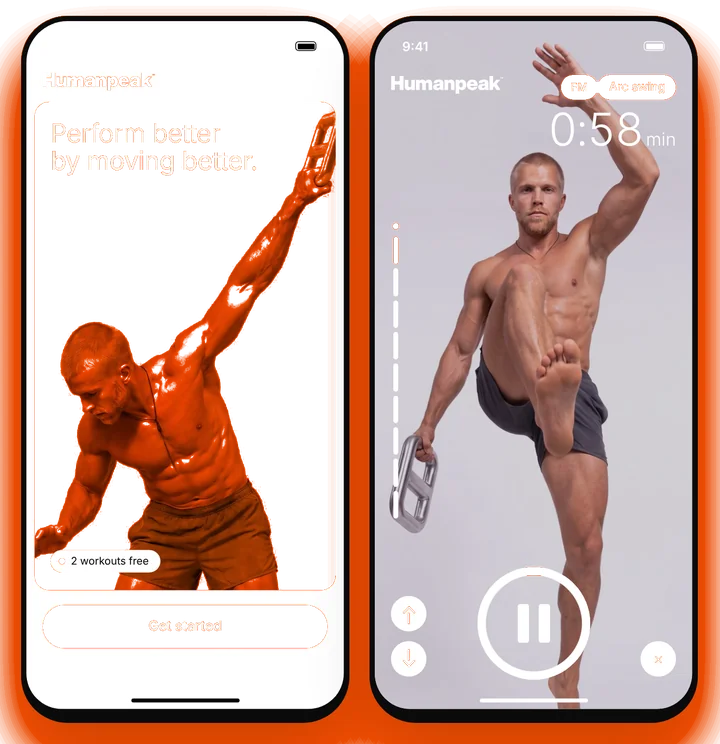
Why Stretching Sometimes Does Nothing
Stretching is not useless. It reliably increases the range you can access, and the mechanism is well described: within the usual eight-week window, the gain comes largely from tolerating more tensile force rather than from a lengthened muscle or tendon [2][3]. That is a real effect. It is also a narrow one, and it explains the pattern people describe as stretching that does nothing.
- If the driver is passive tissue resistance, stretching alone moves a dial that is mostly sensory, while the structural side answers to load [3][6].
- If the driver is protective tone, pulling harder into a guarded position gives a window of relief, then the guard returns [4].
- If the driver is perceived tightness, the input that changes the feeling is not necessarily tension at all [1].
There is a further reason to hold range loosely as a goal. A widely discussed position paper in Sports Medicine argued that flexibility shows little predictive validity for health and performance outcomes compared with strength and cardiorespiratory fitness, and that resistance training offers the broader return where range needs improving [7]. That paper drew published rebuttals and remains contested. Read it as a counterweight to range-for-its-own-sake, not as a verdict.
The practical conclusion is the one Humanpeak is built on: active movement instead of passive treatment. Range you can produce yourself, under load, is the version that stays.
Which One Do You Have — and What to Train
Three checks separate the states well enough to train against. None of them is a diagnosis; they are sorting tools.
- The passive-versus-active check: have the joint moved for you, without effort, then produce the same range yourself. Range that appears passively but not actively points at control and tone, not at short tissue.
- The session check: if range opens during a warm-up and is gone by the next morning, the change was neural. Structure does not reorganize and unreorganize in twelve hours.
- The pattern check: if the same region tightens after every long day at a desk or every heavy training block, the driver is load and habit distribution, not a single stubborn muscle.
The training answer is the same in shape across all three, with the emphasis shifting. Build range under load, then make it usable.
- Load the end range. Work where the range runs out, with control, rather than parking passively at the limit — this is the difference between mobility and flexibility.
- Add rotation. Most training runs forward and back. Guarded regions are usually guarded against rotation, which is exactly what daily life asks for.
- Go five days a week, go short. Protective tone answers to repetition and predictability more than to session length.
- Keep it novel. New coordinated patterns give the nervous system fresh information about a position it has decided to protect.
- FOCUS: LOADED RANGE
- DURATION: 20 MIN, 5× PER WEEK
- BEST FOR: ALL LEVELS
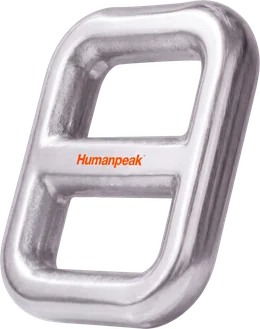
That is the structure of the 12-Week Movement Protocol: 5 workouts per week, about 20 minutes each, across three phases (Restore, Build, Perform), with the 2.2 kg Humanpeak™ Movement Tool. Every flow combines mobility, control and targeted fascial loading through multidirectional movement, so range and the strength to hold it are built in parallel rather than in separate sessions. It sits on top of the training you already do, as the layer that training usually leaves out.
When Stiffness Deserves a Second Look
Most stiffness is mechanical and behaves predictably: worse after stillness, better with movement, variable from day to day. One pattern behaves differently and belongs in a physician's hands rather than a training plan.
- Inflammatory pattern. Insidious back pain starting before roughly age 40 to 45, morning stiffness lasting more than 30 minutes, improvement with activity but not with rest, and waking in the second half of the night [8].
- Progressive or one-sided change. Stiffness that increases steadily over weeks, or is clearly restricted to one joint without an obvious load history.
- Neurological signs. Numbness, weakness or radiating symptoms alongside the stiffness.
These are reasons to get assessed, not conclusions. Training resumes with better information afterward.
Stiff and tight are one complaint with three sources. Passive resistance in the tissue answers to load over months. Protective tone answers to predictability and control. The felt sense of restriction answers to input and confidence in a position — and in the laboratory it can move without the body moving at all.
Which means the useful question is not how hard to pull, but what the region is being asked to do and how often. Load the range. Rotate. Repeat. Move better. Perform better.
Fact check
Frequently asked questions
Humanpeak follows clear sourcing guidelines: we rely on peer-reviewed studies, scientific institutions and professional bodies, and aim for primary sources. Spotted an error? Write to us.
This article is for educational purposes only and does not replace medical advice. If you have symptoms, talk to a doctor.

Related articles


