Shoulder Pain and the Control Problem Behind It


Shoulder pain when lifting rarely announces itself as an injury. It shows up as a catch at a certain height, a press that feels heavier on one side, a shoulder that is fine for three weeks and then is not. The instinct is to look for damage — a tear, an impingement, something structural to blame. The evidence points somewhere less dramatic and considerably more useful. Most of the time the shoulder is not broken. It is under-controlled.
The shoulder is the most mobile joint in the body and the least bony-stable. Its stability is not a property of the socket. It is produced, continuously, by muscle timing, shoulder-blade motion and the position of the ribcage underneath it. That makes stability a trained quality rather than a fixed one — and it means stability can be lost quietly, long before anything hurts.
Shoulder pain when lifting is usually a control problem rather than a damage problem. Imaging abnormalities are common in shoulders that never hurt, and motor-control-focused exercise reduces disability more than general exercise. The shoulder needs range it can stabilize under load, built through ribcage position, shoulder-blade timing and how the load is applied.
What Causes Shoulder Pain When Lifting?
Shoulder pain when lifting is most often a mismatch between demand and control: the load, the speed or the position asks for more stability than the joint can produce in that moment. Clinical practice guidelines now group most of these presentations under rotator cuff–related shoulder pain, a deliberately broad label covering what used to be split into impingement, bursitis and tendinitis [8]. The renaming was not cosmetic. It reflects how poorly specific structural labels hold up on physical examination, and how consistently loading-based exercise remains the first line of nonsurgical management [8].
Three things tend to shift together when a shoulder starts complaining under load. The range available overhead shrinks. The timing of the shoulder blade against the ribcage gets sloppy. And the force the shoulder can produce in the outer part of its range drops. None of the three appears on a scan, and all three respond to how the body is trained.
Why Imaging Rarely Explains the Pain
A 2025 systematic review pooled 53 studies of shoulders that did not hurt at all. In population-based samples, full-thickness rotator cuff tears showed up in 11% to 17% of asymptomatic shoulders on ultrasound and in about 20% on MRI. Tendinopathy or partial-thickness change was found in 34% of asymptomatic shoulders on ultrasound and 65% on MRI [2]. Across all included samples, prevalence ranged from 0% to 100%, and the authors rated the certainty of that evidence as low to very low [2].
This does not make imaging useless. It makes imaging a description of tissue, not an explanation of a symptom. Structural change accumulates in shoulders that work perfectly well, which is why the same picture can belong to a person in pain and to a person who has never noticed a thing. The practical consequence is that decisions get made on what the shoulder can do — how much range, how much control, how much load, how repeatable — rather than on the picture alone. The same logic runs through the spine, where pain does not always mean damage.
- FINDING: COMMON WITHOUT SYMPTOMS
- CERTAINTY: LOW TO VERY LOW
- DECIDES: FUNCTION, NOT IMAGE
Does Scapular Dyskinesis Cause Shoulder Pain?
The shoulder blade is the moving base the arm works from, so altered scapular motion — scapular dyskinesis — became one of the most examined signs in shoulder assessment. Then the numbers arrived. A systematic review found scapular dyskinesis in about 60% of people with shoulder symptoms and in 48% of people without them, rising to 59% in the asymptomatic general population [1]. The authors put the conclusion plainly: dyskinesis may be a normal finding in nearly half the population without symptoms [1].
That removes the sign from diagnosis and leaves it available as a training target, which is a smaller and more honest claim. The training evidence follows the same shape. A 2024 meta-analysis found that adding scapular-focused exercise improved shoulder function compared with control interventions, with a moderate effect (SMD 0.52), while the difference in pain did not reach statistical significance (SMD 0.32) [4]. Programs of six weeks or longer produced better functional outcomes than shorter ones [4].
Function moved. Pain did not follow automatically. Both facts belong in the same sentence, and most content on this topic only ever quotes the first one.
A science-based protocol built around fascial lines to support multidirectional movement.
Start the protocol 14-day money-back guarantee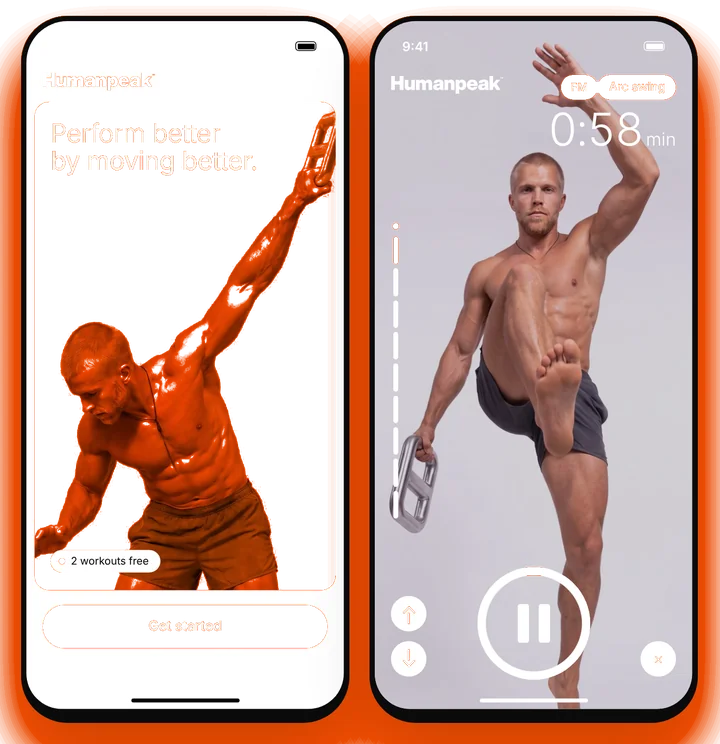
Bottom-Up Loading: What an Unstable Position Actually Trains
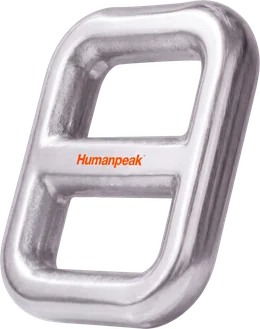
The bottom-up kettlebell press has become the internet's preferred shoulder demonstration, and the mechanism behind the clip is real. Inverting the bell puts the mass above an unstable pivot, so the system only stays upright if grip, cuff and shoulder blade keep correcting it in real time. Less stability in the implement means more demand on the controller. That is the whole point of the position.
The measured picture is narrower than the caption suggests. In 28 collegiate baseball players pressing the same 11.34 kg three ways, the bottom-up kettlebell produced greater serratus anterior activity than either the dumbbell or the conventional kettlebell — while the dumbbell produced greater activity in the medial deltoid and the lower trapezius [6]. Bottom-up loading is not a stronger version of a press. It is a different task, biased toward the muscle that keeps the shoulder blade flat and organized against the ribcage.
- The load stays light by design. The limit in a bottom-up position is the controller, not the prime mover. Loading it heavy removes the reason it works.
- The instability is the stimulus. Correcting a wobbling load is a coordination demand, which is trained by repetition and attention rather than by adding kilos.
- It complements heavy work, it does not replace it. Maximal strength still comes from heavy progressive loading. Bottom-up work trains the timing that decides whether that strength is usable overhead.
- FOCUS: CONTROL UNDER LOAD
- LOAD: LIGHT BY DESIGN
- TRAINS: SCAPULAR TIMING
Range You Cannot Control Is Range You Cannot Use
The shoulder does not move against a fixed frame. It moves against a ribcage that changes shape with posture and breathing. A classic biomechanics study measured what happens when only that base changes: in a slouched thoracic position, active shoulder abduction dropped by a mean of 23.6 degrees compared with an erect position, isometric force with the arm horizontal fell by 16.2%, and the shoulder blade tilted backward significantly less in the upper part of the range [7]. Same shoulder. Same person. Different base.
This is why thoracic rotation and ribcage position belong inside a shoulder plan rather than beside it as a separate mobility hobby. It is also the practical version of a broader principle: usable range is usable strength. Range that exists only when someone else moves the limb is not range the body can call on mid-lift. Force can only be expressed in positions the body can access and control.
The sensing side matters as much as the mechanical one. Joint position sense at the shoulder is measurably poorer where rotator cuff pathology is present, with error increasing alongside tear size [5]. Rehabilitation that actively targeted that sense improved kinesthesia, while passive additions — electrical stimulation, bracing, taping — produced no significant improvement [5]. Passive input does not build a controller. New movement does.
How to Train the Shoulder for Control
The strongest dose-related evidence in this field comes from a 2024 systematic review with meta-analyses covering 22 randomized trials and 1,281 participants with rotator cuff–related shoulder pain. It found moderate-certainty evidence that motor control exercise programs reduced disability more than general exercise in the short and medium term, while findings for pain, for eccentric-specific protocols and for exercise intensity remained inconclusive [3]. Read as a whole with the guideline evidence, the message is consistent: exercise carries the load, and how the movement is organized appears to matter as much as how much is lifted [3][8].
- Set the base. Ribcage and thoracic position organized before the arm goes anywhere.
- Own the range actively. Reach to end range under your own muscle, then hold it — not gravity's version of the position.
- Load it light and unstable. Bottom-up carries, presses and holds, where the limiter is control rather than the prime mover.
- Add speed and rotation last. Throws, swings and diagonal patterns, once the position holds under slow load.
Frequency beats heroics here. Coordination is motor learning, and motor learning responds to short, frequent, varied exposure rather than to one long session per week. This is the logic the 12-Week Movement Protocol is built on: 5 workouts per week of about 20 minutes each with the Humanpeak™ Movement Tool (2.2 kg), in whole-body flows in which the shoulder is trained as part of a chain instead of as an isolated joint.
The shoulder that hurts when you lift is usually not a shoulder that has failed structurally. It is a shoulder being asked for more control than it currently produces, in a position it does not fully own, on a base that has quietly changed shape. That reframing is not softer than the structural story. It is more demanding, because it puts the work back in the hands of daily practice.
Train the base. Own the range. Control the load. Stability is not something the joint has — it is something the body produces, every repetition, for as long as it is trained.
Fact check
Frequently asked questions
Humanpeak follows clear sourcing guidelines: we rely on peer-reviewed studies, scientific institutions and professional bodies, and aim for primary sources. Spotted an error? Write to us.
This article is for educational purposes only and does not replace medical advice. If you have symptoms, talk to a doctor.


