SI Joint Pain and Tight Hips: Usually Not a Stretching Problem


A dull ache low and to one side, just inside the back of the pelvis. Hips that feel packed tight by mid-afternoon, then looser for twenty minutes after a stretch. The pattern repeats for months, and the working theory almost never changes: something is short, something is stuck, pull on it harder. SI joint pain and tight hips are the most self-treated combination in movement culture, and the stretch-first theory is a large part of why the sensation keeps returning.
The mechanics point somewhere else. The sacroiliac joint is built for load transfer and moves in millimeters, not degrees [1]. Tightness is a sensation the nervous system produces, not a ruler reading. And in people with low back complaints, what shows up on measurement is rarely slack, lazy tissue: it is reduced hip rotation, weaker hip abductors and extensors, and more muscle activity around the pelvis rather than less [4]. This guide covers what the joint does, where the tight feeling comes from, and what the evidence supports as the lever.
SI joint pain with tight hips is usually a control and load-tolerance problem rather than a length problem. The sacroiliac joint moves only two to four millimeters, so the tight feeling is rarely short tissue. It more often reflects protective muscle activity around a pelvis that is not being controlled well under load.
Why SI joint pain and tight hips travel together
The sacroiliac joint sits where the base of the spine meets the pelvis, one on each side. Its job is load transfer: everything the trunk carries passes through it on the way to the legs, and every step sends force back the other way. It is also a plausible pain source in a meaningful share of low back presentations, with estimates that up to a quarter of low back pain may originate in this region [1].
It is also difficult to localize. No single physical test is both sensitive and specific for the joint, which is why the accepted approach is a cluster rather than one manoeuvre: three or more positive pain provocation tests raise diagnostic accuracy [1]. The European guidelines for pelvic girdle pain go further and recommend pain provocation tests plus the active straight leg raise as a functional test, while explicitly not recommending mobility and palpation tests, plain X-rays, CT or scintigraphy for diagnosis [2].
That matters for self-diagnosis. If trained hands cannot reliably locate the restriction by feel, the sensation in your own hip is a rough map at best. Tight hips and a one-sided pelvic ache describe an experience, not a mechanism.
- JOINT MOTION: 2–4 MM
- SHARE OF LOW BACK PAIN: UP TO 25%
- SINGLE RELIABLE TEST: NONE
The joint moves in millimeters, not degrees
Motion at the sacroiliac joint is minimal, described as limited to roughly two to four millimeters in any direction [1]. That number quietly dismantles the most popular story in the category. A joint with a few millimeters of available travel, wrapped in some of the densest ligament in the body, is not sliding out of place during a long drive and back into place under a thumb. The hardware does not work that way.
What can change is how much load the region tolerates, and how well the pelvis holds position while that load passes through. This is why the functional item in the guideline list is revealing: the active straight leg raise asks whether you can lift one leg without the pelvis losing its position [2]. It is not a length test. It is a control test, run under a small amount of load.
- Not a position problem. Millimeter-scale motion and unreliable palpation make an alignment story hard to support [1][2].
- A load question. The joint transfers force between trunk and legs, so the relevant variable is how much force it can accept and how well that force is organized.
Tightness is an output, not a measurement
In 2020 the International Association for the Study of Pain revised its definition of pain and attached a note worth reading twice: pain and nociception are different phenomena, and pain cannot be inferred solely from activity in sensory neurons [3]. Sensation is produced, not simply detected. The same logic applies to the feeling of tightness. It is an experience the system generates, and it can be generated by a protective strategy just as readily as by a mechanical limit.
The observational data point in that direction. A systematic review of 54 studies comparing people with low back pain to healthy controls found greater activation of the hamstrings and gluteus maximus during functional activities and specific tests, alongside reduced hip range and lower hip abductor and extensor strength [4]. More tension, less usable range, less capacity. That combination is difficult to explain as short tissue and easy to explain as guarding.
The hip that feels jammed at 4 p.m. is not a hip that shortened since breakfast. It is a hip held in one position, loaded in one direction, and asked for nothing else.
What the hip actually loses
When you replace the sensation with the measurement, the picture narrows. The same review of 54 observational studies reported a significant reduction in hip range of motion in people with low back pain, most consistently hip internal rotation, together with weakness of the hip abductor and extensor muscles during specific tests and functional activities, and slower performance of everyday tasks such as sit-to-stand [4].
Internal rotation is the range most training never touches. Squats, hinges, runs and rides all live in one plane. Rotation is where the hip either gives you room or borrows it from the pelvis and low back, and the pelvis is exactly where the borrowing gets felt.
| What it feels like | What tends to be measurable | What training targets |
|---|---|---|
| Tight hip flexors | Reduced hip internal rotation [4] | Rotational range, loaded and controlled |
| Deep, jammed pelvic ache | Pelvis losing position under single-leg load [2] | Controlled leg-load patterns |
| Tight glutes on one side | Hip abductor and extensor weakness [4] | Progressive single-leg loading |
| Tight hamstrings | Higher hamstring activation during tasks [4] | Load shared back to the hip |
Read the middle column again. Not one line of it is a length problem. Range, position and capacity respond to being used, not to being pulled.
A science-based protocol built around fascial lines to support multidirectional movement.
Start the protocol 14-day money-back guarantee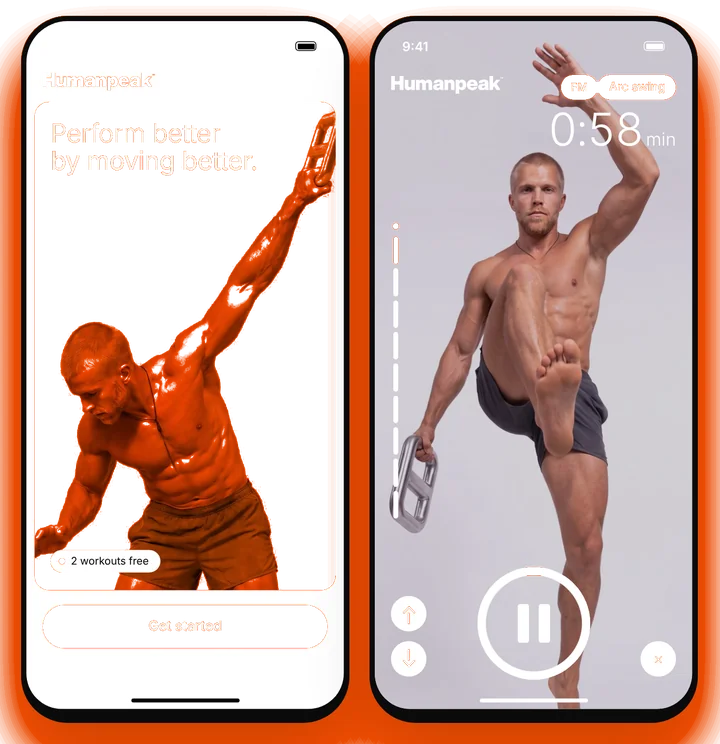
Why stretching buys twenty minutes
Stretching is not useless, and the research is more interesting than either camp admits. A 2025 systematic review with meta-analysis and multivariate meta-regression covering 65 studies and 1,542 adults examined what actually changes when range of motion improves after static stretching. Neither acute nor chronic stretching altered muscle fascicle length. Increased range was associated with reduced overall stiffness and, after chronic stretching, with an increased maximum tolerable passive resistive torque [5].
Translated: stretching changes how stiff the tissue behaves and how much stretch you tolerate. It does not lengthen the muscle. And tolerance, by definition, is a property of the nervous system, which is why the effect on a protective pattern is real but short-lived. The demand that produced the guarding has not changed by the time you stand up.
So the twenty-minute window is not a failure of your technique. It is an accurate report of what the intervention does. The alternative is not to stop stretching. It is to stop asking stretching to do a job it was never doing.
What actually changes it: control and load tolerance
The strongest evidence in this whole area is unglamorous. A Cochrane review of 249 trials and 24,486 participants found moderate-certainty evidence that exercise is more effective than no treatment, usual care or placebo for chronic low back pain, with an average improvement of about 15 points on a 0–100 pain scale [6].
The follow-up question is which exercise, and the answer is the honest one. A separate Cochrane review of 29 trials and 2,431 participants found that motor control exercise is probably better than minimal intervention for pain, function and global impression of recovery, but is not clinically more effective than other forms of exercise at any follow-up. The authors concluded that the choice should depend on patient and therapist preference, training, cost and safety [7]. No method owns this. Training does.
Where the hip fits is more specific. A systematic review of seven clinical trials and 517 participants found that adding hip muscle strengthening to conventional treatment improved pain and disability in non-specific low back pain, with no adverse effects reported [8]. Small trials, review level, no pooled meta-analysis — treat it as supportive rather than settled. The European pelvic girdle guidelines land in the same territory, recommending individualized exercise programs rather than passive management [2].
- Restore rotation at the hip, actively, in positions you can control rather than positions you can only fall into.
- Load one leg at a time, so the pelvis has to hold position instead of splitting the work.
- Train the diagonal: force crosses the pelvis from one hip to the opposite shoulder, and that pattern needs practice, not just strength.
- Progress the demand in small steps, since tolerance grows with exposure rather than with intensity spikes.
- Repeat often. Adaptation follows frequency, and a protective pattern unlearns slowly.
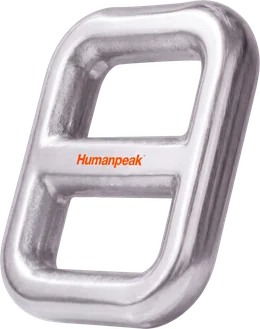
That is the logic the 12-Week Movement Protocol is built on: rotation, single-leg control and force transfer through the pelvis, trained in 5 workouts per week of about 20 minutes each with the Humanpeak™ Movement Tool (2.2 kg), on top of the training you already do.
- FOCUS: ROTATION & PELVIC CONTROL
- DURATION: 20 MIN
- FREQUENCY: 5X PER WEEK
When it belongs with a clinician
Pelvic girdle complaints can arise in relation to pregnancy, trauma and arthritis. Those are assessments, not training decisions [2].
- After a fall or impact. New pelvic or low back pain following trauma belongs with a physician before any loading plan.
- During or after pregnancy. Pregnancy-related pelvic girdle pain has its own assessment pathway and its own individualized programs [2].
- Nerve symptoms. Numbness, weakness or symptoms travelling down the leg need a clinical examination.
- Night pain or fever. Pain that consistently wakes you, or arrives with fever or feeling unwell, is a medical question.
- No change over weeks. If a structured, progressive program produces nothing over several weeks, get it looked at rather than adding volume.
The tight hip and the one-sided pelvic ache are usually reporting the same thing from two directions: a region that is being asked to transfer force it has not been trained to accept. Millimeters of joint motion cannot be stretched open. Tolerance and control can be built.
Which changes the daily question from how hard you pulled to how well the load was organized, and how often you practiced. Controlled. Loaded. Connected.
Fact check
Frequently asked questions
Humanpeak follows clear sourcing guidelines: we rely on peer-reviewed studies, scientific institutions and professional bodies, and aim for primary sources. Spotted an error? Write to us.
This article is for educational purposes only and does not replace medical advice. If you have symptoms, talk to a doctor.


