Power vs Strength Aging: Power Goes First. That Changes How You Train


Two capacities usually get filed under one word. Strength is how much force the body can produce. Power is how fast it can produce it. Everyday life runs mostly on the second one: catching a stumble, standing out of a low chair, taking a stair two at a time. The power vs strength aging data separates these two early, and it separates them in one consistent direction.
Power goes first. Longitudinal cohorts show strength dropping several times faster than muscle mass, and power dropping faster than strength, with the divergence already measurable by the fifth decade [1][2][4]. That single fact reorganizes what a training week should contain — and it explains why a body can look well trained and still feel slow.
Power declines earlier and faster than maximal strength. Longitudinal data show strength falling two to five times faster than muscle mass, and power falling faster still, with measurable decline from around age 40. Power also predicts walking speed, stair climbing and fall risk better than maximal strength does.
Power vs Strength Aging: What Declines First?
Strength is a maximum. It is measured slowly, against a load the body pushes until it cannot push further. Power is a rate: force multiplied by the velocity at which that force appears. A one-rep maximum and a fast step out of the way of a bicycle draw on the same muscle and grade it on completely different scales.
A quantitative review of the aging literature pulled the numbers together. Across studies that measured muscle size and muscle strength in the same people, strength was lost two to five times faster than mass. In longitudinal work on adults past 75, leg strength fell roughly 3 to 4 percent per year in men and 2.5 to 3 percent in women, against mass losses under 1 percent per year. The same review notes that power is lost faster than strength, while flagging that power is harder to measure consistently [1].
The Baltimore Longitudinal Study of Aging put a start date on it. Repeated measures taken every two years across 25 years found that arm strength and power both began declining by age 40. In men, power declined about 10 percent more than strength over the follow-up. In women, the difference between the two curves did not reach significance — an early signal that the size of the gap is not uniform across everyone [4].
Why Speed Is the First Thing Lost
Power is the product of force and velocity, so it can be lost from either side. With age, the velocity side erodes first. Type II fibers — the fast, high-output ones — can generate roughly four times the power output of type I fibers, and advancing age brings a selective reduction in both the number and the size of type II fibers and the motor units that drive them [3].
This is what the research literature separates as dynapenia: the loss of strength and force-generating speed, distinct from sarcopenia, the loss of muscle mass. The two travel together but at very different speeds, and only one of them is visible in a mirror.
- CONTRACTION VELOCITY. The speed at which a muscle can shorten under load falls before maximum force does. Slow training never asks for this quality, so it is never defended.
- MOTOR UNIT LOSS. Fast motor units are lost preferentially. What remains can still produce force, but it produces it later in the movement.
- MUSCLE QUALITY. Force produced per unit of muscle declines independently of size, which is why a maintained physique is not a maintained capacity [2].
Nothing here requires decline to be dramatic. It requires it to be unaddressed. The quality that fades first is the one almost no adult training program deliberately trains.
Why Muscle Mass Is the Wrong Thing to Watch
The Health, Aging and Body Composition Study followed 1,880 older adults for three years with repeated measurement of leg strength and leg lean mass. Annualized strength decline ran 3.4 percent in white men, 4.1 percent in black men, 2.6 percent in white women and 3.0 percent in black women — about three times the roughly 1 percent annual loss of leg lean mass [2].
| MARKER | ANNUAL CHANGE (HEALTH ABC, 3 YEARS) |
|---|---|
| Leg lean mass | approximately 1% loss per year |
| Leg strength, men | 3.4% to 4.1% loss per year |
| Leg strength, women | 2.6% to 3.0% loss per year |
| Strength loss in those who gained mass | still present |
The most useful finding in that dataset is the last row. Participants who maintained or even increased lean tissue over the three years still lost strength at comparable rates. Adding mass did not buy protection. Muscle quality, not quantity alone, carried the decline [2].
So the mirror is a lagging indicator, and so is the scale. If the fastest-moving capacity is velocity, the honest test is a movement, not a measurement of size.
Built around fascial lines. 20 minutes per session, 5 times a week, guided step by step in the app.
Start the protocol 14-day money-back guarantee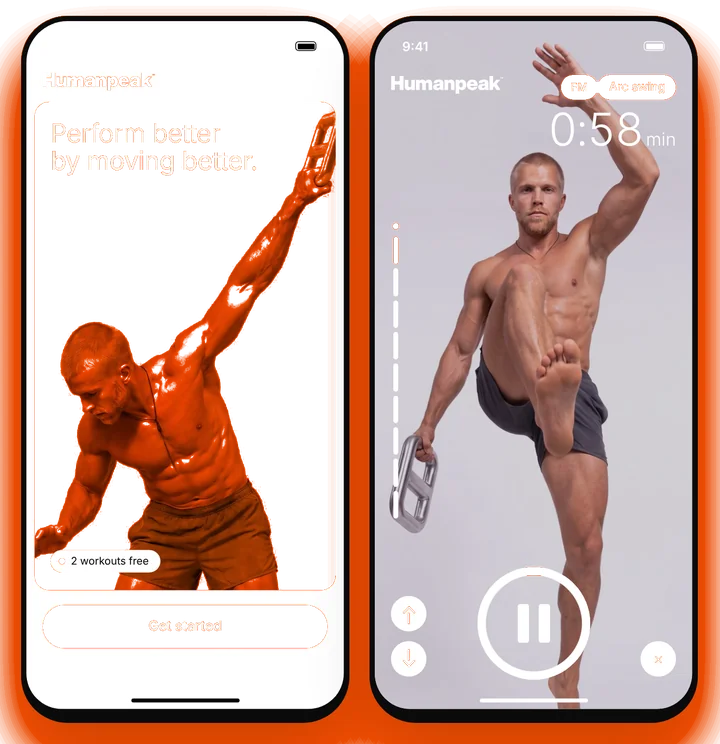
What Power Predicts That Strength Does Not
If power were simply strength with a stopwatch attached, it would not carry extra predictive weight. It does. In a review of skeletal muscle power in older adults, peak muscle power correlated more closely with physical function than muscle strength did (r = 0.47 versus r = 0.43), and in the 1,032-participant InCHIANTI cohort, impairments in power were more influential determinants of mobility performance than impairments in strength. Adults with low power output carried a two- to three-fold greater risk of mobility impairment [3].
The same review reports the sharpest illustration of the split. Compared with healthy older adults, mobility-limited elders showed a 65 percent reduction in leg power but only a 13 percent reduction in muscle mass [3]. The functional gap was five times the size of the structural one.
Falls follow the same logic. Balance recovery is a rate problem: the corrective force has to arrive inside a fraction of a second, or it arrives after the fall. A 12-month longitudinal study of 94 community-dwelling older adults measured isokinetic strength and power across eight lower-limb muscle groups and found hip flexor power independently associated with the odds of falling, alongside hip abductor strength [6]. The sample is small and the study is observational, so read it as a signal rather than a settled number.
- STRENGTH: HOW MUCH
- POWER: HOW FAST
- FUNCTION: MOSTLY HOW FAST
What the Training Evidence Actually Shows
Here is where honesty matters more than enthusiasm. A systematic review and meta-analysis in JAMA Network Open compared power training — a fast lifting phase with a controlled lowering phase — against traditional slow, controlled strength training. Twenty randomized trials, 566 community-dwelling older adults, mean age 70.1. Power training produced a small advantage in physical function, with a standardized mean difference of 0.30 (95% CI 0.05 to 0.54) [5].
The authors rated that evidence low-certainty. Median group sizes were 12 to 13 participants, most interventions ran only 12 weeks, several trials carried a high risk of bias, and few tracked movement velocity objectively. Their own conclusion asks for large, robust trials [5]. So the correct statement is modest: training with intent to move fast appears somewhat better for function than training slowly, and it is clearly better than not training that quality at all.
The prescriptive guidance has moved in the same direction. The 2026 resistance training guidelines from the American College of Sports Medicine, built on 137 systematic reviews, recommend moderate loads of 30 to 70 percent of one-rep maximum for power development, with the instruction to move the load as quickly as possible during the lifting phase — intent, not weight, is the variable [8]. The World Health Organization asks adults 65 and over for varied multicomponent activity emphasizing functional balance and strength training on three or more days per week, to support functional capacity and reduce falls [7].
Two consistent themes across all of it: frequency and speed. Neither requires a heavier barbell.
How to Train Power Without Chasing Load
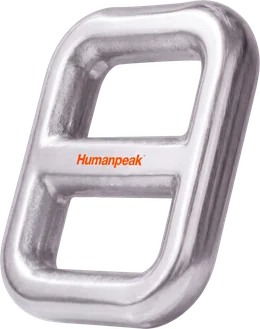
Force equals mass times acceleration. That is physics, not marketing, and it means a light implement moved with real acceleration produces genuine peak force. This is the basis of how Humanpeak trains: a light tool, whole-body flows, and speed as the organizing variable rather than load. It builds power, elasticity and force endurance. It is not a substitute for heavy progressive loading if maximal strength or muscle size is the goal — those adaptations belong to the barbell, and we say so plainly.
Bill Parisi, in The Anatomy of Speed, frames the body as a connected system that stores, transfers and expresses force. That framing is useful here, because power rarely fails in one muscle. It fails in the handoff — the hip that cannot rotate, the mid-back that cannot turn, the foot that lands late.
- Train speed early in the session, when the nervous system is fresh and intent is highest.
- Keep the working effort short. Power qualities degrade quickly under fatigue, so quality of intent outranks accumulated volume.
- Move in more than one plane. Most training is forward and back; balance recovery and daily life are rotational.
- Practice often rather than heavily twice a week. Velocity is a coordination skill, and skills respond to frequency.
- Own the range first. Force can only be expressed through positions the body can access and control.
- FOCUS: SPEED + ROTATION
- DURATION: 20 MIN
- FREQUENCY: 5X PER WEEK
No heavier load. Just the quality that fades first, trained on purpose as a layer on top of the training you already do. Fast. Connected. Repeatable.
The power vs strength aging picture is not symmetrical, and that asymmetry is the whole instruction. Mass moves slowly. Strength moves faster. Power moves fastest, and it is the capacity that walking speed, stair climbing and balance recovery actually draw on [1][2][3].
Which means the useful question is not how much the body can lift. It is how quickly it can answer. Train the rate, not just the maximum — the body keeps the capacity it is regularly asked for. Move better. Perform better.
Fact check
Frequently asked questions
Humanpeak follows clear sourcing guidelines: we rely on peer-reviewed studies, scientific institutions and professional bodies, and aim for primary sources. Spotted an error? Write to us.
This article is for educational purposes only and does not replace medical advice. If you have symptoms, talk to a doctor.


