Grip Strength as a Health Marker: What It Does and Does Not Predict


A dynamometer is a small device with a handle. You squeeze, it returns a number in kilograms, and that number tracks survival across hundreds of thousands of people [1][2]. This is why grip strength longevity content travels so far: a health forecast that runs in ten seconds and fits in one hand.
The association is real, and it is large. The instruction people extract from it usually is not. Squeezing harder is not the intervention the data points to. This guide separates the two — what the number predicts, what it cannot prove, and what it is actually reading.
Grip strength is one of the most reliable predictors of all-cause and cardiovascular mortality in large population studies: each 5 kg lower reading is linked to roughly 16 to 20 percent higher mortality risk. It predicts. It does not cause. Grip reflects whole-body condition, not the hand alone.
What Does Grip Strength Actually Predict?
Two large prospective cohorts carry most of the weight in the grip strength longevity discussion. The Prospective Urban Rural Epidemiology (PURE) study followed 139,691 adults in 17 countries for a median of four years. Each 5 kg reduction in grip strength was associated with a 16% higher risk of death from any cause and a 17% higher risk of cardiovascular death. In that dataset, grip strength predicted all-cause and cardiovascular mortality more strongly than systolic blood pressure [1].
UK Biobank ran the same question at greater scale: 502,293 participants, a mean 7.1 years of follow-up, 13,322 deaths. After adjustment for age, sex, body composition, smoking, socioeconomic status and physical activity, each 5 kg lower reading remained associated with higher mortality across several causes [2].
| PER 5 KG LOWER GRIP (UK BIOBANK) | WOMEN | MEN |
|---|---|---|
| All-cause mortality | HR 1.20 | HR 1.16 |
| Cardiovascular mortality | HR 1.19 | HR 1.22 |
| All cancer mortality | HR 1.17 | HR 1.10 |
| COPD mortality | HR 1.24 | HR 1.19 |
The same data also draws its own borders. In PURE, grip strength showed no significant association with incident diabetes, hospital admission for pneumonia or chronic obstructive pulmonary disease, injury from a fall, or fracture [1]. A marker that predicts several outcomes well does not predict all of them.
Grip Strength and Longevity: A Marker, Not a Mechanism
Prediction and causation are different jobs, and the researchers are the first to say so. The UK Biobank authors note that reverse causality is possible in any observational study, that residual confounding is always possible, and that their interest is risk identification rather than cause [2]. Adding grip to a conventional risk score improved prediction. Improved prediction is not a treatment plan.
Consider what sits behind a weak reading in a large cohort. Some of those people are already ill in ways nobody has diagnosed yet. Some have spent decades with very little physical demand placed on them. Some have lost fast motor units faster than their peers. Each of those paths lowers grip, and each of them independently raises risk. The dynamometer collects all of it into one tidy figure, which is exactly what makes it useful for screening and useless as an explanation.
Which is where the popular version breaks. No trial has randomized people to grip training and then measured how long they lived. Training the forearm changes the reading. It does not change what the reading was reporting on. The hand is the dial, not the engine.
Grip Strength Is Not Whole-Body Strength
The most-cited review of grip strength as a biomarker is unusually candid about its own limits. Bohannon documents that grip predicts mortality, functional decline, disability, falls, fractures and hospitalization — and cautions in the same paper that clinicians and scientists should be careful using grip strength as an indicator of overall strength, because it is not always reflective of it. He recommends pairing it with a measure of lower-limb strength [3].
The intervention evidence sharpens the point. In frail older adults completing a supervised resistance exercise program, handgrip strength did not represent an appropriate measure of the muscle-strength changes the program produced [6]. The training worked. The dial did not follow it.
That is the practical distinction, and it is the one almost every viral post skips. Grip strength is a screening instrument. It is not a training target, and it is not a stand-in for the strength used to stand up, climb, carry, rotate and catch a stumble.
Built around fascial lines. 20 minutes per session, 5 times a week, guided step by step in the app.
Start the protocol 14-day money-back guarantee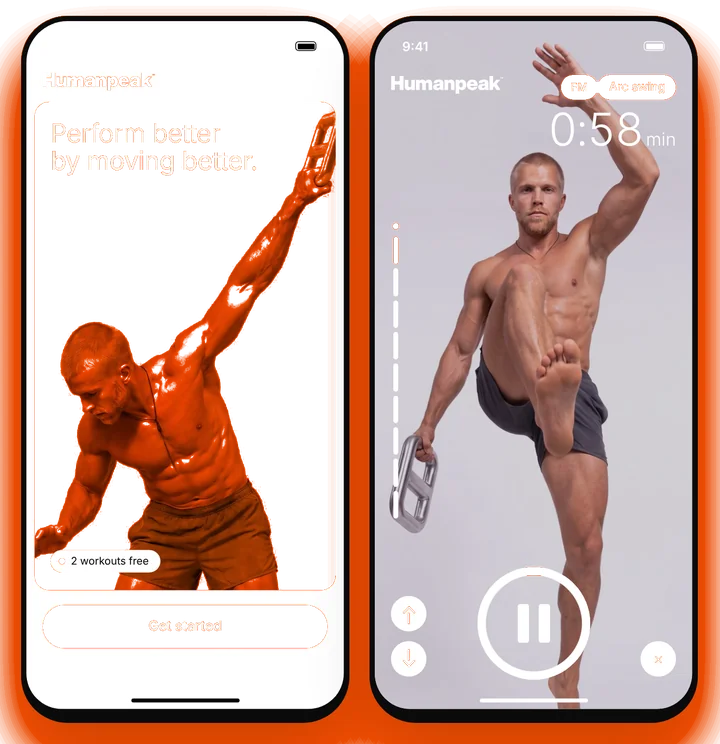
What Counts as Low Grip Strength?
Normative data pooled from twelve British studies puts the trajectory in numbers. Median grip peaks near 51 kg in men between ages 29 and 39 and near 31 kg in women between 26 and 42, then declines from midlife onward. By age 80, roughly 23% of men and 27% of women sit at least 2.5 standard deviations below peak [5].
The European Working Group on Sarcopenia in Older People places grip strength at the entry point of its diagnostic pathway, defining low muscle strength as under 27 kg for men and under 16 kg for women [4]. Low strength raises the suspicion of sarcopenia; imaging or body-composition measures confirm it.
- The thresholds have a job. They were built to flag probable sarcopenia in older adults inside a clinical pathway, not to rank a healthy 40-year-old against a chart on social media.
- The reading has error bars. Values depend on the dynamometer model, elbow and wrist position, verbal coaching and the number of attempts. A single measurement on an inexpensive device is an estimate, not a diagnosis.
- The trend beats the snapshot. One number tells you little. The same protocol repeated twice a year tells you the direction, which is the part worth knowing.
The Quality the Marker Is Actually Pointing At
If grip is standing in for something, the more informative something is how quickly the body can produce force. Muscle power declines earlier and more rapidly than muscle strength with advancing age. In one comparison, mobility-limited older adults showed a 65% reduction in leg power against only a 13% reduction in muscle mass, and low power carried a two- to threefold greater risk of significant mobility impairment than low strength alone [7].
That gap is the whole argument. Losing tissue and losing the ability to use it fast are two different problems, explained in Sarcopenia and Dynapenia. Power is what catches a stumble, clears a curb, gets you off a low chair and covers the first two steps across a street — and it responds to training that looks nothing like squeezing a handle. See Power Declines Before Strength and Rate of Force Development.
What to Train Instead of Your Grip
The public-health floor is unambiguous. WHO recommends muscle-strengthening activity involving all major muscle groups on two or more days a week for adults, and for adults aged 65 and over, varied multicomponent activity emphasizing functional balance and strength on three or more days a week, to support functional capacity and reduce falls [8]. Neither recommendation mentions the hand.
- Train patterns, not parts. Grip appears inside carries, hangs, swings and rotational work without ever being the exercise. It is the byproduct of a body that handles load.
- Add speed, not only load. Force equals mass times acceleration. A light implement moved fast builds power and elastic qualities that slow heavy lifting alone leaves untouched. It does not build maximal strength — that is a separate job.
- Train through range. Force can only be expressed in positions the body can access and control. Range you cannot control is range you cannot use.
- Repeat it often. Consistency beats intensity. Short, frequent exposure keeps the whole system in circulation instead of visiting it twice a week.
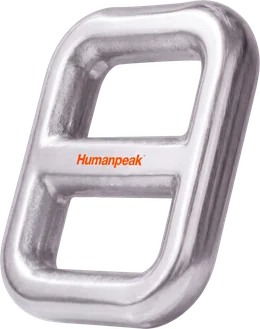
That is the reasoning behind the Humanpeak 12-Week Movement Protocol: three phases, Restore, Build and Perform, 5 workouts per week of about 20 minutes each, with the Humanpeak™ Movement Tool (2.2 kg). Every flow combines mobility, control and targeted fascial loading through multidirectional movement. What changes first is not a number at the hand. It is how the body produces and transfers force as one connected piece, the framing Bill Parisi uses in Anatomy of Speed: the body stores, transfers and expresses force.
- FOCUS: WHOLE-BODY POWER
- DURATION: 20 MIN
- FREQUENCY: 5× / WEEK
It sits on top of your strength work, not in place of it: short workouts that ask the whole body to move in every plane it was built for. Strong. Fast. Connected.
Grip strength earns its reputation as a marker and loses it as a method. The link with survival is one of the more reproducible findings in population health. The instruction the internet extracts from it — squeeze more — is supported by nothing.
No training system, Humanpeak included, can promise anyone years. What training can do is build the capacity the marker was reading: force produced quickly, through usable range, in every direction, in a body that still works as one piece. Measure the dial. Train the engine.
Fact check
Frequently asked questions
Humanpeak follows clear sourcing guidelines: we rely on peer-reviewed studies, scientific institutions and professional bodies, and aim for primary sources. Spotted an error? Write to us.
This article is for educational purposes only and does not replace medical advice. If you have symptoms, talk to a doctor.


