Light Weight, High Velocity Training: Why a Light Tool Produces Real Force


A tool that weighs 2.2 kg looks like it cannot matter. That is the most common objection aimed at any training system built around a light implement, and it deserves a straight answer rather than a slogan. Light weight high velocity training operates on a different variable than heavy lifting does. Not mass. Acceleration.
The physics is not in dispute. The training effect is where the argument actually sits, and it has both a yes and a no inside it. Fast work with a light implement has good support for power, for the speed at which force is produced and for coordination. It has no business claiming maximal strength or muscle size. This guide separates the two, states the tier of confidence for each claim, and marks the point where the evidence stops.
Light weight high velocity training produces force through acceleration rather than load. Because force equals mass times acceleration, a light implement moved fast still demands rapid force production from the body. It develops power, rate of force development and coordination under speed. It does not build maximal strength or muscle size the way heavy loading does.
Does light weight high velocity training produce force?
Force equals mass times acceleration. NASA states it without decoration: the acceleration of an object depends on the mass of the object and the amount of force applied, written as F = m × a [1]. Read the equation from the other side and the training logic appears. Force rises when mass rises, and force rises when acceleration rises. Heavy training takes the first route. Light weight high velocity training takes the second.
A light implement cannot be loaded further, so the only remaining variable is how hard it is accelerated — and how hard the body has to work to do that. The demand does not come from the object being heavy. It comes from the body producing force quickly enough to move something fast, hold a shape while it travels, and then stop it.
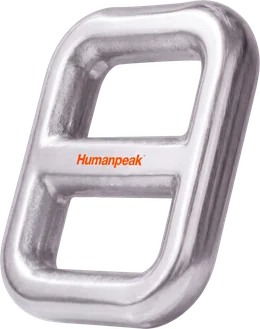
Two clarifications belong here rather than in the small print. First, the force applied to a 2.2 kg implement is modest in absolute terms, and no honest brand should suggest it replicates a loaded bar. Second, the muscular force required to accelerate a limb and a trunk through full range at speed is not modest, and that is the demand the training is actually built on. The tool is a handle for the movement, not the load.
Where the force in a fast movement comes from
Maximal muscular power is defined and limited by the force–velocity relationship [2]. Muscle produces less force as shortening velocity rises, and less velocity as force demand rises, so peak power output sits between the two extremes rather than at either end [2]. Heavy training lives at the force end of that curve. Light, rapidly accelerated implements live at the velocity end. For ballistic movements — movements in which the implement is accelerated throughout rather than braked to a stop mid-range — loads in the region of 0 to 50% of one-repetition maximum are the recommended stimulus for developing power [3].
- The implement. The smallest contributor. It sets the shape of the movement, gives the hands something to aim, and provides just enough resistance for the body to organize around.
- The body segments. An arm and a trunk are heavy relative to a light tool. Accelerating them through range at speed is where most of the mechanical work is done.
- The ground. Fast rotational and springing movement is expressed against a floor. Force travels from the foot upward, which is why the same movement performed seated feels like a different exercise.
There is a second half to the equation that most marketing skips. Every acceleration is paid for twice. What the body speeds up, the body must also slow down, and the braking phase is a force demand in its own direction. A light implement swung fast and stopped under control asks more of the system than the same implement moved slowly through the same path. Same mass. Different physics.
- VARIABLE: ACCELERATION
- LOAD: LIGHT
- DEMAND: FULL BODY
What light, fast work actually builds
A systematic review of the aging and power literature found muscle power to be a marginally superior predictor of functional performance than muscle strength, with maximal angular velocity of movement predicting function better than strength alone [4]. The same review's pragmatic prescription reads like a description of a light-tool practice: maximal intended movement velocity, low training load, simple methods, low volume, low frequency [4].
The mechanism behind fast force is largely a nervous-system property. Rate of force development appears to be determined mainly by the capacity to reach maximal voluntary activation within the first 50 to 75 milliseconds of an explosive contraction, chiefly through increased motor unit discharge rates [7]. Both explosive and heavy-resistance training improve it, primarily by improving how rapidly muscle can be activated [7]. That is why fast work with a light implement is not a paradox: the adaptation being trained is timing and drive, not tissue bulk.
- POWER. The ability to express force quickly, which the review evidence links more closely to everyday function than maximal strength does [4].
- RATE OF FORCE DEVELOPMENT. How much force arrives in the first fraction of a second — a trainable, largely neural quality [7].
- COORDINATION UNDER SPEED. Sequencing a full-body pattern while it is moving fast. Slow practice does not rehearse this, because the timing problem only exists at speed.
- CONTROL THROUGH RANGE. Force can only be expressed in positions the body can access and organize. Fast work in wide, rotational shapes trains the range and the control together — the body works and coordinates in parallel.
One framing is worth borrowing here as a way of thinking rather than as evidence — the view, associated with Bill Parisi's work on speed, that the body is a connected system which stores, transfers and expresses force. Fast, whole-body movement trains the transfer between segments. Isolated slow work rarely rehearses it, because the sequencing problem only exists when the parts have to arrive in order and on time.
Built around fascial lines. 20 minutes per session, 5 times a week, guided step by step in the app.
Start the protocol 14-day money-back guarantee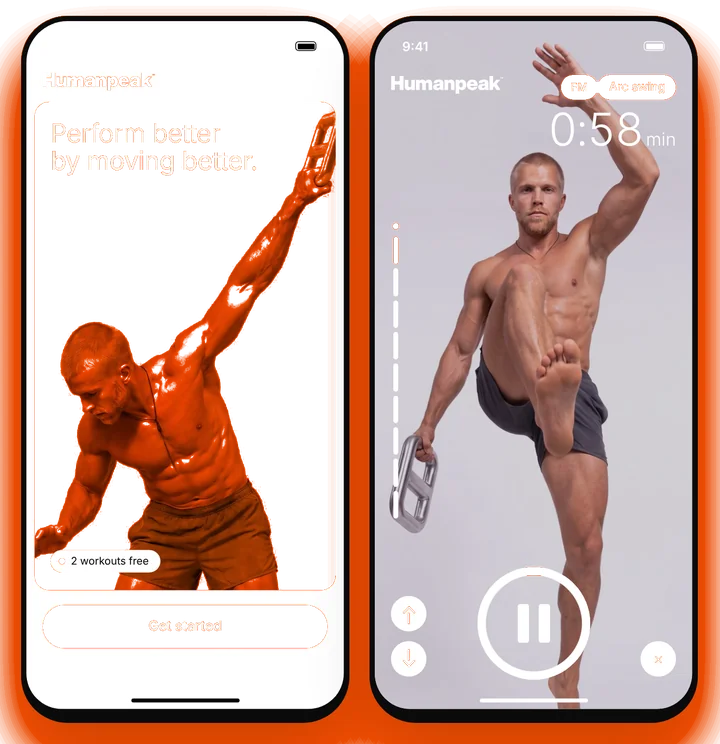
What it does not build — the honest limit
A systematic review and meta-analysis comparing low- and high-load resistance training reported that gains in one-repetition-maximum strength were significantly greater in favor of high- versus low-load training, while changes in measures of muscle hypertrophy were similar between conditions [6]. The authors concluded that maximal strength benefits come from heavy loads, while hypertrophy can be achieved across a spectrum of loading ranges [6].
The second half of that finding is routinely misused by light-tool marketing, so state it precisely. Hypertrophy parity was observed for low-load sets taken close to failure, with high repetition counts and substantial time under tension. Short, fast, deliberately non-fatiguing ballistic sets are not that stimulus. Light and fast is not the same thing as light and to failure. Neither maximal strength nor muscle size is a claim a light-implement practice can make.
There is a further constraint worth respecting: strength is foundational for power, and adequate strength is required before high power output is available at all [3]. That is the argument for keeping heavy work rather than abandoning it. The barbell builds the engine. The 12-Week Movement Protocol, 5 workouts per week of about 20 minutes each, wires it into patterns the body actually uses.
Even for physical function, the superiority of high-velocity training is task-specific rather than universal. A network meta-analysis of 79 trials in older adults found that velocity effects depended on which test was used [5].
| Outcome measured | Stimulus favored in the analysis |
|---|---|
| Timed-up-and-go | High-velocity resistance exercise [5] |
| 5-times sit-to-stand | High-velocity resistance exercise [5] |
| Fast walking speed | High-velocity resistance exercise [5] |
| 30-second sit-to-stand | Traditional resistance exercise [5] |
| 6-minute walk | Traditional resistance exercise [5] |
The authors' conclusion was that prescription based on contraction velocity should be individualized to the functional need in front of you [5]. Tasks that are short and fast respond to fast training. Tasks that are long and repeated respond to conventional loading. That is a boundary, not a defeat.
Intent is the variable, not the tool
The implement does not create the adaptation. The attempt to accelerate does. The pragmatic prescription drawn from the aging and power literature puts maximal intended movement velocity first on its list of components, ahead of load, method and volume [4]. The nervous-system data points the same way: what improves is the speed of activation in the opening milliseconds of a contraction [7].
The practical consequence is uncomfortable for anyone who wants a tool to do the work. A light implement moved casually is close to a rest interval. The same implement moved with genuine intent to accelerate — and stopped with genuine intent to control — is a demanding piece of training that leaves very little visible evidence behind. No load on the bar. No obvious fatigue. Only the quality of the movement to judge it by.
How to program light, fast work
Programming follows from the mechanism. Fast work is a quality stimulus, not a fatigue stimulus, and it degrades quickly once the nervous system tires.
- Keep the load in the light range so velocity stays genuinely high — ballistic work belongs at the low end of the load spectrum [3].
- Keep sets short. Quality of acceleration is the metric, and it collapses long before the muscles feel finished.
- Train with maximal intended velocity on every repetition, not on the last few [4].
- Favor low volume repeated often over long, exhausting sessions — simple methods and low training load are part of the evidence-based prescription, not a compromise [4].
- Keep a heavy strength stimulus in the week if maximal strength matters to you [3][6].
- Respect contraindications. Acute tendon complaints and diagnosed bone-density conditions call for medical guidance before adding ballistic work.
The rest is the ordinary discipline of any regular practice: rotation as well as flexion, both directions, both sides, and enough consistency that the nervous system treats the pattern as normal rather than novel.
The equation is not the argument. Force equals mass times acceleration is definitional physics, and quoting it proves only that a second route to force exists. What the evidence adds is the boundary around that route: light, fast, intentional work develops power, rate of force development and coordination, and it does not develop maximal strength or size.
Said plainly, a light-tool practice builds a different kind of muscle — the kind you use. It is a layer on top of strength work, not a replacement for it. Light. Fast. Deliberate.
Fact check
Frequently asked questions
Humanpeak follows clear sourcing guidelines: we rely on peer-reviewed studies, scientific institutions and professional bodies, and aim for primary sources. Spotted an error? Write to us.
This article is for educational purposes only and does not replace medical advice. If you have symptoms, talk to a doctor.


