Your Feet Decide How Much Force Reaches the Ground


Every force you produce leaves your body through the soles of your feet. A sprint, a cut, a jump, a hard stop: all of it passes through the foot before it reaches the ground, and all of it comes back the same way. Your foot is the last link in the chain and the first thing the ground talks to.
A set of reels has put that link in front of millions of athletes. The claims stack up fast: barefoot alone is not enough, you have to decompress the midfoot, spread the toes, build a triangular foot, because shoes have paralyzed your intrinsic muscles, and the thousands of nerve endings in your sole steer the whole body. Some of this is good coaching. Some of it is physics. Some of it is a story.
We checked the research behind each piece. The picture is more interesting than the reel, and more useful.
The foot decides how much force reaches the ground because it is the last structure to shape that force: its arch stores and returns elastic energy, its small muscles stiffen the forefoot at push-off, and its sole feeds the nervous system the information it needs to balance and brake. Research links conventional footwear to weaker foot muscles and a less stiff arch, and shows the muscles recover size and strength within weeks when they are loaded again. Barefoot time is one such load, not a cure, and it needs a gradual dose.
What does the viral claim get right about your feet?
Start with the part that holds up. The foot is not a rigid platform. It is a stack of small bones and joints with a longitudinal arch that flattens when you land and springs back when you push off. In 1987, Ker and colleagues loaded cadaver feet in a testing machine and measured how much energy the arch absorbed and returned. Their title said it plainly: there is a spring in the arch of the human foot [1].
That spring is not decorative. Stearne and colleagues fitted runners with custom insoles that blocked arch compression and measured how much oxygen they burned. With the spring restricted, the metabolic cost of running on level ground rose by about 6% [2]. The arch is doing work you never see, on every step.
The reel's instinct is right: a foot that cannot deform and recoil costs you. Where the reel drifts is the explanation of why, and what to do about it.
Why is the arch a spring and not a platform?
Three structures make the spring work.
The first is the plantar fascia, a thick band of connective tissue running from the heel to the base of the toes. When your toes bend upward at push-off, the fascia wraps around the metatarsal heads like a cable around a drum, pulls the heel toward the forefoot and raises the arch. Hicks described this in 1954 and called it the windlass mechanism [3]. It is the reason your foot gets stiffer at exactly the moment you need to push.
The second is the set of ligaments spanning the arch, the elastic structures Ker's team was loading and measuring when they found the spring [1].
The third is the layer the reel talks about most: the plantar intrinsic muscles, the small muscles that start and end inside the foot. McKeon and colleagues proposed calling them the "foot core," an analogy to the deep trunk muscles, and argued they are routinely ignored by both clinicians and researchers [4]. The analogy has stuck, and it is a reasonable one. These muscles sit in a position to shape the arch, and they are rarely trained on purpose.
Here is where the research refines the story. Farris and colleagues temporarily blocked the nerve to the intrinsic foot muscles in healthy adults and measured what changed in walking and running. The answer was surprising: with the muscles switched off, arch stiffness under the high loads of ground contact did not change. The muscles are too small to hold the arch against body weight at speed. What did change was push-off. Without the intrinsics, the joints of the forefoot could not stiffen enough for a normal push against the ground, stride rate went up, and the hip had to generate compensatory power [5].
So the foot core is real, but its job is not what the reel implies. It is not a suspension system holding up your arch. It is a stiffening system for the forefoot at the moment force leaves the body. That is a force-transfer role, and for an athlete, a more important one.
Did shoes really paralyze your foot muscles?
"Paralyzed" is the reel's word, and it is the wrong one. The right one is underused.
Holowka, Wallace and Lieberman compared men from northwestern Mexico who habitually wear minimal sandals with men from the United States who wear conventional shoes. The minimally shod group had higher and stiffer arches during walking and larger abductor hallucis and abductor digiti minimi muscles, the muscles that spread the big toe and the little toe. Abductor hallucis size was positively associated with arch stiffness during walking [6]. The authors' conclusion is careful: conventional shoes with arch supports and narrow toe boxes are associated with weaker foot muscles, which may predispose people to reduced foot stiffness.
Associated with. Not paralyzed by. The difference matters because paralysis implies damage, and the next study shows the opposite.
Ridge and colleagues randomized 57 runners into three groups for eight weeks: one group walked in minimalist shoes, raising the number of steps taken in the shoes each week; one did progressive foot-strengthening exercises at least five days a week; one changed nothing. All groups kept running their usual mileage. Both intervention groups increased foot muscle size and strength significantly across every measure. The control group did not change. Minimalist walking was as effective as the exercise program, and some muscles had already grown by week four [7].
Read that against the reel's claim that "barefoot alone is not enough." In this trial, walking in minimalist shoes, alone, with no exercise prescription, did the job. The muscles were not paralyzed. They were waiting for a reason to work.
What the reel gets right by accident: foot strengthening and barefoot time produced the same result, which means the stimulus is load through the foot, not any particular drill. Spreading the toes is one way to load those muscles. Walking without a shoe deciding your foot shape is another.
What do the nerve endings in your sole actually do?
The reel's biggest number is "thousands of nerve endings" controlling the whole body. We could not find that number in a primary source, so we will not use it. What the research does describe is more specific and more useful.
Kennedy and Inglis inserted microelectrodes into the tibial nerve of 13 volunteers and recorded directly from the touch receptors in the skin of the sole. They identified 104 receptors across four classes, the same four classes found in the palm of the hand. The receptors were spread across the whole sole with no concentration in the toes, and the largest receptive fields sat under the metatarsals and midfoot. One detail stands out: with the foot unloaded, none of the receptors fired on their own. They respond to contact, pressure and skin stretch, and they are silent otherwise [8].
The authors' interpretation is that these receptors behave differently from hand receptors because they serve a different job: standing balance and movement control [8]. That is the honest version of the reel's claim. Your sole reports where pressure is and how it is moving, and your nervous system uses that report to adjust how you load the leg.
Two things follow for athletes. First, a thick, cushioned sole most likely dampens the signal, because the receptors need skin contact and deformation to fire. That is not a scandal, it is a design trade-off, and on a hard track or a long run you may want the cushion. Second, the signal only exists when the skin is loaded and deforming. Standing still on a textured mat produces little. Shifting weight through the foot in different directions, braking, pushing off at an angle: that produces a stream of information.
Whether more sensory input from the sole improves athletic performance is not something these studies tested. They tell you what the sensor is and what it reports. The rest is coaching.
A science-based protocol built around fascial lines to support multidirectional movement.
Start the protocol 14-day money-back guarantee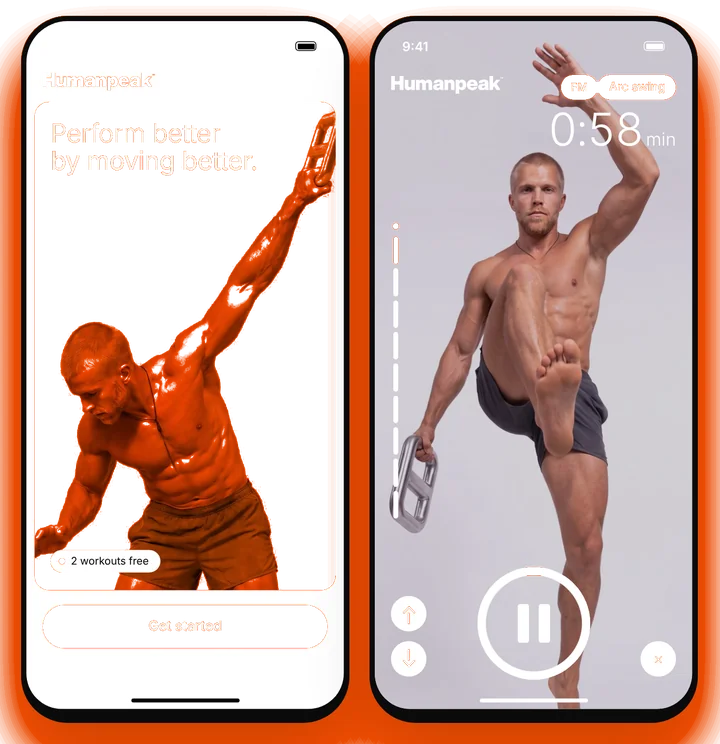
Toe spreading, the tripod and the "decompressed" midfoot: cue or science?
Three ideas from the reels deserve a separate look.
The triangle. Coaches describe the foot as a tripod: heel, base of the big toe, base of the little toe. It is a teaching image, not a measurement, and as a cue for even loading across the foot it works well. The research above supports the idea behind it. The abductor hallucis, which pulls the big toe toward the midline of the body and widens the forefoot, was the muscle most linked to arch stiffness in Holowka's data [6]. A wide, active forefoot is a stiffer foot at push-off.
Toe spreading. Here the direct evidence is thin. We found small studies and feasibility trials on toe separators, mostly in people with existing bunions, and none that would support a performance claim for healthy athletes. What we can say is indirect: the muscles that spread the toes are the ones that shrink in conventional shoes and grow with minimalist walking [6, 7]. If toe spreading loads those muscles, it is a plausible drill. It is not a documented one.
Shoes and bunions. The reels treat hallux valgus, the drift of the big toe toward the others, as a footwear injury. Nix and colleagues screened 34 studies on what is associated with hallux valgus and analyzed the 16 with reliable measurements. The strongest associations were structural: the angle between the first and second metatarsals, a longer first metatarsal, a round first metatarsal head. The evidence for footwear was, in their words, less conclusive [10]. That does not clear narrow shoes. It means the research cannot yet separate the shoe from the foot you were born with, and anyone who tells you otherwise is ahead of the data.
"Decompressing" the midfoot. We could not find a definition of this that corresponds to a measured variable. If it means letting the arch flatten and recoil instead of propping it up, the spring research supports the idea [1, 2]. If it means something is being physically released, there is no evidence for that.
| WHAT THE CLAIM SAYS | WHAT THE RESEARCH SHOWS |
|---|---|
| Shoes have paralyzed your intrinsic foot muscles | Conventional footwear is associated with smaller foot muscles and a less stiff arch. The muscles grew within eight weeks when loaded [6, 7] |
| Barefoot alone is not enough | Walking in minimalist shoes alone matched a foot-strengthening program for muscle size and strength over eight weeks [7] |
| The intrinsic muscles hold up your arch | Under running loads, blocking the muscles did not change arch stiffness. They stiffen the forefoot for push-off [5] |
| Thousands of nerve endings in your sole control the whole body | Four classes of skin receptors, silent until loaded, with a documented role in balance and movement control. No whole-body claim [8] |
| Spread your toes to fix your feet | The toe-spreading muscles are the ones that respond to load. Toe spreaders themselves have little evidence [6, 7] |
| Shoes cause bunions | Structural factors show the strongest associations. The footwear evidence is less conclusive [10] |
How fast can you go barefoot?
This is the part the reels skip, and it is the part that decides whether the stimulus helps or hurts.
Ryan and colleagues randomized 103 recreational runners into neutral shoes, partial minimalist shoes or full minimalist shoes, then put them through a 12-week training plan toward a 10 km race. Of the 23 injuries reported, four were in the neutral group and twelve in the partial minimalist group. The full minimalist group reported more shin and calf pain. The authors' conclusion: minimalist footwear appears to increase the likelihood of injury in runners new to it [9].
That is not an argument against barefoot work. It is an argument about dose. The foot muscles and the tissues around them adapt, but on their own schedule. Ridge's runners, the ones whose foot muscles grew, were walking in minimalist shoes, not running, and they increased their step count week by week [7]. Ryan's runners went straight to running volume in new shoes, and the tissue bill came due.
For an athlete, the practical reading is this. Barefoot time is a stimulus, like any other load. Start with walking and standing work, not running. Add surface, speed and direction gradually. Treat shin and calf soreness as information, not proof of progress. And do not let the foot become the only thing you train. It is the last link, not the whole chain.
- FOCUS: forefoot stiffness and arch recoil
- LOAD: body weight, barefoot or flat shoes
- TEMPO: slow and controlled first, then rhythmic
How Humanpeak trains this
Force transfer begins at the ground, and most training never asks the foot a question. A squat loads the foot in one direction, under a stable bar, in a cushioned shoe. Your sport does not. You land at an angle, brake on one leg, push off sideways, pivot under load. The Humanpeak method trains the body as one connected system, from stance to hand, and the stance is where every flow starts.
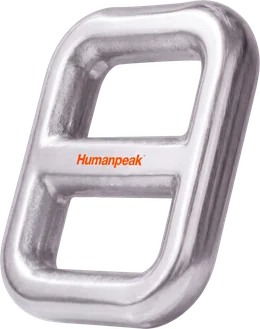
The Humanpeak™ Movement Tool weighs 2.2 kg, cast in one piece from aluminum, with its mass offset from the grip. When you accelerate it, the torque pulls off-axis and changes direction mid-movement, so your whole chain has to organize against it: grip, wrist, shoulder, trunk, and the foot on the ground. Every rotation shifts pressure across the sole. Every reversal asks the forefoot to stiffen and the arch to recoil in a different direction than the rep before. Over 450 movement flows in the 12-Week Movement Protocol build this across three phases, Restore, Build and Perform, in 5 workouts per week of about 20 minutes each. Every flow combines mobility, control and targeted fascial loading through multidirectional movement. The flows need no running shoe. Barefoot or in flat shoes, your foot gets the full stimulus, at a dose that starts with body weight and control.
The principles behind Humanpeak are established training science. Studies on the specific tool are still to come. What we can say is what the research above says: load the foot in the directions your sport demands, and it adapts.
The reel was right that your feet matter. It was wrong about why. They are not paralyzed and they do not need rescuing. They need load, in every direction, at a pace the tissue can follow.
Move better. Perform better.
Fact check
Frequently asked questions
Humanpeak follows clear sourcing guidelines: we rely on peer-reviewed studies, scientific institutions and professional bodies, and aim for primary sources. Spotted an error? Write to us.
This article is for educational purposes only and does not replace medical advice. If you have symptoms, talk to a doctor.


