Neck and Shoulder Tension From Desk Work: What Actually Changes It


Neck and shoulder tension from desk work rarely announces itself. It accumulates. A low hum across the top of the shoulders by mid-afternoon, a stiff turn of the head in the car, a dull ache that lifts on vacation and returns by Wednesday. The standard explanation is posture, and the standard prescription is to sit up straighter.
The evidence tells a more specific story. What separates the people who develop desk-related neck and shoulder complaints from those who do not is not mainly the angle of the head. It is how long the same small muscles stay switched on without a pause, how much the mid-back and ribcage contribute to movement, and how the body breathes while it works. Those are trainable. Sitting position mostly is not.
Neck and shoulder tension from desk work is driven mostly by duration, not by posture. The same low-threshold muscle fibers stay active for hours with too few pauses, while the mid-back and ribcage contribute less. Research links infrequent muscle rest to later neck-shoulder pain, and strengthening plus frequent movement breaks to improvement.
What Causes Neck and Shoulder Tension From Desk Work?
Desk work is low-force work. Typing and mouse use demand a fraction of what the shoulder girdle can produce, and that is precisely the problem. Motor units are recruited in order, smallest first, and released in reverse. At the very low effort levels office tasks require, the same small, fatigue-resistant units are called on every time and let go last, so they can remain active for the entire task. Direct recordings during prolonged computer work have captured individual trapezius motor units firing continuously through the task, with no orderly handover to fresh units [4].
This is the sustained low-level load model, often named after the motor units that start first and finish last. It is a hypothesis about exposure rather than a demonstrated injury pathway, and it reframes the complaint. On this reading the upper trapezius is not tense because the head is forward or because the muscle is weak in any conventional sense, but because it has been quietly switched on for hours.
The prospective data point the same way. Thirty newly hired women in repetitive work at a chocolate manufacturing plant were followed with surface electromyography and interviewed about muscular pain every ten weeks. Those who later developed trapezius pain did start with higher static and median muscle activity, but that difference normalized over follow-up. What persisted was a lower rate of EMG gaps: the brief pauses in which the muscle drops back to rest [5]. A low rate of gaps was the significant predictor of who reported pain later. The signal was the absence of rest more than the presence of effort. The sample was small and entirely female, so the direction of the finding travels better than its size.
Is Posture the Real Problem?
Forward head posture is the standard villain, and it is not nothing. A meta-analysis of head position and neck pain found that adults with neck pain held their heads measurably further forward than adults without it, a mean difference of 4.84 degrees in craniovertebral angle (95% CI 0.14 to 9.54), with moderate correlations to pain intensity and disability [3]. In adolescents the association vanished, with a mean difference of roughly minus one degree [3].
Two things follow. First, the association in adults is real but modest and cross-sectional, and the confidence interval very nearly touches zero. It shows that people with neck pain hold their heads slightly differently, not that head position produced the symptom. Second, the review authors named age itself as a confounding factor [3]. A variable that predicts nothing in teenagers and correlates moderately in adults is behaving like a marker of accumulated exposure, not like a cause.
The intervention data close the loop. A meta-analysis of workplace programs for office workers found only low-quality evidence for ergonomic interventions covering keyboards, monitors and workstation adjustment, and no meaningful benefit from education on posture, work style or stress [1]. Adjusting the chair changes the chair. It does not change what the muscle is doing for the next four hours. The same distinction runs through why sitting itself is not the problem.
- POSTURE: MARKER, NOT MECHANISM
- ERGONOMICS: LOW-QUALITY EVIDENCE
- DURATION: THE ACTIVE VARIABLE
Why Movement Variability Beats Posture Correction
If duration is the load, variation is the counterweight. The target is not one correct position but a wide set of positions the body can move between, and the frequency with which it actually does. In the same workplace meta-analysis, two trials of supplementary breaks of roughly five extra minutes per working hour outperformed conventional break schedules for neck and shoulder symptoms [1]. The dose that helped was measured in interruptions, not in degrees of spinal curve.
- Change position often. The unit of measurement is switches per hour. A position held well is still a position held, and a well-aligned muscle that never pauses is still a muscle that never pauses.
- Move through range, not just out of it. A break that only removes the hands from the keyboard restores less than one that takes the shoulders, ribcage and mid-back through their available range.
- Load the region deliberately. Rest alone is unlikely to raise tolerance. Tissue that carries a small load all day plausibly needs a larger, brief, controlled load to lift its ceiling.
Kelly Starrett frames this as daily movement hygiene rather than posture discipline: the body is built to change shape frequently, and much of what registers as desk stiffness is a shortage of shape changes [8]. Framed that way, the answer stops being vigilance and becomes a habit. No perfect chair. No constant self-correction. Just more movement, more often, through more range.
A science-based protocol built around fascial lines to support multidirectional movement.
Start the protocol 14-day money-back guarantee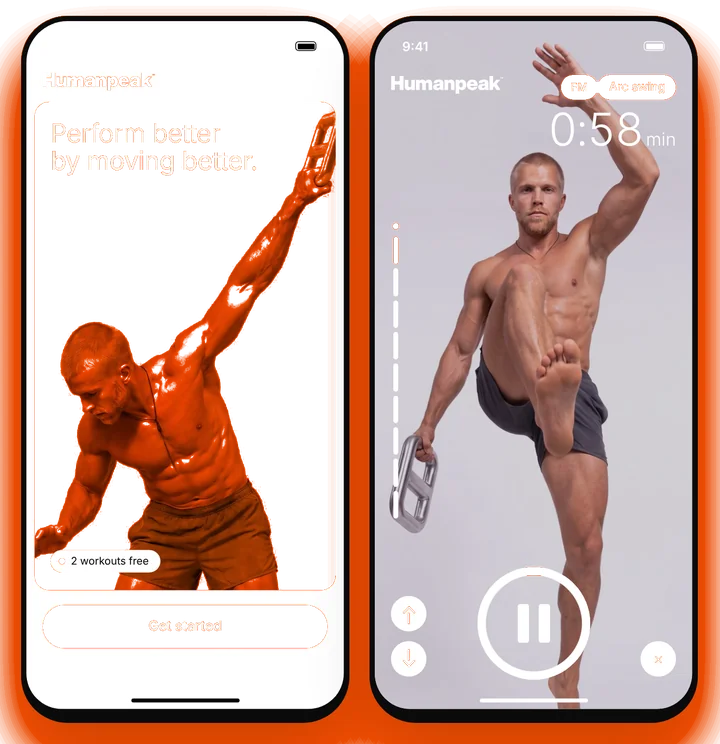
The Mid-Back Contribution
The neck does not turn alone. Cervical rotation, side bending and extension all draw on the segments below, and the working assumption in the clinical literature is that when the thoracic spine and ribcage contribute less, the cervical segments carry more of the demand. There is direct trial evidence for the coupling. A 2026 meta-analysis of 17 randomized trials in 1,100 participants found that working on the thoracic spine, not the neck, reduced neck pain intensity on visual analogue scales (SMD -0.53, 95% CI -0.84 to -0.22) and improved cervical range of motion in every plane measured, immediately after the intervention [6].
Read that carefully, because it cuts both ways. It supports the idea that the mid-back governs a large share of what the neck can do. It does not show that passive input is the answer. The trials measured immediate effects only, samples were small, and several of the pooled range-of-motion effect sizes are implausibly large for data of this kind [6]. What the finding identifies is the target, not the method. If a single passive input to the thoracic spine can change neck range within minutes, thoracic mobility is a live variable rather than a fixed constraint. Whether training it produces a more durable version of the same change is a reasonable expectation, not something these trials establish. That mechanism is unpacked in thoracic rotation.
- TARGET: THORACIC SPINE
- EFFECT: IMMEDIATE, SHORT-TERM
- DURABLE VERSION: TRAINED ROTATION
What Breathing Has to Do With It
The scalenes and sternocleidomastoid are neck muscles with a second job: they assist inspiration. A breathing pattern that recruits them for every breath adds thousands of small contractions per day to muscles that are already holding up the head. It is the same duration problem arriving through a different door.
The measured association exists. A pilot study comparing people with chronic neck pain to matched controls found reduced maximum voluntary ventilation (about 14%), maximal inspiratory pressure (about 21%) and maximal expiratory pressure (about 17%) in the neck pain group, alongside an association between more forward head position and lower respiratory muscle strength [7]. The honest caveat sits in the same paper: twelve participants per group, cross-sectional design, and no way to establish whether restricted breathing preceded the neck complaint or followed it [7].
For training purposes the direction of causality matters less than the overlap. Ribcage expansion, rotation and breath occupy the same mechanical territory, and the plausible reading is that a ribcage which rarely changes volume also rotates less. Training both inside the same movement is a reasonable design choice rather than a demonstrated efficiency, and the detail is covered in breathing, ribcage and pressure.
What Actually Changes It
Across the two strongest evidence syntheses in this area, one intervention type carries the signal. A Cochrane review of exercise for mechanical neck disorders found moderate-quality evidence that strengthening of the cervico-scapulothoracic region and the upper extremities produced moderate to large pain reductions in chronic neck pain, with combined strengthening and stretching holding its benefit at long-term follow-up. Stretching on its own showed minimal benefit, and the reviewers were explicit that no high-quality evidence exists in this field [2].
The office-worker meta-analysis agrees and adds the dose. In symptomatic workers, neck and shoulder strengthening pooled at a standardized mean difference of 0.46 (95% CI 0.07 to 0.86) against 0.43 (0.06 to 0.81) for general fitness training — a nominal edge for strengthening, with confidence intervals that overlap almost entirely. The more useful finding is the moderator: greater effects were observed with greater participation, and the largest single-trial effect, 1.29, came from the program with the highest attendance [1]. Participation was the variable that moved. The program that gets done outperforms the program that is theoretically optimal.
| Approach | What the evidence supports |
|---|---|
| Workstation and chair adjustment | Low-quality evidence for symptom change in office workers [1] |
| Posture and work-style education | No meaningful benefit in pooled workplace trials [1] |
| Stretching alone | Minimal benefit as a standalone approach [2] |
| Extra short breaks each working hour | More effective than conventional break schedules [1] |
| Neck, shoulder and mid-back strengthening | Moderate-quality evidence, moderate to large effect in chronic neck pain [1][2] |
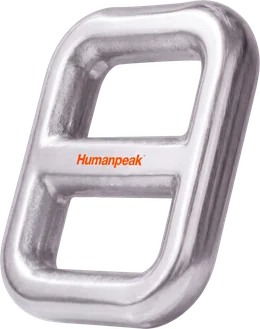
This is where a regular practice earns its place. The 12-Week Movement Protocol is built around whole-body flows that load the shoulder girdle and mid-back through rotation and range instead of isolating the neck, with the ribcage working in every pattern. Five workouts per week, about 20 minutes each, with the Humanpeak Movement Tool, repeated often enough to count. The aim is capacity, not a clinical intervention. Consistency is the mechanism here, not intensity.
Desk neck and shoulder tension is a duration problem wearing a posture costume. The load is small, the exposure is long, and the pauses are missing. Chairs and screens set the stage, but they do not decide the outcome. What decides it is how often the body changes shape, how much the mid-back and ribcage take on, and whether the region is ever loaded deliberately enough to raise its ceiling. Move often. Move through range. Load it on purpose.
Fact check
Frequently asked questions
Humanpeak follows clear sourcing guidelines: we rely on peer-reviewed studies, scientific institutions and professional bodies, and aim for primary sources. Spotted an error? Write to us.
This article is for educational purposes only and does not replace medical advice. If you have symptoms, talk to a doctor.


