Active Recovery vs Rest Day: What Each One Is Actually For


The question shows up on the day the body feels worst. Active recovery vs rest day: move a little, or do nothing at all. Online the answer arrives with total confidence and almost no evidence in either direction. One camp treats an off day as a character flaw. The other treats any movement on an off day as interference with repair. The research is less dramatic and considerably more useful than both.
Active recovery and full rest are two different tools, working on two different timescales. The common mistake is not picking the wrong one. It is picking by feel, using a signal that does not measure what most people think it measures.
Active recovery means low-intensity movement on an easy day; a rest day means no training load at all. Evidence suggests light movement restores explosive performance faster within the first 24 hours, while full rest is the better call for illness, sleep debt, sharp pain, or accumulated fatigue. Most weeks need both.
Active Recovery vs Rest Day: What the Evidence Actually Shows
First the definitions, because most of the argument online is two people using one phrase for different things. Active recovery is low-intensity movement performed after a hard session or on the day between hard sessions: easy cycling, walking, unloaded mobility work, a slow flow. A rest day is the absence of structured training load. Neither term implies anything about repair. Both are inputs, and the evidence rates them differently depending on what you ask them to do.
A 2026 systematic review and network meta-analysis compared post-exercise recovery strategies across explosive performance and markers of muscle damage. At 24 hours, active recovery produced the largest effect on countermovement jump recovery (SMD 0.944, 95% CI 0.201–1.686), ahead of cold-water immersion (SMD 0.447). The same analysis found no significant effect of active recovery on creatine kinase and no significant reduction in soreness, and by 48 to 72 hours most interventions had lost their advantage entirely [3].
An earlier meta-analysis of recovery techniques found the opposite pattern on soreness: active recovery reduced delayed-onset muscle soreness (SMD −0.94, 95% CI −1.61 to −0.28) across eight experimental groups, showed no significant effect on perceived fatigue, and produced no detectable influence on creatine kinase, IL-6 or CRP [1]. Two pooled analyses, two different answers on soreness, one answer they agree on: nothing happens to the damage and inflammation markers.
| Outcome | Active recovery | What it means |
|---|---|---|
| Explosive performance at 24 h | Largest effect of the strategies compared [3] | Real, short-lived, wide confidence interval |
| Perceived soreness | Mixed across meta-analyses [1][3] | Sensation moves inconsistently |
| CK, IL-6, CRP | No detectable influence [1][3] | Not a repair mechanism |
| Effect at 48–72 h | Advantage largely gone [3] | A same-day and next-day tool |
That is the honest summary of active recovery vs rest day at the level of pooled evidence. Light movement buys back short-term readiness. It does not accelerate the biology of repair, and it was never going to.
What Light Movement Actually Changes
The most complete examination of the question is a narrative review of the active cool-down covering psychophysiological effects, performance, injury and long-term adaptation. Its findings are worth reading slowly, because they dismantle the marketing and rescue the practice at the same time.
- Lactate. Active cool-downs generally lead to faster removal of blood lactate, though the authors question the practical relevance, noting that lactate is not necessarily cleared more rapidly from muscle tissue [2].
- Soreness and damage. Most evidence indicates active cool-downs do not significantly reduce muscle soreness or improve the recovery of indirect markers of muscle damage [2].
- Same-day performance. For performance later the same day, with four or more hours between, active cool-downs are largely ineffective and may carry small detrimental effects [2].
- Injury. Across prospective cohort work, a cool-down generally does not affect injury rates [2].
- Long-term adaptation. Preliminary evidence suggests an active cool-down after every session does not attenuate, and may even enhance, the long-term adaptive response [2].
Read that last point again, because it is the one that matters for how a week is built. The fear that easy movement on an easy day steals adaptation is not supported. The claim that it repairs tissue faster is not supported either. What remains is smaller, unglamorous and genuinely valuable: circulation increases, range is used rather than parked, coordination stays in circulation, and the nervous system gets a low-cost repetition of the patterns you want to own.
This is why a structured easy day is worth more than an unstructured one. Twenty minutes of controlled, multiplanar movement is a different input than twenty minutes of walking, and both are a different input than a sofa. The Humanpeak method is built on the same logic: the 12-Week Movement Protocol runs 5 workouts per week, about 20 minutes each, so the practice continues while the intensity moves.
Why Soreness Is a Bad Signal to Decide On
Most people resolve the active recovery vs rest day question with one input: how sore they are. It is the least reliable input available.
Delayed-onset muscle soreness typically appears 12 to 24 hours after unaccustomed eccentric work, peaks between 24 and 72 hours, then subsides and disappears within five to seven days. Its intensity is poorly correlated with other indirect markers of exercise-induced muscle damage and does not appear to reflect the magnitude of that damage [5]. Soreness is a sensation with its own timeline, driven by neurotrophic and inflammatory signaling rather than by lactate accumulation.
Which means the sentence "I am too sore to train" is a decision made on a dial that is not connected to the engine. Sometimes the reading is right by coincidence. Often it is not. More useful inputs exist, and none of them require a wearable.
- Sleep. Sleep extension showed the most consistent benefit for subsequent performance in the available review, which makes it the first lever to check [7].
- Warm-up quality. If range and control return within the first five minutes of moving, the soreness is noise. If they do not, treat it as information.
- Sharp versus diffuse. Diffuse, symmetrical, movement-easing discomfort behaves like ordinary soreness. Sharp, localized, one-sided or worsening pain does not, and is a reason to stop and seek assessment.
- Trend, not day. One heavy morning means little. Performance sliding across several sessions while perceived effort rises is the pattern that matters [6].
- Life load. Consensus work on recovery frames the balance as training, competition and life demands against recovery — not training alone [4].
Soreness reports sensation. Function reports capacity. Train the second, not the first.
A science-based protocol built around fascial lines to support multidirectional movement.
Start the protocol 14-day money-back guarantee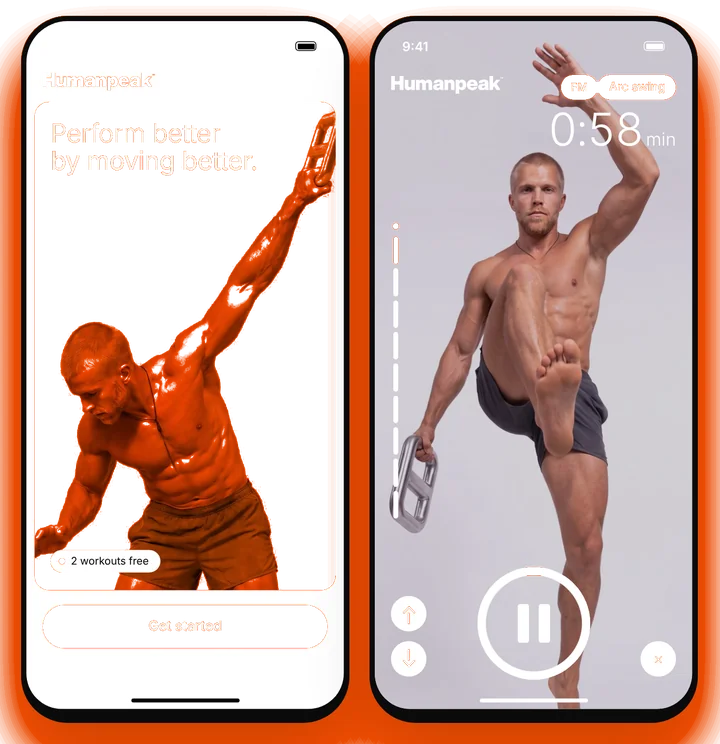
When Full Rest Is the Right Call
There are days when the correct dose of training is zero, and the brand of movement culture that cannot say so is doing its readers a disservice.
The joint ECSS and ACSM consensus statement draws the line clearly. A short-term drop in performance from an overload block, described as functional overreaching, resolves after adequate rest and can be followed by improved performance. When the balance between load and recovery stays wrong, that state becomes non-functional overreaching and, further along, overtraining syndrome, with prolonged maladaptation. The consensus also insists that any such assessment excludes organic disease, infection, iron or magnesium deficiency, and inadequate carbohydrate, protein or total energy intake first [6]. Recovery questions are frequently medical questions in disguise.
The recovery consensus statement from the same field makes the second point: the equilibrium that matters runs between all stressors and all recovery, individual responses to training vary substantially, and the practical answer is monitoring rather than a fixed rule [4]. There is no universal number of rest days per week. There is a pattern you learn to read in yourself.
- Systemic illness or fever — no training, and no easy session either.
- Meaningful sleep debt across several nights, since sleep extension is the intervention with the most consistent benefit for subsequent performance [7].
- Sharp, localized or worsening pain, especially one-sided, which belongs with a clinician rather than a training decision.
- Performance declining across sessions while perceived effort climbs.
- Life load spiking — deadlines, travel, caregiving — because the body does not file those separately from training stress [4].
None of that argues for immobility. In every study cited here, rest means the absence of training load, not the absence of movement. A day without a session and a day in a chair are not the same day.
How Easy Is Easy Enough
The most common way to ruin an easy day is to train on it. Active recovery that drifts upward in intensity stops being recovery and becomes an unplanned session, which is how a week accumulates fatigue nobody programmed. Here the evidence is thinner than the confidence of most advice: no meta-analysis defines an exact intensity, and protocols across studies vary. What follows is reasoned practice, stated as such.
- INTENSITY: LOW
- DURATION: 15–30 MIN
- MARKER: CONVERSATIONAL
- Breath as the governor. If full sentences become difficult, the intensity has left the recovery range.
- Range over effort. Prioritize joints moving through their available range with control rather than accumulating work.
- Skip the sore lift, keep the pattern. Loading the same tissue hard on consecutive days is the problem; moving it gently through range is not.
- Leave feeling better than you started. That is the whole quality control test. If the session takes more than it returns, it was training.
The simultaneity is the point: the body works and recovers in parallel, as long as the dose stays honest. Low. Controlled. Short.
How to Build the Week
Once you stop treating active recovery and rest as rivals, the week organizes itself quickly.
- Place hard sessions first — the ones with real intent, load or speed. Everything else arranges around them.
- Follow each hard session with a low-intensity day rather than an empty one, since the evidence for short-term neuromuscular restoration sits there [3].
- Keep one genuine off day in reserve, unscheduled, and spend it the moment the rest criteria appear.
- Protect sleep before you optimize anything else, because sleep extension showed the most consistent benefit for subsequent performance [7].
- Judge the arrangement over three weeks, not three days. Soreness lies. Trends do not [5][6].
That structure also resolves the false choice underneath the question. The alternative to a hard session is not nothing. It is something smaller, kept daily, which is why consistency beats intensity over any horizon longer than a month.
Hard days build. Easy days connect. Off days decide how long you get to keep doing both.
Active recovery vs rest day is not a contest, and the confident answers online are confident because they are unencumbered by the data. Light movement earns its place through short-term readiness and the simple continuation of the practice. Full rest earns its place when illness, sleep debt, sharp pain or a downward performance trend make training the wrong instruction. Neither one repairs tissue faster than the body already does.
What changes outcomes over a year is not the recovery modality. It is whether the week has a shape at all — hard days that are genuinely hard, easy days that stay genuinely easy, and off days taken on evidence rather than guilt. Structured. Steady. Repeatable.
Fact check
Frequently asked questions
Humanpeak follows clear sourcing guidelines: we rely on peer-reviewed studies, scientific institutions and professional bodies, and aim for primary sources. Spotted an error? Write to us.
This article is for educational purposes only and does not replace medical advice. If you have symptoms, talk to a doctor.

